
STOCKHOLM — March 19, 2026
Noru, a Stockholm-based startup building AI-native compliance infrastructure, has raised €560,000 in pre-seed funding to develop an “agentic compliance” platform — positioning itself within a new enterprise AI layer where regulatory execution becomes continuous and system-driven.
The round was led by Ampli Ventures, with participation from Andreessen Horowitz (a16z) Scout Fund, SSE Business Lab, DHS Venture Partners, and a group of Nordic angel investors.
The capital itself is modest. The underlying premise is not.
The implication is subtle but far-reaching: compliance is shifting from something companies prepare for to something systems continuously enforce — in real time.
Noru is attempting to reframe compliance from a reporting function into a persistent, system-level capability integrated into the software stack — a shift that aligns with broader transformations in enterprise AI, particularly the transition from interfaces to execution systems, as explored in our analysis of the shift from chat interfaces to AI agent systems.
From Compliance as Process to Compliance as System
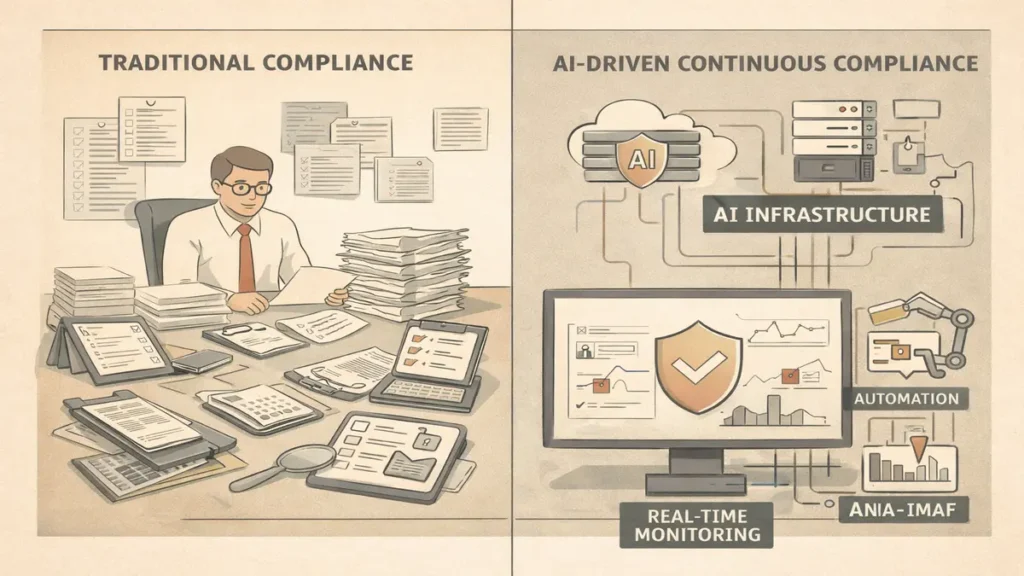
For decades, compliance has been treated as an episodic function — defined by audits, documentation cycles, and manual verification.
That model is increasingly misaligned with how modern companies operate.
Software systems now run on:
- continuous deployment cycles
- distributed cloud infrastructure
- real-time data flows
Regulatory frameworks, by contrast, remain largely static and retrospective.
The mismatch is structural — and widening.
Noru’s central thesis is direct: compliance must evolve from a periodic process → into a continuously operating system
This mirrors a broader shift across enterprise AI — from tools to infrastructure, where execution layers are becoming the primary source of value, a transition outlined in our analysis of why the next AI breakthrough is expertise, not models.
Building “Agentic Compliance”
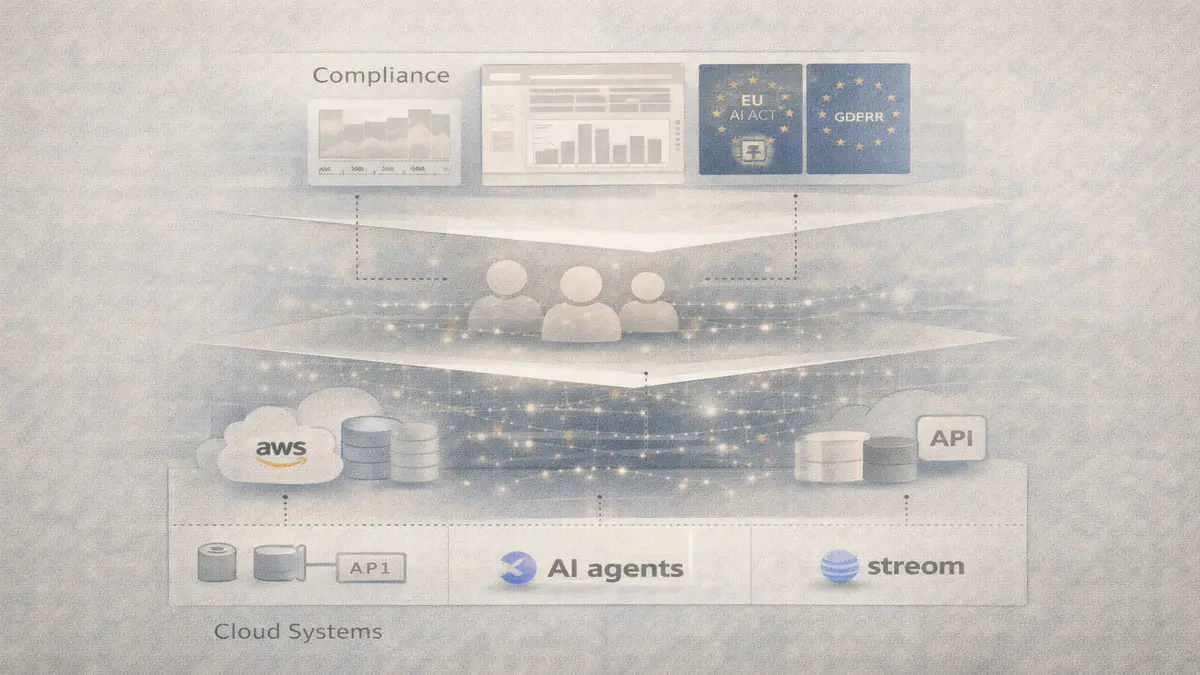
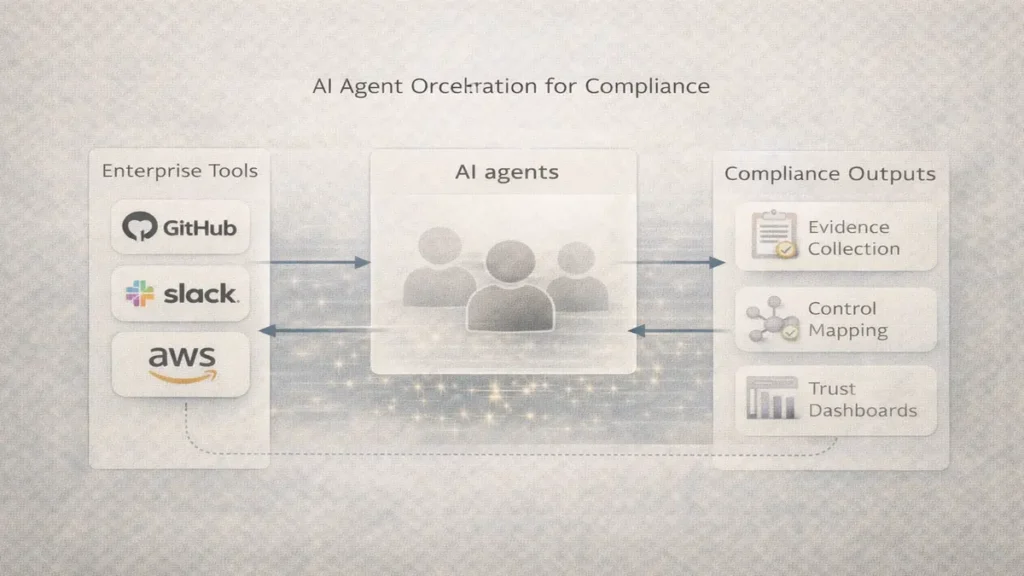
At the core of Noru’s platform is a system of autonomous AI agents that integrate directly into a company’s operational stack, including:
- GitHub
- Slack
- AWS
- Google Workspace
- identity and access systems
Once connected, the system operates across a continuous loop:
- Mapping regulatory controls to operational systems
- Collecting evidence passively from day-to-day activity
- Synchronizing compliance data in real time
- Publishing live “Trust Pages” reflecting certification status
- Identifying gaps and triggering remediation workflows
This is not incremental efficiency. It is structural replacement.
The objective is to eliminate compliance as a separate operational layer altogether — positioning compliance closer to infrastructure than software.
Why This Category Is Emerging Now
The timing reflects a convergence of two forces.
First, regulatory pressure is accelerating — particularly in Europe, where frameworks such as the European Union AI Act regulatory framework and expanding GDPR enforcement are increasing both the scope and frequency of compliance requirements.
Second, the systems being regulated have become fundamentally more dynamic.
The result is a structural bottleneck:
compliance remains one of the few layers in modern software that is not real-time
Noru is positioning itself as a system designed to close that gap — a pattern increasingly visible across AI infrastructure platforms reshaping execution layers, as discussed in our analysis of the AI startup market power shift.
A Founder Pairing Built for the Problem
The company’s leadership reflects the intersection it is targeting.
- Bip Thelin, co-founder and CEO, previously co-founded and served as CTO of Kivra
- Therese Ruth, co-founder, brings experience in regulatory affairs and financial systems alongside startup execution
The pairing combines infrastructure-scale engineering with regulatory domain expertise — a combination increasingly required as compliance moves closer to core product architecture.
Competition: From Workflow Tools to Control Layers
The compliance software market is already populated by platforms such as Vanta, Drata, Secureframe, and Sprinto.
These systems have digitized compliance workflows, but remain largely:
- rule-based
- dashboard-driven
- human-dependent
A newer cohort — including Delve and Norm AI — is beginning to incorporate deeper automation.
Noru’s positioning is narrower, and more ambitious:
compliance as autonomous infrastructure rather than assisted workflow
This reframes the competitive question.
The issue is no longer which platform manages compliance more efficiently —
but which system controls how compliance is executed within operational environments.
Signal in the Cap Table
The participation of Andreessen Horowitz (a16z) at the pre-seed stage is notable.
Scout and seed allocations at this level are typically small in capital terms, but high in signal.
They suggest early conviction not just in the company, but in the category itself.
For a company less than a year old, the involvement indicates that compliance is increasingly being viewed as a control layer within the AI-driven enterprise stack, as detailed in Tech.eu’s coverage of the Noru funding round.
A Market in Transition
The global Governance, Risk, and Compliance (GRC) market is projected to exceed $60 billion.
Much of that spend remains tied to:
- fragmented tooling
- manual verification
- audit-driven workflows
The transition underway is toward:
continuous, integrated, and automated compliance systems
This shift is already beginning to reshape how regulated companies build and ship software — aligning with broader enterprise infrastructure transitions outlined in our analysis of AI context platforms and control layers.
Noru is entering at the point where that transition is beginning to take structural shape, competing against both legacy systems and emerging AI-native platforms, as outlined on Noru’s official platform overview.
Constraints and Execution Risk
The ambition of the model introduces equally significant constraints.
Reliability
Autonomous systems must operate accurately across complex environments where errors carry regulatory consequences.
Trust
Enterprises must be willing to rely on automated systems for functions traditionally overseen by human auditors.
Competitive pressure
Incumbents are rapidly integrating AI capabilities into existing platforms, narrowing the window for differentiation.
From Reporting Layer to Execution Layer
What Noru represents is not simply a product shift.
It is a redefinition of where compliance sits within the software stack.
From:
→ compliance as reporting
To:
→ compliance as execution
In this model:
- regulatory requirements become machine-readable
- enforcement becomes embedded within workflows
- compliance becomes an always-on system
The Broader Pattern
Noru’s approach reflects a wider transformation across enterprise AI:
- copilots → autonomous agents
- tools → systems
- workflows → infrastructure
Compliance, historically one of the least automated domains, is now beginning to follow that trajectory.
The Bottom Line
Noru’s €560,000 round is unlikely to dominate headlines.
But it signals a deeper shift in how enterprises will operate under increasing regulatory pressure.
If the model proves viable, compliance will cease to be a discrete function.
It will become a continuous, embedded capability — executed by systems rather than teams.
Live Update Signal
This article will be updated as Noru expands deployments, raises additional funding, or releases product benchmarks.
Research Context
This report synthesizes verified disclosures from Tech.eu, FinSMEs, Nordic startup networks, and official company materials.