
Manufacturing has never lacked data.
It has lacked usable expertise.
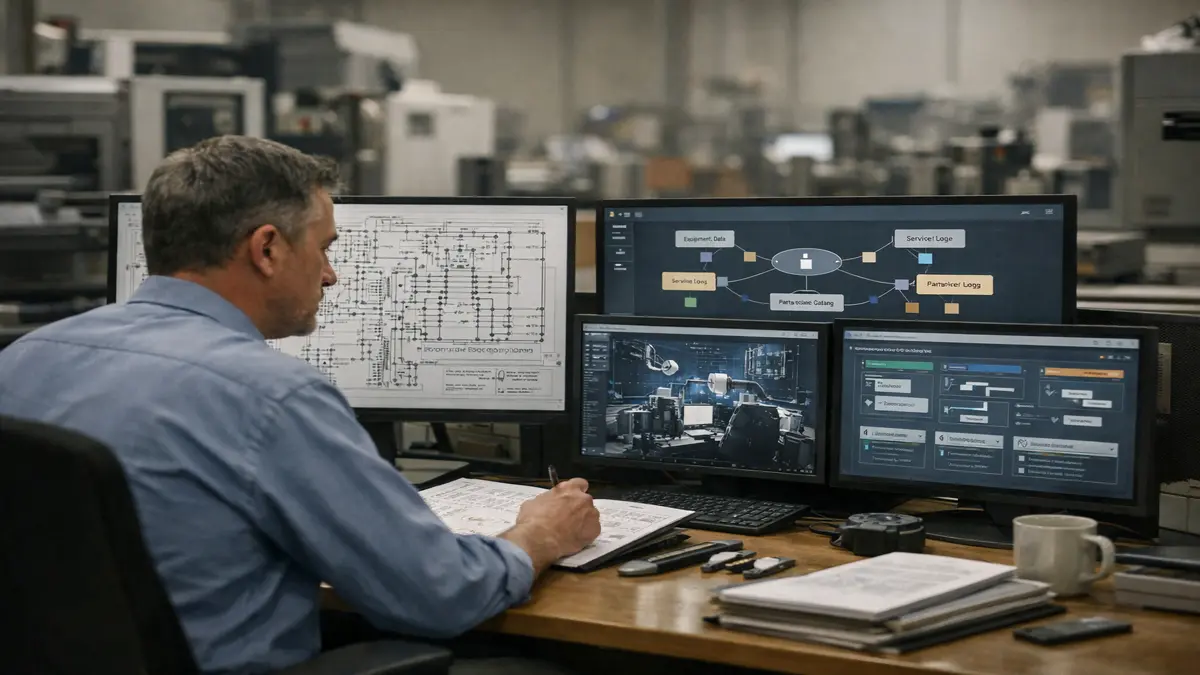
Technical documents, schematics, service logs, and tribal knowledge sit fragmented across systems, departments, and retiring workforces. AI promised automation, but generic models struggle to interpret domain-specific visual and technical context.
That gap is where Circuit is positioning itself.
The Austin-based startup is building an AI platform that converts engineering documentation into an operational knowledge layer, enabling specialized agents to automate quoting, diagnostics, field service, and onboarding. Rather than competing on model capability, Circuit targets a different problem: how expertise moves inside industrial organizations.
This reframes industrial AI from intelligence generation to expertise distribution.
The Structural Problem Industrial AI Has Faced
Enterprise AI adoption accelerated fastest in software workflows. Manufacturing remained constrained by complexity.
Technical work depends on:
• CAD and schematics
• Equipment manuals
• Bills of materials
• Historical service data
• Undocumented operator knowledge
These inputs are multimodal, fragmented, and often private. Generic AI systems can summarize text but struggle to reason across technical diagrams, visual identifiers, and procedural context.
As product complexity rises and experienced workers retire, the bottleneck shifts from automation to knowledge continuity.
Industrial AI therefore requires infrastructure that treats expertise as a system rather than a document.
Circuit’s Positioning: The Knowledge Infrastructure Layer
Circuit’s platform interprets technical documentation and builds an internal knowledge graph that specialized AI agents can act on.
The design philosophy differs from horizontal copilots in three ways:
1. Visual-technical reasoning
Agents interpret diagrams, equipment labels, and engineering files alongside text.
2. Workflow execution
The system automates operational tasks such as quoting, troubleshooting, and report generation.
3. Traceability
Outputs include citations, images, and source context to build trust in high-stakes environments.
This moves industrial AI closer to decision infrastructure than productivity tooling.
The distinction matters. Productivity tools accelerate work. Infrastructure reshapes it.
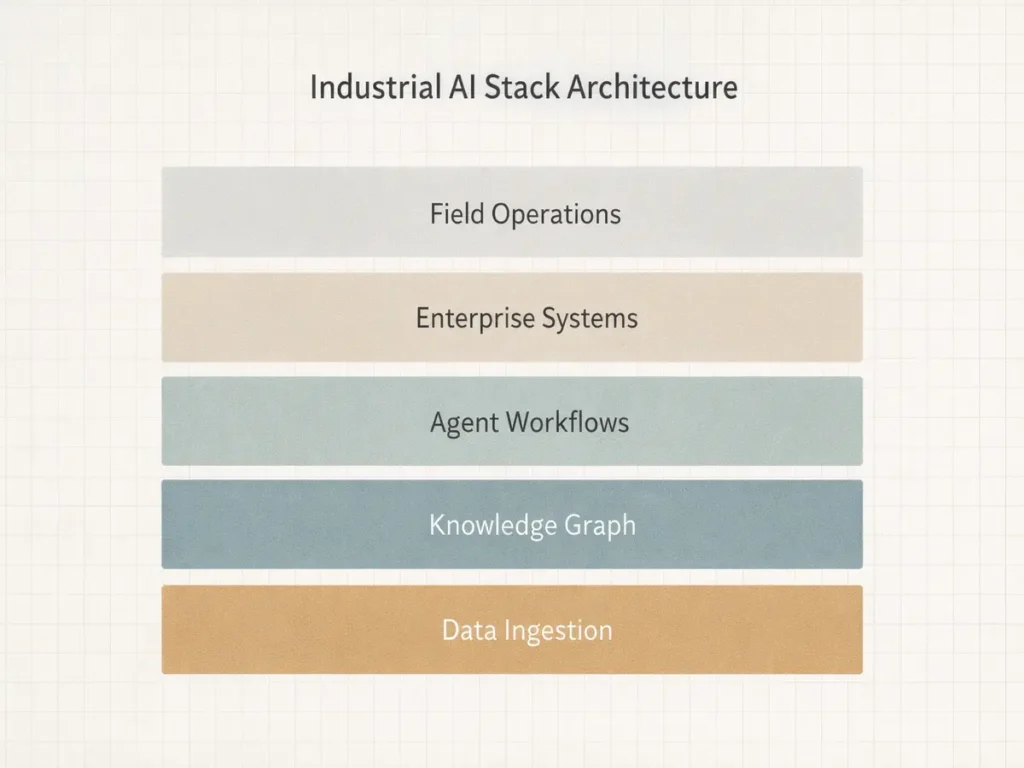
This mirrors how AI capital is shifting toward infrastructure layers rather than application velocity.
Circuit was founded in 2024 in Austin by former Silicon Labs executives including Tyson Tuttle, with early funding supporting its Molecula acquisition and enterprise pilots. The company announced a $30M angel round in February 2026, bringing total disclosed funding near $95M, though valuation remains undisclosed.
The Founders’ Advantage: Manufacturing Context
Circuit’s leadership comes from semiconductor and industrial engineering backgrounds, including executives who previously scaled Silicon Labs.
That experience informs the product thesis: the hardest part of industrial AI is not modeling language but capturing operational nuance.
Manufacturing workflows evolve through exceptions, edge cases, and undocumented fixes.
AI systems trained on public data rarely capture that layer.
By targeting private operational knowledge, Circuit is attempting to create a durable moat built on context accumulation rather than algorithmic novelty.
This mirrors earlier enterprise software shifts where systems of record became systems of intelligence. A similar pattern is visible across enterprise AI infrastructure competition where context accumulation increasingly defines defensibility.
Why the Molecula Acquisition Matters
Circuit’s acquisition of data platform Molecula signals a deeper architectural ambition.
Industrial expertise often lives in unstructured environments: emails, internal files, legacy systems.
Molecula’s capabilities in ingesting private data allow Circuit to unify those sources into a usable knowledge layer.
In effect, the company is building the ingestion pipeline required for industrial agent systems to function reliably.
That pipeline may prove more defensible than the agents themselves.
This reveals a deeper shift beneath industrial automation narratives.
Industrial AI Is Entering the Agent Phase
The broader AI ecosystem is shifting from copilots to autonomous workflows.
In industrial settings, that transition is particularly consequential.
Agent systems can:
• Diagnose equipment remotely
• Generate service documentation
• Assist field technicians
• Reduce onboarding timelines
• Improve first-time fix rates
These capabilities depend less on reasoning breakthroughs than on reliable context.
Industrial agents fail when they lack situational knowledge.
Circuit’s thesis is that knowledge infrastructure solves that constraint. Industrial AI historically struggled because expertise could not scale independently of people. Knowledge infrastructure changes that equation. Once expertise becomes indexable, organizations move from training workers to training systems. That shift compresses onboarding cycles, stabilizes service quality, and alters how productivity is measured across physical industries. This dynamic aligns with AI control planes emerging as governance infrastructure for agent-driven systems.
The Macro Tailwind: Expertise Scarcity
Manufacturing faces a demographic transition.
Retirements remove decades of tacit knowledge while product complexity increases. Training cycles for skilled roles can extend beyond a year.
AI therefore becomes a workforce multiplier rather than a cost reducer.
Circuit’s narrative aligns with broader reindustrialization themes: productivity gains without proportional hiring, localized manufacturing resilience, and margin recovery through operational efficiency.
In that framing, industrial AI becomes economic infrastructure rather than digital transformation.
The Competitive Landscape Is Misleading
Most comparisons focus on industrial AI startups building predictive maintenance or analytics platforms.
Circuit sits in a different category.
It attempts to own the layer that determines what AI systems know about the environment they operate in.
That layer resembles:
• Knowledge graphs
• Operational memory
• Documentation orchestration
• Agent context management
Historically, these coordination layers accumulate leverage quietly because every workflow depends on them.
The Contrarian Insight: Industrial AI May Be a Knowledge Race
The dominant narrative suggests frontier model progress will drive industrial automation.
A competing possibility is emerging.
Industrial advantage may depend less on who builds better models and more on who structures expertise more effectively.
If knowledge layers standardize first, they shape:
• Which agents are deployable
• How workflows are automated
• Where switching costs accumulate
• How organizations retain institutional memory
In that scenario, infrastructure vendors influence productivity without owning the underlying intelligence.
Cloud orchestration followed a similar trajectory.
Why This Matters Beyond Manufacturing
Industrial AI has historically lagged software adoption cycles.
When it accelerates, the impact tends to be structural. The shift is unfolding within a fragmenting global AI infrastructure landscape shaped by regional priorities and industrial strategy.
Manufacturing touches supply chains, energy, logistics, and defense.
Improvements in expertise scalability compound across sectors.
Circuit represents a category of startups translating frontier AI into operational continuity rather than new interfaces.
That category may define the next phase of enterprise AI adoption.
The Forward Signal
The next wave of AI competition may center on systems that preserve and distribute expertise inside organizations.
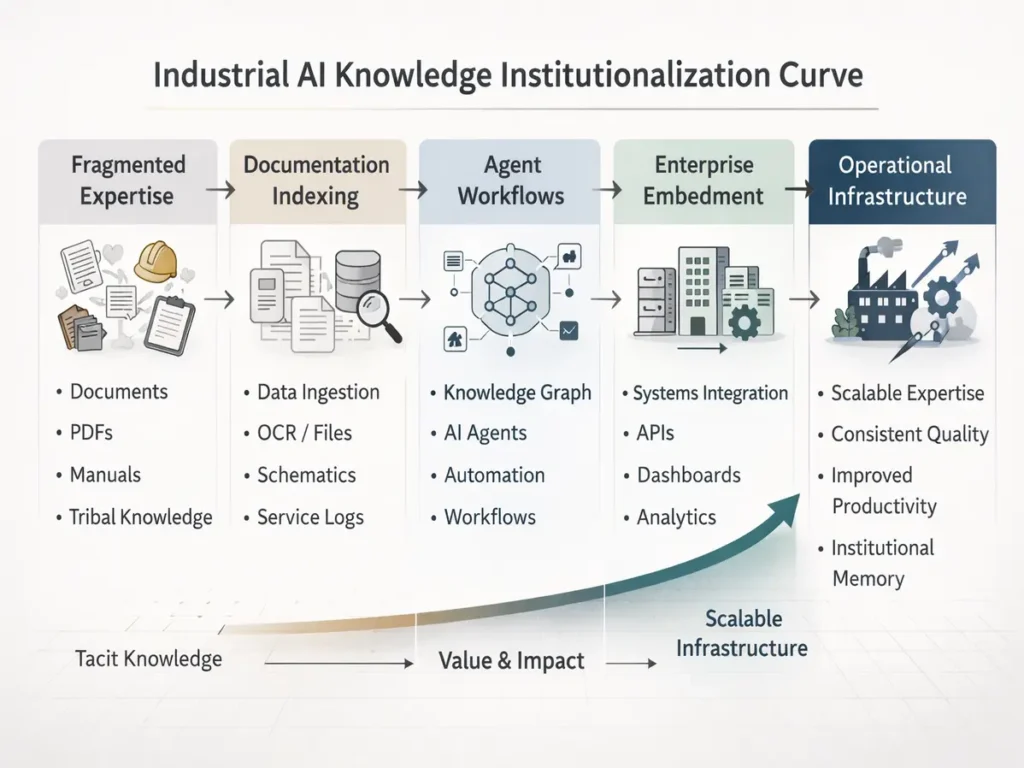
Models generate answers.
Infrastructure determines whether those answers are usable.
Circuit is betting that industrial AI’s breakthrough is not reasoning capability but contextual permanence.
If that thesis holds, the companies building knowledge infrastructure could become foundational to physical-world automation.
The most important AI layer may be the one that remembers how work is done.
Research Context: Based on company disclosures, founder background reporting, industrial AI trend analysis, and emerging agent infrastructure patterns across enterprise manufacturing.
Editorial Note: This article reflects independent analysis of structural shifts shaping industrial AI deployment rather than coverage of a single funding event.