
Inside the fastest scaling AI developer tool and what it reveals about the future of software engineering
AI coding tools are rapidly transitioning from developer productivity assistants into foundational infrastructure for software creation.
The AI coding tools market has moved from experimentation to infrastructure faster than almost any category in modern software history.
And one startup is emerging as the clearest signal of that shift.
Cursor, the AI-native code editor developed by Anysphere, has reportedly crossed $2 billion in annualized recurring revenue (ARR) as of February 2026. The milestone arrives less than three years after the company launched its product and roughly four years after its founding.
In the process, Cursor has become one of the fastest scaling software companies ever.
But the significance of the $2B number goes beyond a single startup.
It reveals a deeper structural transition underway in software development itself.
From Coding Assistants to Agentic Development
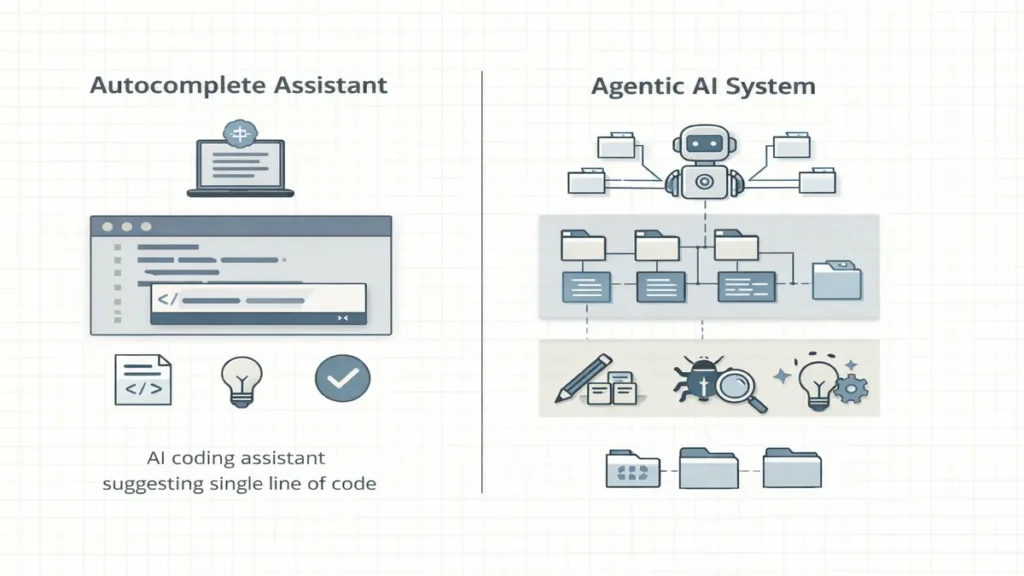
The first wave of AI coding tools focused primarily on autocomplete.
Products such as GitHub Copilot introduced developers to AI-assisted programming by suggesting individual lines or blocks of code.
Cursor represents a different architectural approach.
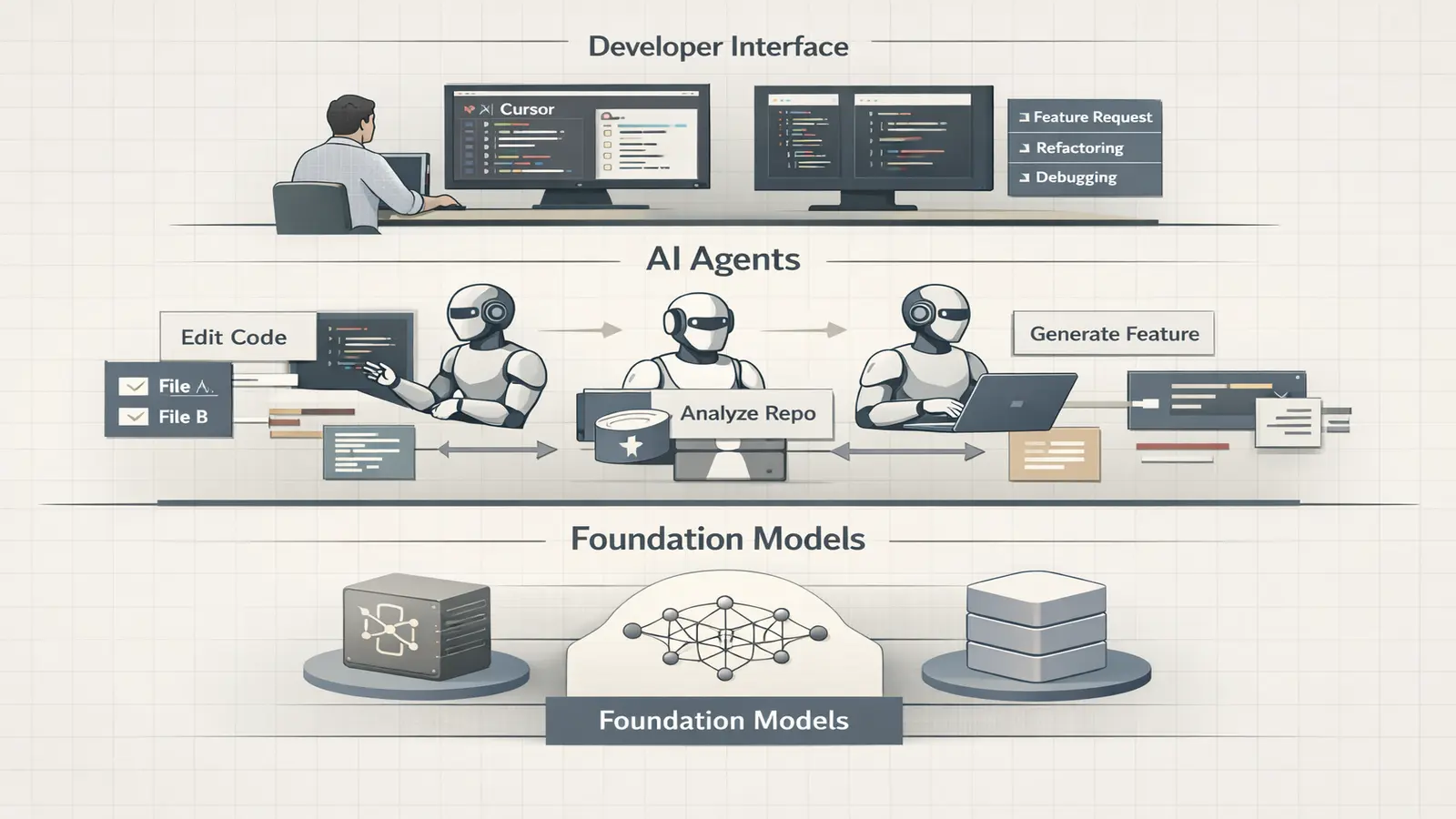
Instead of simply generating snippets, the platform is designed around agentic workflows—AI systems capable of understanding entire codebases and executing complex development tasks autonomously.
These capabilities include:
- multi-file code editing
- full codebase navigation and context awareness
- automated refactoring and restructuring
- natural-language feature generation
Rather than functioning as a productivity plugin layered onto existing tools, Cursor attempts to operate as a development environment where AI performs large portions of the programming process itself.
The distinction is subtle but important.
Autocomplete accelerates coding.
Agentic systems begin to reshape how software is actually produced. This shift reflects the broader emergence of AI agent infrastructure� powering next-generation software systems.
One of the Fastest Revenue Curves in SaaS History
Cursor’s growth trajectory is extraordinary even by the standards of high-growth software startups.
Public reports suggest the company reached:
- $100M ARR in early 2025
- $500M ARR by mid-2025
- $1B ARR by November 2025
- $2B ARR by February 2026
Doubling revenue from $1B to $2B in roughly three months places Cursor among the fastest scaling SaaS companies ever recorded.
The growth has been fueled by both individual developer adoption and a rapid expansion into enterprise customers.
Approximately 60% of Cursor’s revenue now comes from enterprise contracts, including major technology companies and Fortune 500 organizations adopting AI-assisted development workflows.
The shift from developer tool to enterprise infrastructure has dramatically expanded the platform’s revenue potential. The transformation mirrors how enterprise AI infrastructure� platforms are rapidly becoming foundational layers in modern software stacks.
The Startup Behind Cursor
Cursor is developed by Anysphere, a company founded in 2022 by four MIT alumni:
- Michael Truell
- Sualeh Asif
- Arvid Lunnemark
- Aman Sanger
The company launched Cursor in 2023 with a focus on developer productivity.
Initial adoption came primarily from individual engineers experimenting with AI-assisted coding.
But by 2025 the platform began shifting toward enterprise deployments as organizations realized the productivity gains AI coding tools could deliver across entire engineering teams.
That transition accelerated Cursor’s growth dramatically.
A Venture Capital Frenzy
Investors have moved aggressively to capture exposure to the AI developer tools category.
Cursor’s funding trajectory reflects the intensity of that interest.
Key milestones include:
- Series A (2023): $60M at ~$400M valuation
- Series B (2024): ~$2.6B valuation
- Series C (2025): $900M raised at ~$9.9B valuation
- Series D (2025): $2.3B raised at ~$29.3B valuation
Total capital raised now exceeds $3.3 billion, making Anysphere one of the best-funded startups in the AI tooling ecosystem.
At its latest valuation, the company trades at roughly 15× ARR—a premium multiple, but significantly lower than the peak valuations seen across AI startups during the 2024–2025 capital surge.
That compression reflects a broader AI capital repricing� as investors shift focus from narrative expansion toward infrastructure durability.
Why Developer Tools Become Infrastructure Faster Than Other Software
Developer tools historically evolve into infrastructure faster than most software categories.
The reason is simple: improvements in developer productivity compound across entire technology ecosystems.
When a new tool saves developers even a small amount of time, the effect multiplies across:
- engineering teams
- product releases
- infrastructure maintenance
- software deployment cycles
This dynamic explains why developer platforms such as GitHub, Docker, and Kubernetes evolved from niche tools into foundational components of the global software stack.
AI developer platforms may follow a similar trajectory.
If agentic development environments significantly reduce the time required to build software, they could become a permanent layer in the technology infrastructure stack.
The AI Coding Market Is Becoming a Platform Layer
AI developer tools are increasingly viewed as a foundational layer in the modern software stack.
Historically, programming languages, frameworks, and IDEs defined how software was built.
AI coding platforms are beginning to reshape that architecture by embedding intelligence directly into development workflows. A similar coordination layer is emerging in enterprise software through context orchestration platforms� that connect data, models, and agents.
Instead of writing every line manually, developers increasingly supervise systems capable of generating, refactoring, and debugging code autonomously.
This shift mirrors earlier infrastructure transitions in computing—from manual server management to cloud orchestration.
AI coding platforms may represent the next major abstraction layer in software engineering.
If current adoption trends continue, AI developer platforms could become the default interface for building software within the next decade.
Competition Is Intensifying
Cursor’s rapid growth has placed it at the center of an increasingly competitive AI coding ecosystem.
Major competitors include:
- GitHub Copilot (Microsoft)
- Claude Code (Anthropic)
- Replit AI
- Lovable
- Bolt and Base44
The emergence of platforms like Cursor, GitHub Copilot, Claude Code, and Replit AI signals the rapid formation of an AI-native developer tooling ecosystem, alongside new approaches such as the vibe coding movement� that aim to simplify software creation through natural language prompts.
AI Coding Platforms: Strategic Positioning
| Platform | Core Focus | Target Users | Strategic Layer |
|---|---|---|---|
| Cursor | AI-native development environment | professional developers | agentic development interface |
| GitHub Copilot | AI coding assistant | existing GitHub users | developer productivity layer |
| Claude Code | model-driven coding workflows | AI-first developers | model-centric development |
| Replit AI | cloud development platform | startups and teams | collaborative development |
| Lovable | prompt-based app creation | non-technical builders | AI product creation layer |
This fragmentation suggests the AI developer ecosystem is still forming, with different platforms competing to control the interface through which software is created.
The Emerging AI Developer Stack
The rise of platforms like Cursor suggests that software development may be reorganizing around a new layered architecture.
Instead of traditional development stacks centered on frameworks and IDEs, AI-native software creation may increasingly revolve around three infrastructure layers:
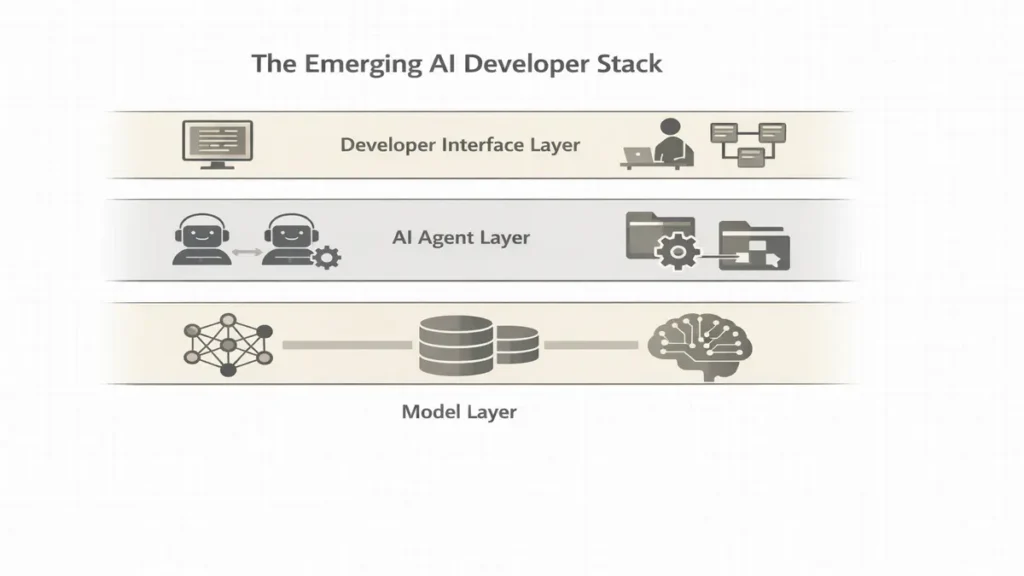
Model layer
Foundation models capable of generating and reasoning about code.
Agent layer
AI systems capable of executing development tasks autonomously across repositories.
Developer interface layer
AI-native development environments that coordinate interactions between developers and intelligent agents.
Cursor operates primarily at the interface layer, where developers supervise AI agents capable of generating and modifying code.
As these layers mature, software development may increasingly resemble an orchestration system rather than a manual programming workflow.
The Cost Problem Beneath the Growth
Despite Cursor’s explosive revenue trajectory, the economics of AI coding platforms remain complex.
Many AI developer tools rely heavily on foundation models from companies such as OpenAI and Anthropic.
This dependency can create significant compute costs.
Some analysts estimate that certain AI products currently operate with negative gross margins, particularly when token consumption rises quickly across large engineering teams.
Users have also raised concerns about cost predictability when large codebases trigger heavy AI usage.
This challenge highlights a broader tension across the AI developer ecosystem: the faster AI tools scale, the more critical infrastructure efficiency becomes.
The Strategic Risk: Platform Dependence
Another structural risk facing Cursor is platform dependence.
Because many AI coding platforms rely on third-party models, they occupy an intermediate layer in the software stack.
If model providers eventually integrate advanced coding capabilities directly into their own products, the independent tooling layer could face pressure.
This pattern has appeared repeatedly in the history of software platforms.
Startups build valuable interface layers.
Then infrastructure providers move up the stack.
Cursor’s long-term defensibility may therefore depend on building deeper workflows and enterprise integrations similar to emerging AI control planes� that coordinate complex AI systems.
The Contrarian View: AI Coding May Expand Software Complexity
The optimism surrounding AI coding tools assumes software creation will become dramatically simpler.
But there is a counterargument.
If AI dramatically lowers the cost of generating code, organizations may begin producing vastly larger software systems than before.
Instead of reducing complexity, AI could increase the total volume of software infrastructure that must be maintained.
In that scenario, AI developer tools would not eliminate engineering work.
They would expand the scale of digital systems, increasing the importance of tools capable of coordinating large codebases.
From that perspective, agentic development platforms like Cursor may not replace developers.
They may instead become the operating systems for future software ecosystems.
Editorial Takeaway
Cursor’s rise illustrates how quickly AI products can evolve from experimental tools into critical infrastructure.
Crossing $2 billion in annualized revenue in just a few years is not simply a startup milestone.
It is evidence that AI-assisted software development is moving into the mainstream.
The long-term winners in this category will likely be the platforms that move beyond code suggestions toward agentic systems capable of coordinating entire development workflows.
If AI developer platforms continue advancing toward agentic autonomy, the software creation stack may reorganize around orchestration rather than manual programming.
In that world, the most valuable platforms will not simply assist developers—they will coordinate the entire development lifecycle.
Cursor’s growth suggests that transition may already be underway.
Research Context
This article synthesizes reporting from Bloomberg, TechCrunch, venture capital research platforms, and developer ecosystem analysis alongside publicly available company disclosures. The analysis also incorporates broader industry trends surrounding AI coding platforms, agentic development systems, and enterprise developer infrastructure.
Editorial Note
This article reflects independent analysis by TechFront360 of the rapidly evolving AI developer tooling market and the broader implications of agentic AI systems for software development infrastructure.