
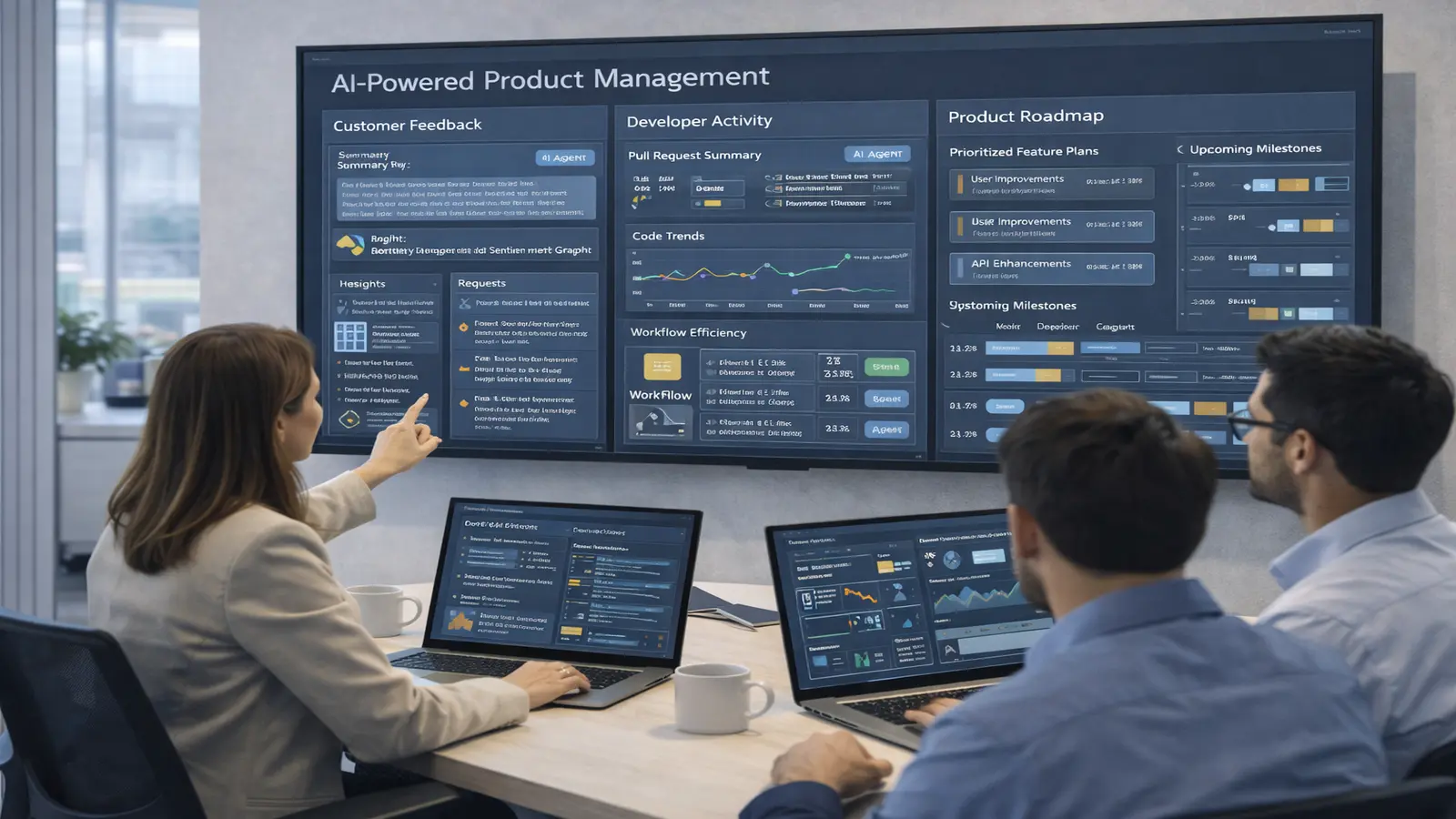
Inside Aligno, the AI platform attempting to automate one of the most overlooked decision layers in the modern software stack.
SEATTLE — March 15, 2026
A Seattle startup called Aligno is attempting to automate one of the most fundamental — and least automated — roles in the modern software industry: product management.
The company, founded in 2025 by Damien Wayne and Charith Lanka, is developing an artificial-intelligence platform designed to function as what the founders describe as an “AI product manager.” Aligno’s software analyzes customer feedback, product usage data, and engineering codebases to automatically generate product roadmaps, feature priorities, and development tasks.
The startup is currently raising a $750,000 pre-seed funding round, which industry observers estimate could value the company between $4 million and $7 million post-money.
The Intelligence Briefing
- Startup: Aligno
- Category: AI product management platform
- Funding: Raising $750K pre-seed round
- Valuation estimate: ~$4M–$7M post-money
- Founders: Damien Wayne (CEO), Charith Lanka (Co-Founder)
- Location: Seattle
- Strategic positioning: “Cursor for Product Management”
- Key capability: AI agents synthesize product feedback, meetings, and codebase context to generate prioritized roadmaps and engineering tickets
The Missing Layer in the AI Software Factory
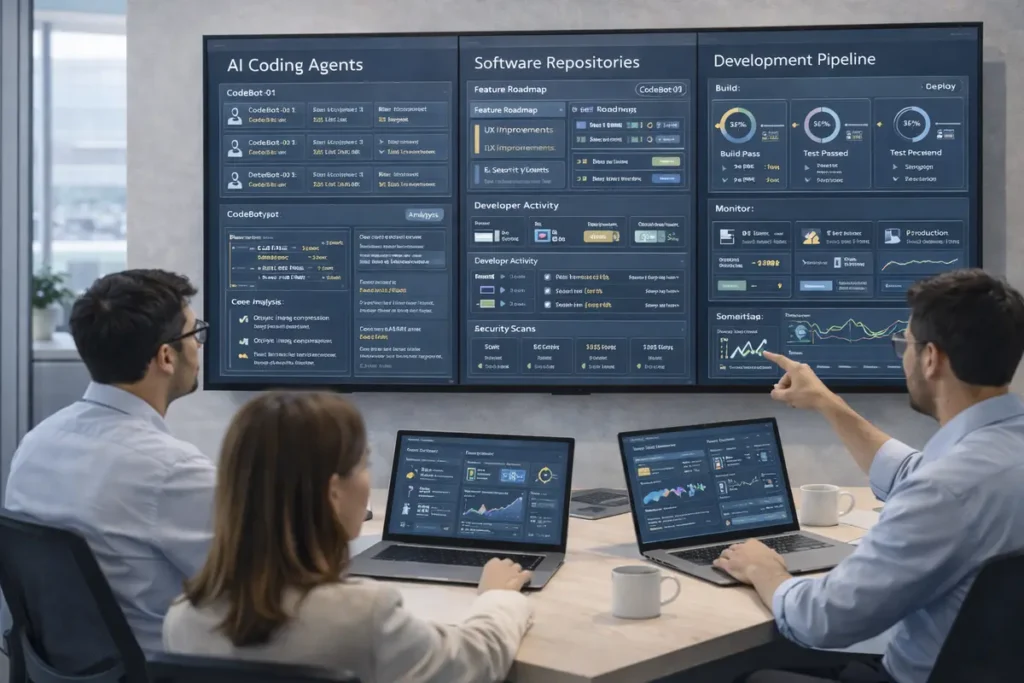
Artificial intelligence is rapidly automating large portions of the software development lifecycle.
Coding agents can already generate production-ready code. Automated testing systems validate software at scale. Continuous deployment pipelines push new features to users within minutes.
Yet one fundamental bottleneck remains stubbornly human: deciding what software should be built in the first place.
That responsibility has traditionally belonged to product managers — professionals responsible for interpreting customer feedback, prioritizing features, and translating business goals into engineering roadmaps.
Aligno believes that decision layer can also be automated.
The platform ingests customer interviews, support tickets, internal conversations, and software repositories. It then synthesizes those inputs into prioritized product roadmaps and engineering tasks.
In an era where coding agents increasingly handle the implementation layer, Aligno is attempting to automate the step that comes immediately before it: deciding which code should exist at all.
This shift is happening alongside the rapid rise of agentic developer infrastructure platforms, a trend explored in Cursor’s $2B ARR Explosion Signals the Arrival of Agentic Developer Infrastructure.
Turning Product Decisions Into Data
Product management has historically relied on a mix of qualitative research, internal debate, and intuition.
Aligno attempts to transform that process into something more systematic.
The platform integrates with many of the tools used by modern product teams, including:
- Zoom recordings of customer interviews
- Slack conversations
- Support tickets from platforms such as Zendesk
- Sales call transcripts
- GitHub code repositories
- Project management systems including Jira and Linear
Once connected, AI agents analyze these data streams to identify recurring customer problems, feature requests, and potential technical constraints.
The result is a continuously updated map of product demand — a structured representation of what customers want and how feasible those requests might be to build.
The platform then converts that analysis into prioritized roadmaps, product requirement documents, and engineering tickets.
In practical terms, the system automates much of the synthesis work that traditionally consumes large portions of a product manager’s time.
The rise of these decision-automation systems mirrors broader capital flows across the AI ecosystem, including the infrastructure and agent startups discussed in Inside the $3B AI Funding Wave Reshaping Infrastructure, Agents, and Robotics.
The Codebase Awareness Advantage
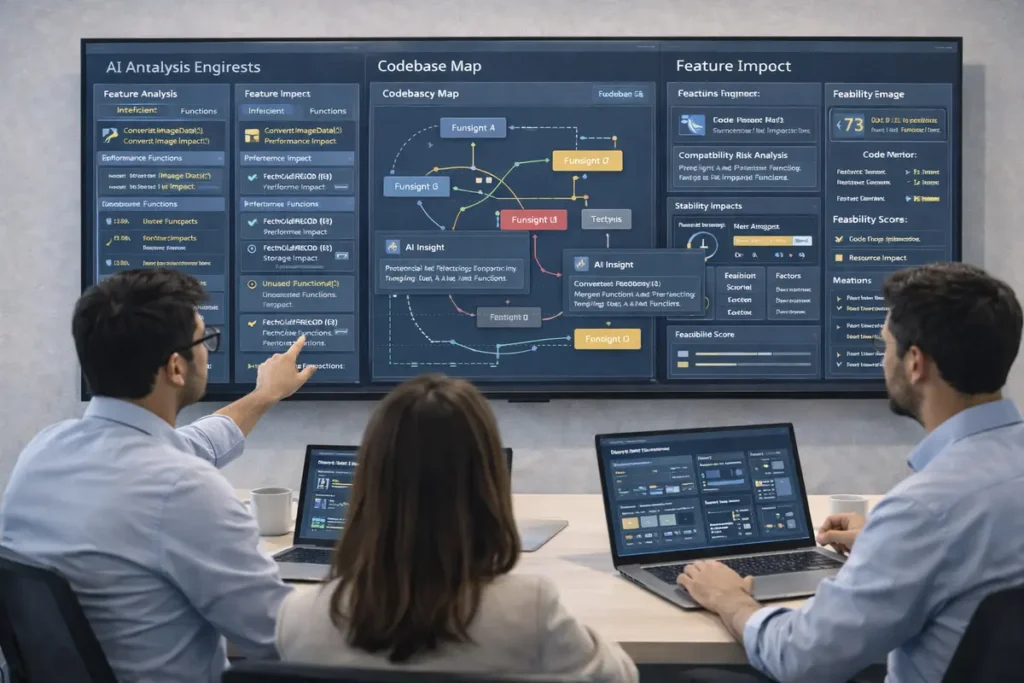
Aligno’s most distinctive feature is something rarely found in product-management software: direct awareness of the codebase itself.
Traditional roadmap platforms analyze customer feedback but have little understanding of the underlying architecture of the product.
Aligno attempts to close that gap.
By integrating directly with GitHub repositories, the platform can examine code structures and estimate how difficult it would be to implement specific features.
In product demonstrations released by the company, the system identifies which files would need to change to implement a requested feature and estimates the engineering effort required.
This capability allows Aligno to evaluate product ideas not only based on customer demand but also on technical feasibility.
The combination of customer insight and engineering awareness could become the company’s most defensible advantage as the product matures.
A similar convergence between enterprise context and AI workflows is also reshaping modern enterprise AI platforms, as explored in The Invisible Infrastructure Layer Reshaping Enterprise AI.
The MCP Integration Strategy
Another key component of Aligno’s approach involves a technology known as the Model Context Protocol (MCP).
The protocol enables AI systems to exchange structured contextual information.
In practice, this allows Aligno to send full product context — including customer feedback, priority scoring, and technical requirements — directly into coding agents such as Cursor or Claude Code.
The result is a dramatically simplified workflow.
Instead of a product manager writing specifications and handing them to engineers, the AI platform generates those specifications automatically and passes them directly to coding agents capable of implementing the feature.
If widely adopted, such workflows could significantly reduce the traditional friction between product teams and engineering teams.
Competing With an Entire Industry
Aligno is entering a market already populated by well-established product-management platforms.
Tools such as Productboard, Aha!, and Canny have become standard infrastructure for many product teams.
These systems collect customer feedback and help teams organize roadmaps, but they still depend heavily on manual interpretation.
Product managers must analyze feedback, prioritize features, and translate those priorities into engineering work.
Aligno’s approach is fundamentally different.
Rather than assisting product managers, the platform attempts to automate significant portions of the role itself.
Other AI-driven tools — including research platforms such as Dovetail and feedback-analysis products like Savio — focus primarily on extracting insights from customer data.
Aligno’s ambition is broader: creating a unified system capable of understanding both what customers want and how software is built.
Early Signals From the Market
Despite its small team and early stage, Aligno has begun attracting attention in developer and startup communities.
The company recently launched its product on Product Hunt, describing itself as “the Cursor for Product Management.”
That framing reflects a larger trend within the AI industry.
Over the past year, a wave of startups has emerged building what investors describe as vertical AI agents — software designed to automate specific professional roles.
Coding agents, legal research assistants, and automated customer support systems are among the earliest examples.
Aligno is attempting to bring that same approach to product management.
Where Aligno Fits in the AI Stack
The emergence of startups like Aligno reflects a broader restructuring of the artificial-intelligence industry.
Over the past several years, venture capital has concentrated heavily on three layers of the AI technology stack:
Infrastructure
Companies building the compute platforms required to train and run AI systems.
Model developers
Organizations creating increasingly powerful machine-learning models.
Execution tools
Platforms that use those models to perform specific tasks such as coding, research, or analysis.
Aligno represents a potential fourth layer within that architecture: decision intelligence.
Instead of executing tasks, the platform focuses on the strategic decisions that determine which tasks should exist in the first place.
This restructuring of the AI stack is also reshaping global competition between technology ecosystems, a trend explored in The Global AI Map Is Fragmenting Into Competing Technology Blocs.
The Risks Ahead
Despite the excitement surrounding AI automation, Aligno remains an early-stage company facing several challenges.
The product is still evolving, and many of its capabilities have yet to be tested at enterprise scale.
Product management also involves significant strategic judgment — including market positioning, competitive analysis, and internal organizational dynamics — that may be difficult for AI systems to interpret accurately.
Competition is another factor.
Established product-management platforms are already incorporating AI features, and larger developer-tool companies could easily expand into the category.
The Road Ahead
Even with those uncertainties, Aligno’s core idea reflects a deeper transformation underway across the technology industry.
Artificial intelligence is no longer limited to automating individual tasks.
It is increasingly reshaping entire decision-making workflows.
If coding agents are transforming how software is written, platforms like Aligno may determine how software decisions themselves are made.
For product managers, that shift could represent either a powerful new assistant — or the beginning of a fundamental evolution in the role itself.
Live Update Signal
This article may be updated as Aligno’s funding round progresses or new product announcements emerge.
Research Context
This analysis synthesizes publicly available information from Aligno’s product materials, developer community discussions, Product Hunt launches, and industry commentary on emerging AI product-management platforms.
Editorial Note
TechFront360 covers artificial intelligence infrastructure, startup ecosystems, venture capital flows, and the strategic technology shifts shaping the global AI economy. Our reporting focuses on the systems, founders, and capital shaping the next generation of computing.