
SOFIA — March 16, 2026
For decades, global supply chains have been powered by one of the least sophisticated pieces of infrastructure in modern business: email.
Purchase orders, shipment confirmations, invoice discrepancies, and delivery delays still move through endless email threads between procurement teams and suppliers. Even inside companies running advanced enterprise resource planning systems such as SAP or Oracle, the operational reality often looks closer to an overloaded Outlook inbox than a modern digital platform.
That inefficiency is exactly the problem Nick Gospodinov believes artificial intelligence can solve.
Gospodinov is the founder of Mandel AI, a startup building autonomous AI agents designed to monitor and manage supplier communication across global supply chains. The company recently announced a €3.6 million seed round backed by Y Combinator, Category Ventures, Ritual Capital, and e2vc, positioning it among a new generation of startups attempting to automate the operational layer of international trade.
The company represents a growing class of “agentic AI” startups attempting to automate operational roles traditionally handled through email threads, spreadsheets, and manual workflows.
The emergence of startups building specialized operational AI agents reflects a broader shift across the artificial-intelligence ecosystem, explored in Inside the $3B AI Funding Wave Reshaping Infrastructure, Agents, and Robotics.
This wave of automation is part of a larger transition in enterprise technology, where AI startups are increasingly targeting operational layers that were historically overlooked — a dynamic explored in How AI Startups Are Reshaping Market Power.
But Mandel’s core idea is deceptively simple:
Turn the supply-chain inbox into an autonomous system.
The Hidden Operating System of Global Trade
Most procurement teams operate inside a fragmented workflow.
Enterprise software platforms manage structured data — inventory levels, purchase orders, and contracts — but the actual coordination of those transactions still happens through email.
Suppliers confirm quantities through attachments.
Logistics partners notify delays through long message threads.
Invoices arrive as PDFs that must be reconciled manually.
The result is an operational blind spot between formal systems of record and real-world communication.
“Every supply chain system was built to track what happened,” Gospodinov said when announcing Mandel’s funding.
“None were built to read and act on what’s happening right now.”
That gap becomes particularly costly in industries where supply disruptions can ripple through entire production lines.
Manufacturers in aerospace, pharmaceuticals, and complex industrial production — some of Mandel’s earliest customers — often rely on thousands of suppliers across dozens of countries. A delayed shipment or missing component can halt production worth millions of dollars per day.
In theory, enterprise resource planning systems should provide visibility. In practice, the most important signals still arrive through emails written by humans.
Mandel’s thesis is that AI agents can become the operational interface between those messages and the structured systems companies already use.

Building an AI Layer for Procurement
Mandel’s software sits on top of existing enterprise tools rather than replacing them.
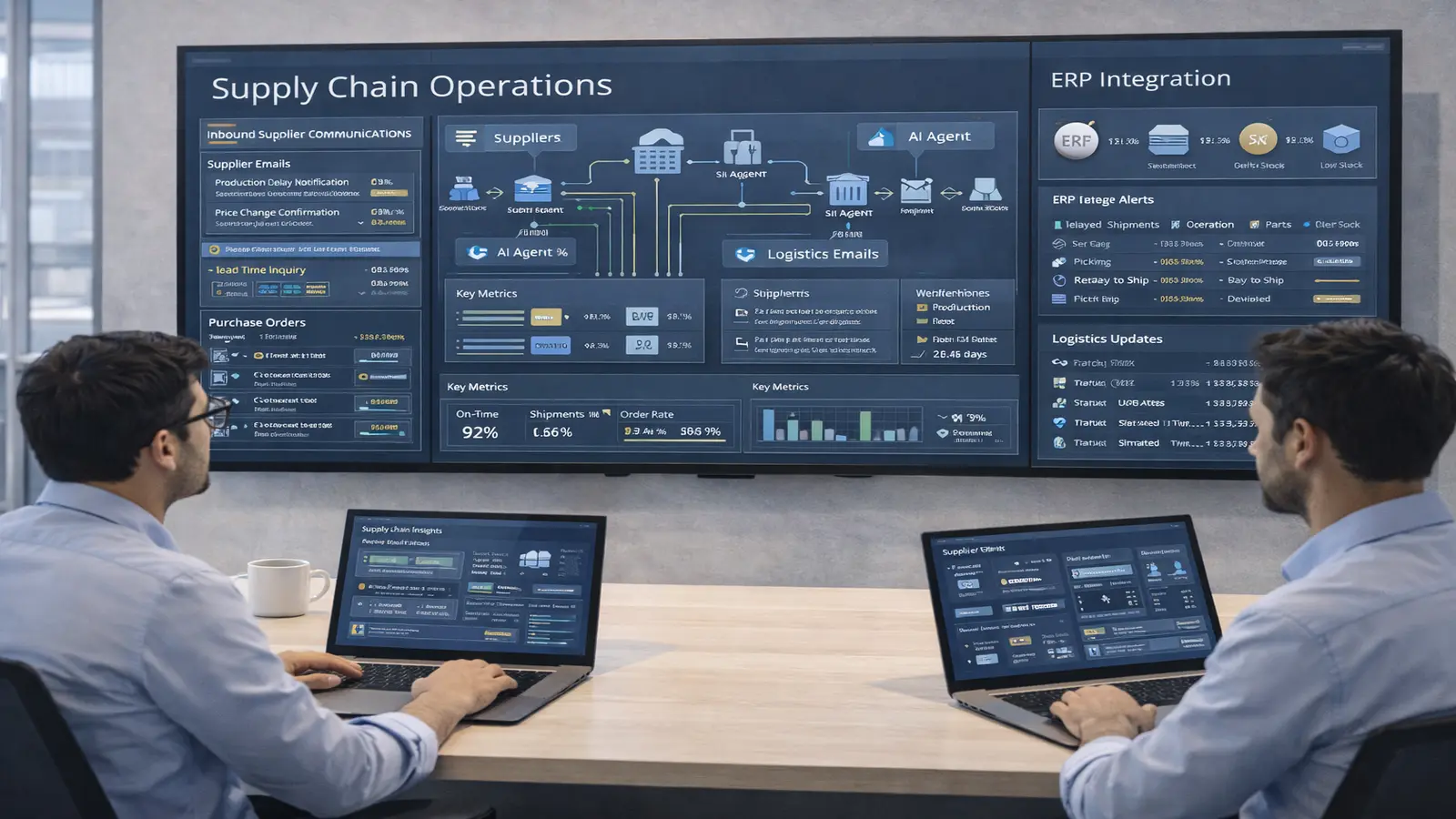
The system connects to company inboxes and ERP platforms and begins reading supplier communication in real time.
The AI agents can then:
- Extract purchase orders, invoices, and confirmations from supplier emails
- Reconcile supplier updates with ERP records
- Automatically email suppliers requesting missing information
- Detect delivery risks and escalate disruptions
- Flag discrepancies between invoices and purchase orders
The platform effectively converts supplier communication into structured operational data.
Instead of procurement teams manually checking hundreds of messages each day, the AI agents operate continuously — monitoring conversations and updating internal systems as events occur.
According to the company, Mandel’s customers already process hundreds of supplier emails per day, and the platform has handled communication linked to more than €920 million in material spend.
The implication is not simply automation but scale.
A procurement manager responsible for dozens of suppliers might suddenly oversee hundreds without adding additional staff.
From YC Startup to Global Supply Chain Software
Mandel AI emerged from Y Combinator’s Summer 2023 batch, one of the world’s most influential startup accelerators.
The rise of YC-backed AI startups reflects a broader trend toward agent-driven enterprise software, a shift also explored in The Startup Building the “Cursor for Product Managers”.
The company began with a small founding team in Sofia, Bulgaria, while targeting manufacturers across North America and Europe.
Like many modern AI startups, Mandel launched with a remarkably lean organization. YC’s public startup directory listed only two employees during the accelerator program.
Yet the company has already achieved traction unusual for such a small team.
The platform’s early adoption reflects a broader trend across enterprise software: AI agents are increasingly being deployed to automate operational roles previously handled by human staff.
Sales teams now rely on conversation-analysis platforms such as Gong.
Legal departments increasingly use AI research systems like Harvey.
Finance teams automate expense workflows with tools such as Ramp.
The broader shift toward AI-driven automation across industries is also reshaping startup economics, as explored in The AI Startup That Doesn’t Look Like a Startup.
Mandel’s ambition is to bring that same automation to procurement and supply-chain operations.
The Rise of “Inbox Automation” Startups
Mandel’s emergence is part of a much larger technological shift.
A growing number of startups are building AI systems that operate directly inside email and messaging workflows.
Rather than forcing companies to adopt entirely new software platforms, these startups design AI agents that observe and act within existing communication channels.
In supply chains, that approach is particularly powerful because email remains the default medium for coordination.
Traditional supply-chain software companies — including large enterprise vendors — historically focused on planning, forecasting, and logistics optimization.
But they largely ignored the messy communication layer where many operational disruptions originate.
The new generation of startups sees that chaos as an opportunity.
Several companies are now attempting to automate the “email-to-ERP” workflow.
Some focus on extracting invoices or purchase orders from supplier messages. Others build broader orchestration platforms that manage procurement approvals and supplier relationships.
Mandel’s differentiator lies in its proactive approach.
The system not only reads supplier emails but also initiates communication when information is missing or delivery risks emerge.
In effect, the software becomes an autonomous participant in supply-chain conversations.
A New Layer in the AI Economy
The rise of companies like Mandel highlights a broader transformation underway in enterprise technology.
The first wave of artificial-intelligence startups focused on building foundation models and cloud infrastructure.
The second wave concentrated on productivity tools — coding assistants, research systems, and chat interfaces.
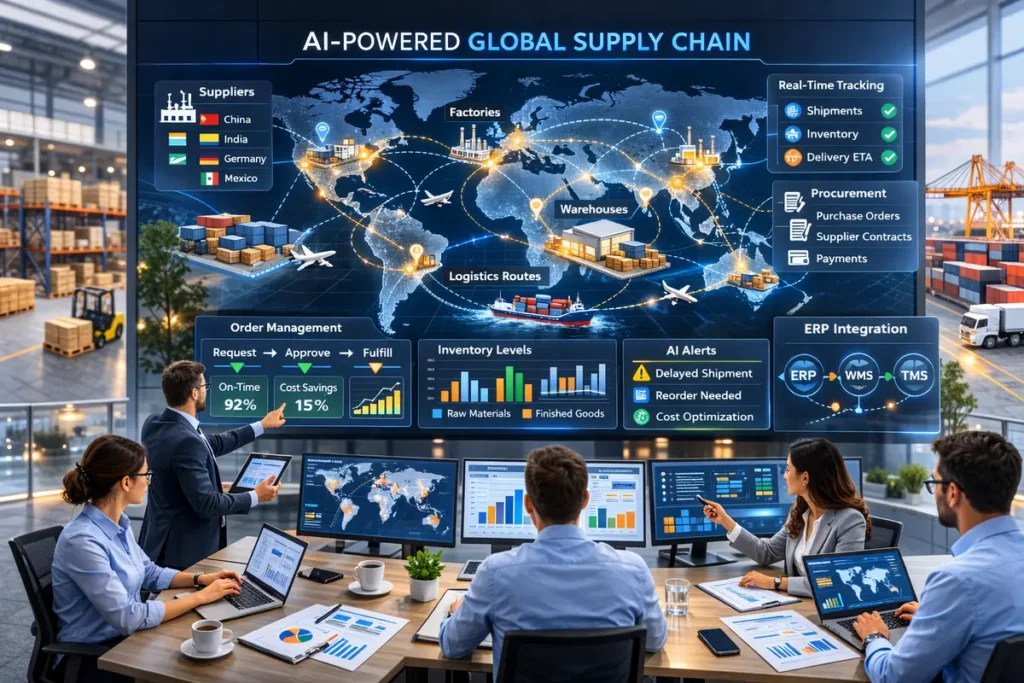
The newest wave is targeting operational workflows embedded inside traditional industries.
Manufacturing, logistics, procurement, and compliance represent enormous markets where automation has historically lagged behind.
For founders like Gospodinov, the opportunity lies in transforming everyday operational friction into structured digital systems.
If successful, Mandel’s agents could become part of the invisible infrastructure managing global supply chains.
Instead of humans constantly monitoring inboxes for critical updates, AI systems would detect disruptions automatically and coordinate responses across suppliers, logistics partners, and internal teams.
The long-term implication is profound.
Supply chains — long considered one of the most complex and opaque parts of the global economy — may eventually operate with the same real-time intelligence that modern software companies apply to their internal systems.
For now, Mandel remains an early-stage startup with a small team and ambitious goals.
But its premise reflects a simple insight about modern business infrastructure:
Sometimes the most important software opportunities hide inside the tools everyone already uses.
In global supply chains, that tool is still email.
Live Update Signal
This article may be updated as Mandel AI expands its funding round, releases new product capabilities, or announces additional enterprise customers.
Research Context
This report synthesizes information from company materials, Y Combinator startup listings, investor announcements, and reporting from European startup publications covering Mandel AI’s seed funding round and product strategy.