
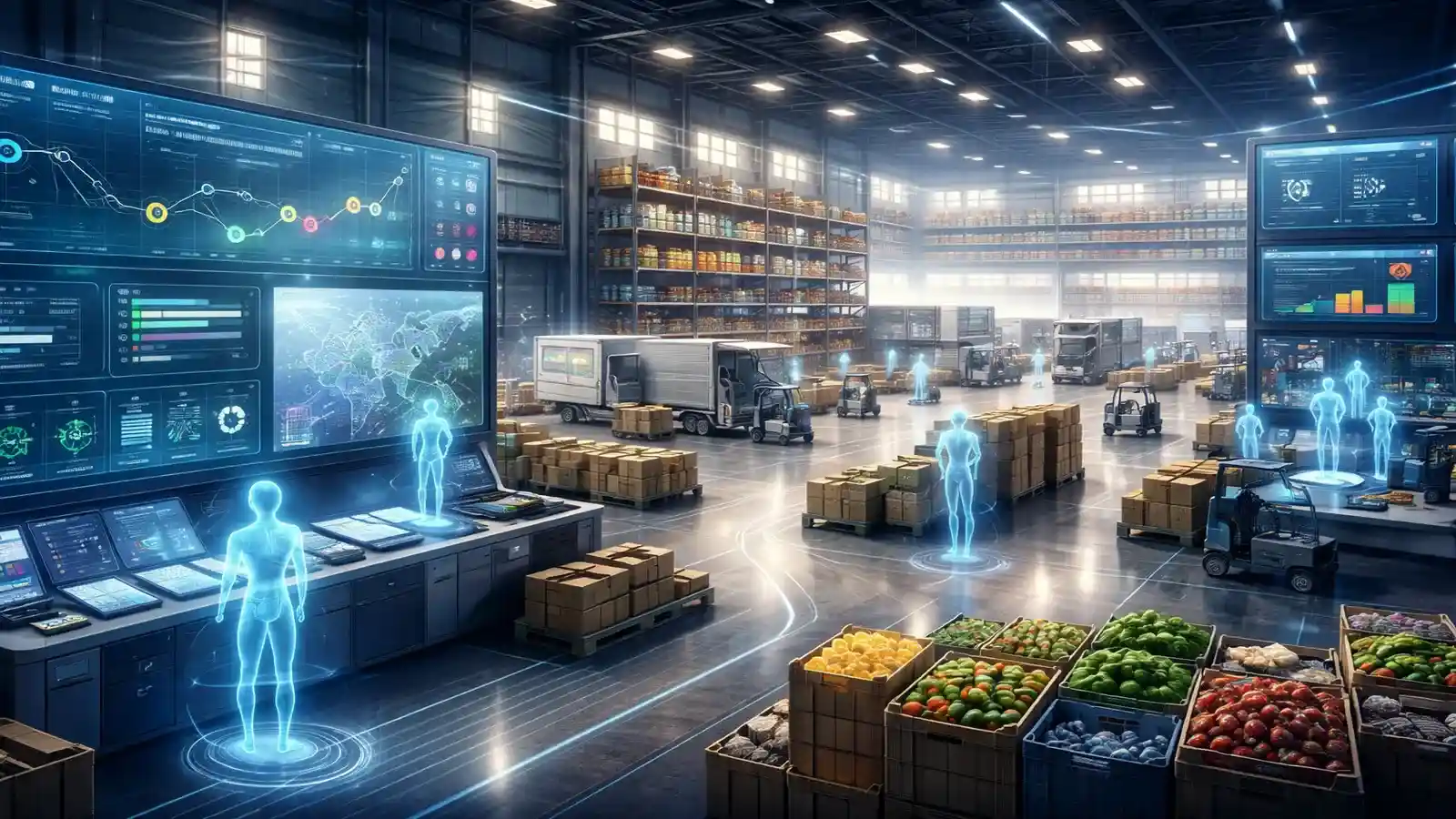
Inside the AI-native platform deploying autonomous agents to automate one of the least digitized infrastructure layers of the global economy.
NEW YORK — Artificial intelligence is rapidly moving beyond chatbots and developer tools into a new frontier: the automation of operational industries that historically relied on manual coordination and legacy software systems.
That transition is beginning to reshape sectors such as logistics, manufacturing, and supply chains — industries that represent enormous economic value but remain technologically underdeveloped.
Anchr, a New York–based startup building AI infrastructure for food distribution, is positioning itself at the center of that transformation.
The company announced a $5.8 million early-stage funding round on March 10, 2026 to develop what it describes as the first AI-native operating system designed specifically for food distributors.
The round included backing from a16z Speedrun, Andreessen Horowitz’s accelerator program, alongside Anterra Capital, Offline Ventures, and Long Journey Ventures, with angel participation from prominent technology investors including Andrew Chen, Dave Morin, Cyan Banister, and leaders from OpenAI.
The investment highlights a broader structural shift across the technology landscape: venture capital is increasingly targeting companies attempting to rebuild the operational infrastructure of legacy industries using AI systems rather than traditional software — a transformation explored in The $189B AI Funding Surge Is Reshaping the Deep Tech Venture Map.
The Hidden Infrastructure of the Food Economy
Food distribution represents one of the largest yet least digitized layers of the modern economy.
The U.S. food supply chain alone represents a $1 trillion market, yet the operational systems that power it often resemble those used decades ago.
Many distributors still rely on fragmented workflows built around:
- spreadsheets
- email threads
- phone calls
- legacy enterprise resource planning (ERP) systems
These tools were originally designed to record transactions rather than manage real-time operations.
As a result, distributors frequently struggle with inefficient coordination across purchasing, sales, inventory management, and logistics.
In an industry where profit margins typically average around three percent, even small inefficiencies can have a meaningful financial impact.
Anchr’s founders believe artificial intelligence can address this structural inefficiency by automating the administrative layer that sits between these fragmented systems.
Building an AI Operating System for Distribution
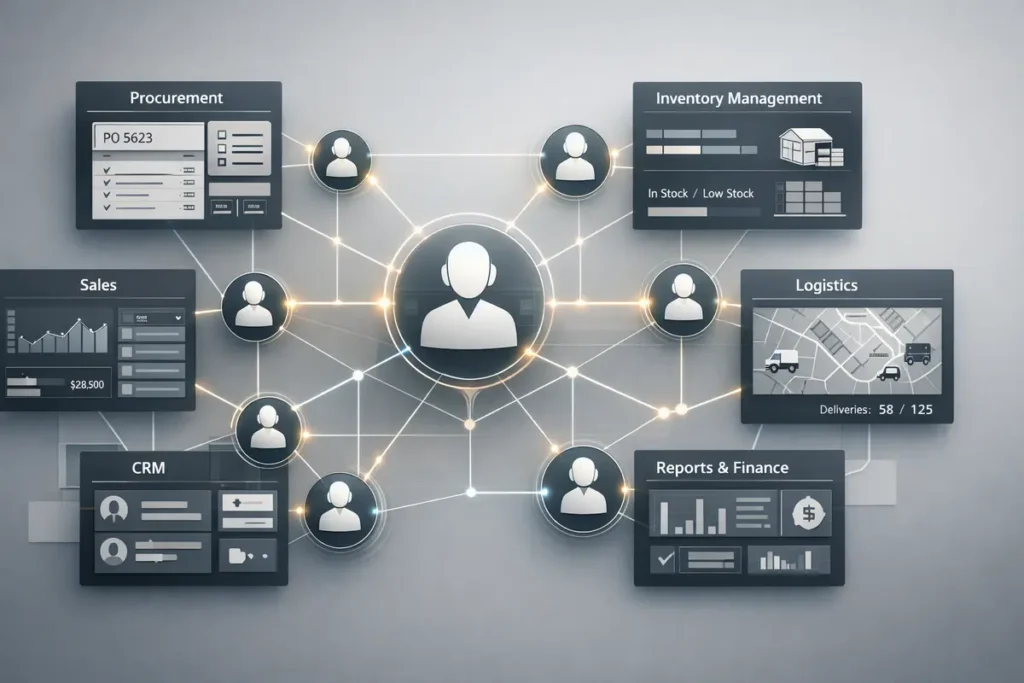
Anchr’s platform introduces what the company calls cross-functional AI teammates — specialized AI agents embedded across a distributor’s operational stack.
These agents are designed to autonomously execute workflows traditionally handled by human operators.
Key automation areas include:
- sales operations
- procurement
- order intake
- inventory management
- customer support
- invoicing and financial reconciliation
Instead of requiring companies to replace their existing infrastructure, the platform operates as an AI orchestration layer sitting above existing ERP and CRM systems.
This architecture allows distributors to deploy automation while preserving their existing software stack.
The objective is not merely digitization, but end-to-end workflow automation across the operational lifecycle of distribution businesses.
The rise of AI orchestration platforms reflects a broader shift toward agent-driven software systems, similar to the transformation underway in developer tooling explored in Cursor’s $2B ARR Explosion Signals the Arrival of Agentic Developer Infrastructure.
From Enterprise Resource Planning to Enterprise Resource Automation
Traditional enterprise software was designed primarily for record-keeping.
ERP systems track transactions such as orders, payments, and inventory movements.
But they rarely provide real-time operational intelligence or decision support.
Anchr’s founders describe their approach as a transition from Enterprise Resource Planning (ERP) to what they call Enterprise Resource Automation (ERA).
In this model, AI systems move beyond tracking activity and instead begin actively managing operational workflows.
Examples include:
- automatically generating purchase orders
- optimizing inventory levels
- identifying upsell opportunities in customer orders
- detecting potential margin risks
The platform’s AI agents maintain contextual awareness across departments, enabling them to coordinate decisions between sales, procurement, and logistics teams.
In effect, the system functions as an operational intelligence layer connecting previously isolated functions within distribution businesses.
This architectural shift mirrors the broader emergence of AI-native enterprise infrastructure platforms, a trend examined in The Invisible Infrastructure Layer Reshaping Enterprise AI.
Founders With Deep Operational Focus
Anchr was founded in 2025 by Tzar Taraporvala and Smayan Mehra, childhood friends originally from Mumbai who have collaborated for more than two decades.
Taraporvala previously worked in enterprise consulting roles focused on operational transformation and supply chain systems.
Mehra, a computer science graduate from Duke University, previously built machine-learning systems and enterprise data platforms.
Rather than approaching the problem purely from a software perspective, the founders spent significant time studying the operational workflows of real distributors.
This field research shaped the platform’s architecture around the specific operational bottlenecks faced by distribution businesses.
Early Traction in a Difficult Industry
Despite its early stage, Anchr reports strong initial traction.
Within roughly twelve weeks of commercialization, the company says it generated seven-figure revenue while onboarding enterprise customers ranging from regional distributors to a publicly traded company generating roughly $5 billion in annual revenue.
Early deployments have reportedly produced measurable operational improvements, including:
- 40 percent time savings for sales teams
- $30,000 monthly reductions in inventory waste
- increased order value through automated upsell recommendations
Such improvements can significantly affect profitability in an industry where margins are extremely narrow.
Insight
The emergence of startups like Anchr reflects a deeper transformation underway in the software industry. For decades, enterprise technology focused primarily on digitizing records and transactions. A new generation of AI-native platforms is now attempting something far more ambitious: automating the operational decisions that previously required human coordination. If successful, these systems could shift enterprise software from passive record-keeping toward active operational management powered by artificial intelligence.
Competition in Distribution Software
The food distribution technology landscape remains fragmented.
Platforms such as Choco and Pepper focus primarily on digitizing ordering workflows.
However, these solutions typically address only one part of the operational stack.
Meanwhile, legacy ERP providers continue to dominate many distributors’ technology infrastructure.
But these systems were designed primarily for accounting and transaction management rather than operational optimization.
Anchr’s strategy attempts to unify these fragmented systems through a centralized AI orchestration layer capable of coordinating operations across departments.
Why Legacy Industries Are Becoming AI’s Next Frontier
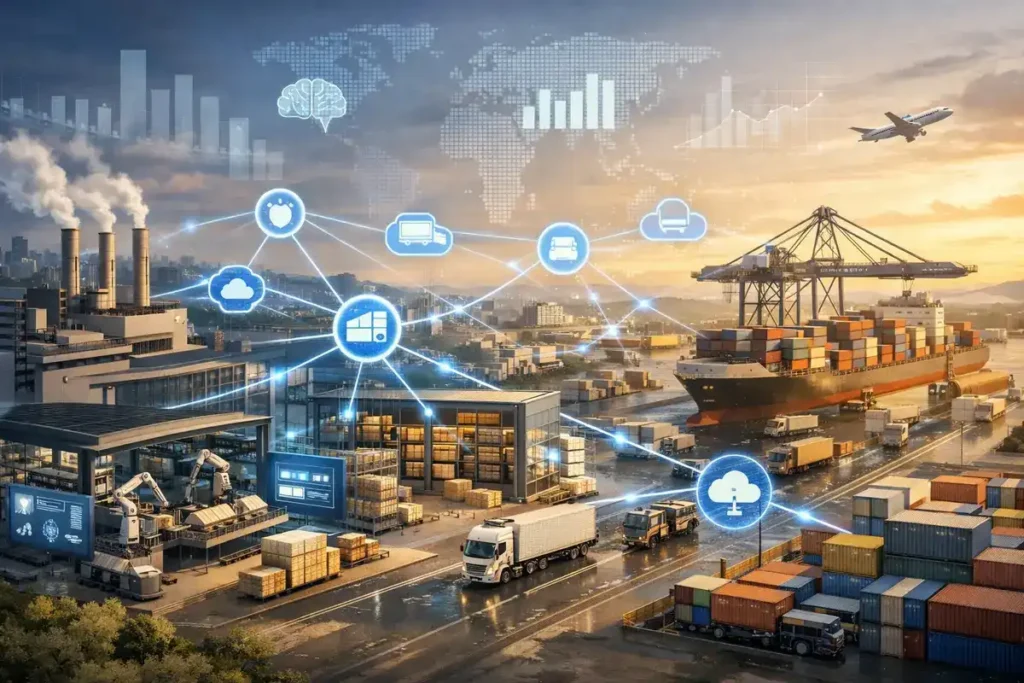
Investors have increasingly turned their attention toward industries often described as “boring.”
These sectors — including supply chains, logistics, and manufacturing — share several characteristics:
- enormous economic scale
- low software penetration
- complex operational coordination
These conditions create ideal environments for AI-driven automation.
Unlike consumer applications, improvements in operational efficiency within these sectors can generate immediate financial returns.
For that reason, many venture firms now view vertical AI infrastructure as one of the most promising opportunities in the next stage of the technology cycle.
The growing importance of infrastructure in AI development is also visible in the rapid rise of new compute providers such as Nvidia-Backed Nscale Raises $2B at $14.6B Valuation.
Editorial Takeaway
Across the technology industry, a growing number of startups are attempting to rebuild the operational backbone of legacy sectors using artificial intelligence.
Artificial intelligence is often framed as a competition between increasingly powerful models.
But the most transformative applications of AI may emerge in industries where software has historically played only a limited role.
Food distribution — the logistical backbone that moves vast quantities of goods through complex supply chains — represents exactly that type of environment.
If platforms like Anchr succeed, they could transform one of the least digitized layers of the economy into an AI-driven operational system.
In doing so, they may provide a blueprint for how AI operating systems could reshape entire industrial sectors.
Research Context
This analysis synthesizes information from company disclosures, venture capital announcements, accelerator program materials, and industry reporting published between 2025 and March 2026. Additional insights were derived from supply chain technology research and emerging trends in AI-native infrastructure platforms.
Editorial Note
TechFront360 publishes independent analysis on artificial intelligence infrastructure, emerging startups, and the strategic technology shifts shaping the global AI economy. Our coverage focuses on the systems, platforms, and capital flows defining the next generation of AI innovation.