US-based climate technology startup Bedrock Energy has raised US$24 million to expand its fleet of AI-enabled geothermal drilling rigs and accelerate the deployment of ground-source heating and cooling systems across the United States. Co-led by Clean Energy Ventures and Clearvision Ventures, the financing will support new drilling equipment, engineering capabilities and expansion into additional commercial markets. Founded around the idea that geothermal energy should become easier and cheaper to install, Bedrock combines artificial intelligence, directional drilling techniques borrowed from the oil and gas industry and underground sensor data to make geothermal systems more practical for large buildings, commercial properties and potentially data centres.
A M Funding Round Will Expand Bedrock’s AI-Guided Drilling Fleet
Bedrock Energy announced its US$24 million funding round on November 16, 2026, with Clean Energy Ventures and Clearvision Ventures jointly leading the investment. The financing also attracted GVP Climate, Susquehanna Sustainable Investments, Catalytic Capital for Climate and Health by Temasek Trust, MUUS, Great Wave Ventures, Autodesk Foundation, Titanium Ventures, Energy Impact Partners, Wireframe Ventures, Elemental Impact and SFV Capital. The company previously raised an US$8.5 million seed round in 2023 and a US$12 million Series A in 2025. Its latest financing follows growing commercial interest in geothermal heating and cooling systems, particularly among owners of large buildings that want more efficient alternatives to conventional HVAC infrastructure. Co-founded by Joselyn Lai and Silviu Livescu, Bedrock plans to use the new capital to manufacture and deploy additional drilling rigs, expand its geographical coverage and strengthen its ability to deliver complete geothermal projects. The company has not announced a specific Series B or other numbered round classification for the new financing.
Geothermal Heating and Cooling Uses the Ground as a Giant Thermal Battery
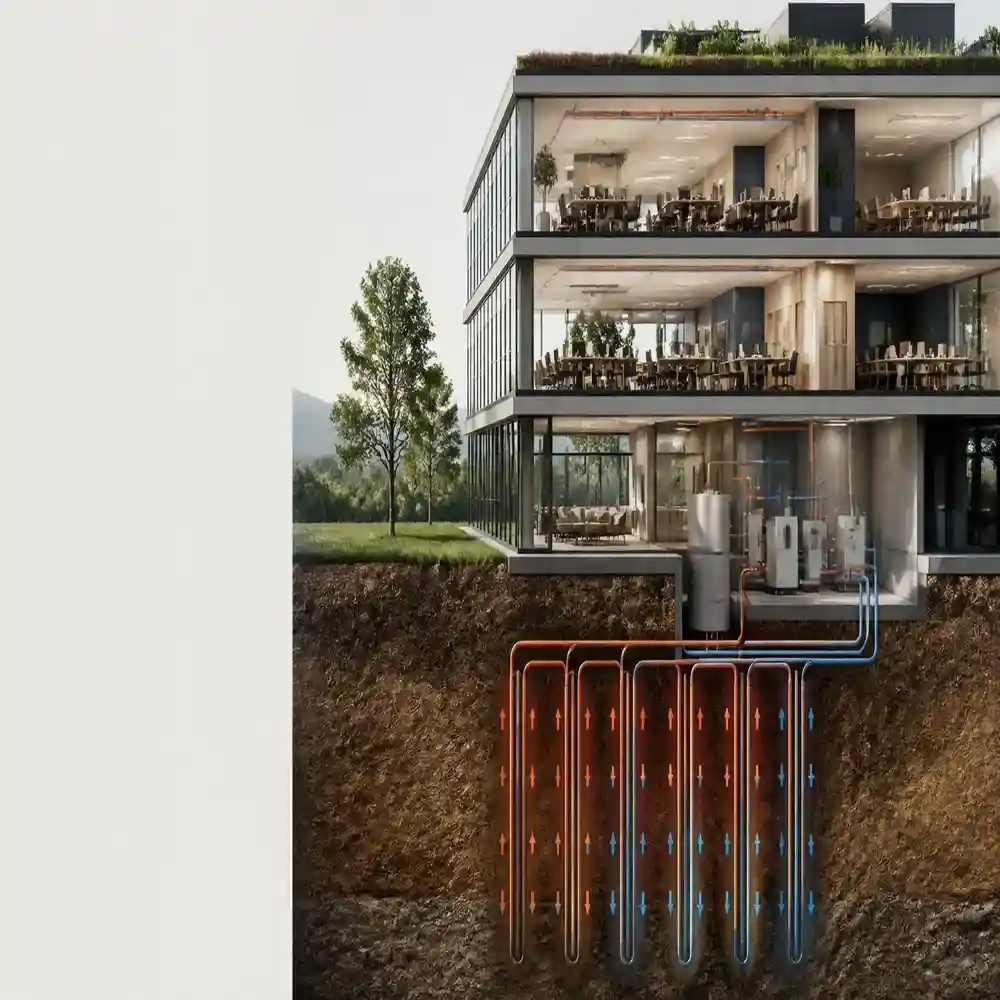
The basic principle behind geothermal heating and cooling is surprisingly simple: temperatures underground remain much more stable throughout the year than temperatures at the surface. During winter, a ground-source heat pump extracts heat from the earth and transfers it into a building. During summer, the system reverses the process, moving heat from the building into the ground. This allows one installation to provide heating and cooling without depending entirely on conventional air-conditioning equipment. Unlike geothermal power stations, which use underground heat to generate electricity, the systems targeted by Bedrock use the ground as a thermal source and storage environment for building HVAC. The technology has existed for decades, but widespread adoption has been restricted by the cost and complexity of drilling the underground boreholes needed to exchange heat with the surrounding ground. Commercial buildings can benefit significantly because they have large and relatively continuous heating and cooling requirements. Bedrock wants to remove the installation bottleneck that has prevented more property owners from adopting this approach.
AI and Directional Drilling Help Build More Efficient Underground Borehole Networks
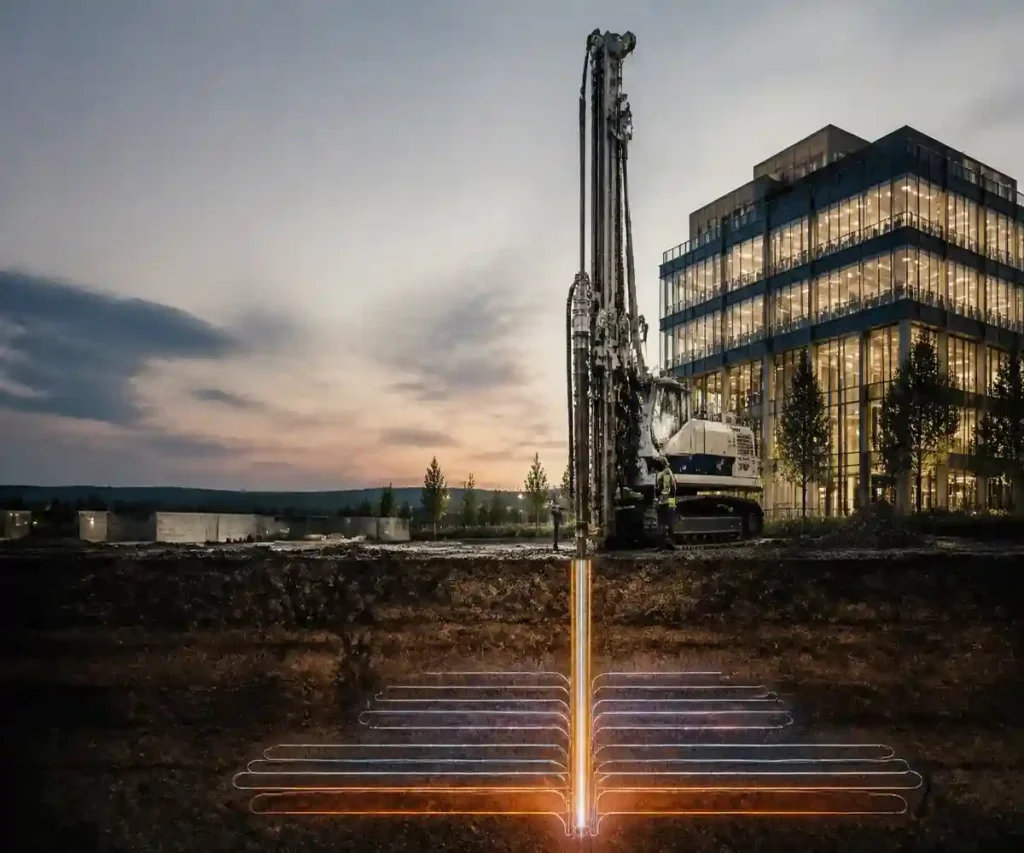
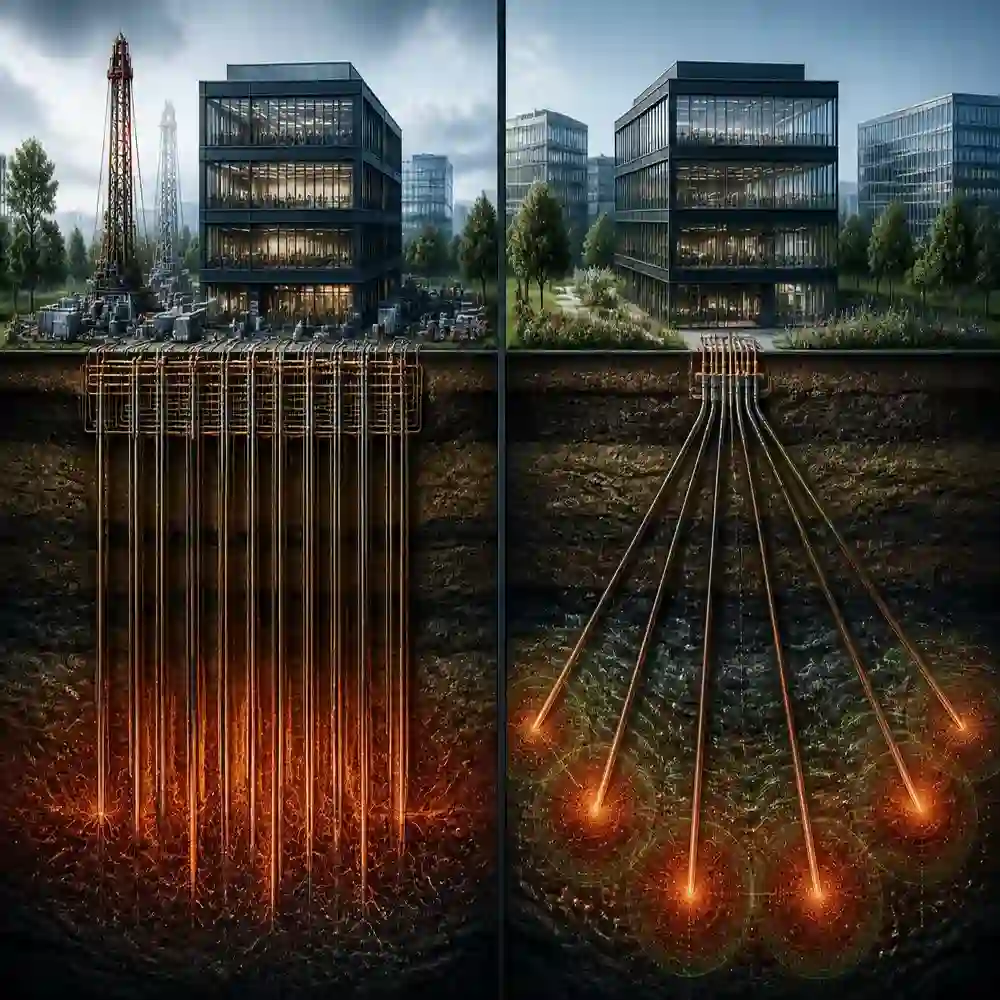
Bedrock’s main technical difference is its use of directional drilling techniques adapted from the oil and gas industry. Conventional geothermal installers often use drilling rigs similar to those used for water wells, following relatively simple drilling patterns. Bedrock instead combines directional drilling with proprietary subsurface models to determine where and how boreholes should be constructed. Its software analyses underground conditions and helps guide drilling decisions, while sensors installed in boreholes provide additional information that can improve the company’s understanding of the site. This is important because every property has different geology, available space and thermal requirements. Poorly designed borehole networks can create unnecessary drilling expenses or fail to deliver the required long-term heating and cooling performance. Bedrock’s integrated approach attempts to optimise both the construction process and the final underground system. The company describes its rigs as AI-directed and says the technology can reduce drilling time by up to 80% compared with conventional approaches. That performance figure is company-reported and may vary depending on geology and site conditions.
Reducing Drilling Costs Could Make Geothermal Practical for More Commercial Properties
Drilling represents one of the most expensive parts of installing a ground-source heat pump system. A commercial property may require multiple boreholes extending hundreds of feet underground, and the number, depth and placement of those holes influence the system’s overall performance. Bedrock’s strategy is to use fewer, more carefully positioned boreholes to deliver the thermal capacity required by a building. This can be particularly valuable in urban properties where underground space is limited and construction schedules are demanding. The company has previously completed a geothermal installation at Penn Field in Austin, demonstrating how its approach can support commercial building applications. Better drilling efficiency can reduce the time spent occupying construction sites, lower installation costs and make the economics of geothermal more attractive to building owners. The company’s official website advertises borehole construction up to five times faster than conventional approaches, while its latest funding announcement coverage reports potential drilling-time reductions of up to 80%. These are company performance claims, not universal guarantees for every project.
Data Centres Could Become a Major New Market for Geothermal Cooling
Bedrock is also exploring opportunities with data centre developers, an important development as artificial intelligence increases demand for computing infrastructure and electricity. Data centres consume substantial amounts of electricity and require continuous cooling to keep servers operating within safe temperature ranges. Conventional cooling systems can place significant demands on local electricity infrastructure, especially when multiple large facilities are built in the same region. Bedrock believes geothermal systems could help some developments by supplying building heating and cooling more efficiently and reducing the electrical demand associated with conventional equipment. The company is also highlighting the possibility of installing geothermal systems on neighbouring properties, creating more flexibility in how data centre campuses and surrounding buildings use energy. CEO Joselyn Lai told TechCrunch that some developers are interested in the cooling applications, while others are examining the potential grid-capacity benefits. These discussions represent an emerging commercial opportunity rather than evidence that large-scale data centre deployments have already been completed.
Nine Sites and Multiple Operating Markets Provide an Early Commercial Foundation
Bedrock currently operates across Texas, Utah, Colorado, New York and Alberta in Canada. The company reports that it has drilled boreholes at nine sites and has secured payments from new customers ahead of drilling projects expected to take place over the next one to two years. Its customer base has primarily involved commercial properties, where accurate borehole placement and efficient use of limited land can improve the economics of geothermal installations. The new funding will support expansion into New England, New Jersey, the upper Midwest and additional western US markets. Building a larger drilling fleet is central to this strategy because geothermal projects require specialised equipment and trained crews to complete installations on schedule. Unlike a conventional software company that can expand simply by adding cloud infrastructure, Bedrock must invest in physical machinery, field operations, engineering expertise and regional project delivery. Its growth therefore depends on whether the technology can deliver repeatable results across different underground conditions and construction environments.
Geothermal-as-a-Service Could Change How Building Owners Pay for Energy Infrastructure
Bedrock is also exploring business models that could reduce the initial financial burden on commercial property owners. A major geothermal installation requires upfront spending on drilling, underground loops, heat pumps and building-system integration. Even when long-term operating savings are attractive, construction budgets and financing constraints can discourage developers from choosing the technology. Bedrock has discussed a geothermal-as-a-service model in which it can help arrange energy financing and provide a long-term thermal-energy solution rather than requiring every customer to manage the entire infrastructure investment independently. The company says it can coordinate MEP design, financing and construction partners as part of an end-to-end project. Once installed and correctly maintained, underground geothermal loop fields can provide thermal infrastructure for decades, although heat pumps and other mechanical equipment still require maintenance and eventual replacement. This long operating life makes the technology particularly relevant to commercial real estate owners seeking predictable energy costs and long-term building performance.
Bedrock’s Biggest Challenge Is Scaling Geothermal Drilling Across Different Markets
The new US$24 million round gives Bedrock the resources to expand its fleet, but the next challenge is proving that its AI-guided drilling model can scale consistently. Underground geology varies considerably between regions, and a drilling method that performs well in one location may require adjustments elsewhere. The company must also manage equipment costs, field-team availability, construction schedules and the long-term performance of installed borehole networks. Data centre developers offer a potentially valuable market, but their projects require careful coordination with electrical infrastructure, cooling engineering and construction timelines. Bedrock also operates in a competitive market where other geothermal companies are developing specialised drilling equipment and installation methods. Its long-term advantage will depend on combining reliable drilling performance with lower total project costs and predictable thermal results. The US$24 million financing marks a transition from demonstrating the technology towards broader commercial deployment. If the company can make geothermal installation faster, more space-efficient and financially attractive, it could become an important infrastructure provider as commercial buildings seek more resilient and efficient heating and cooling systems.