
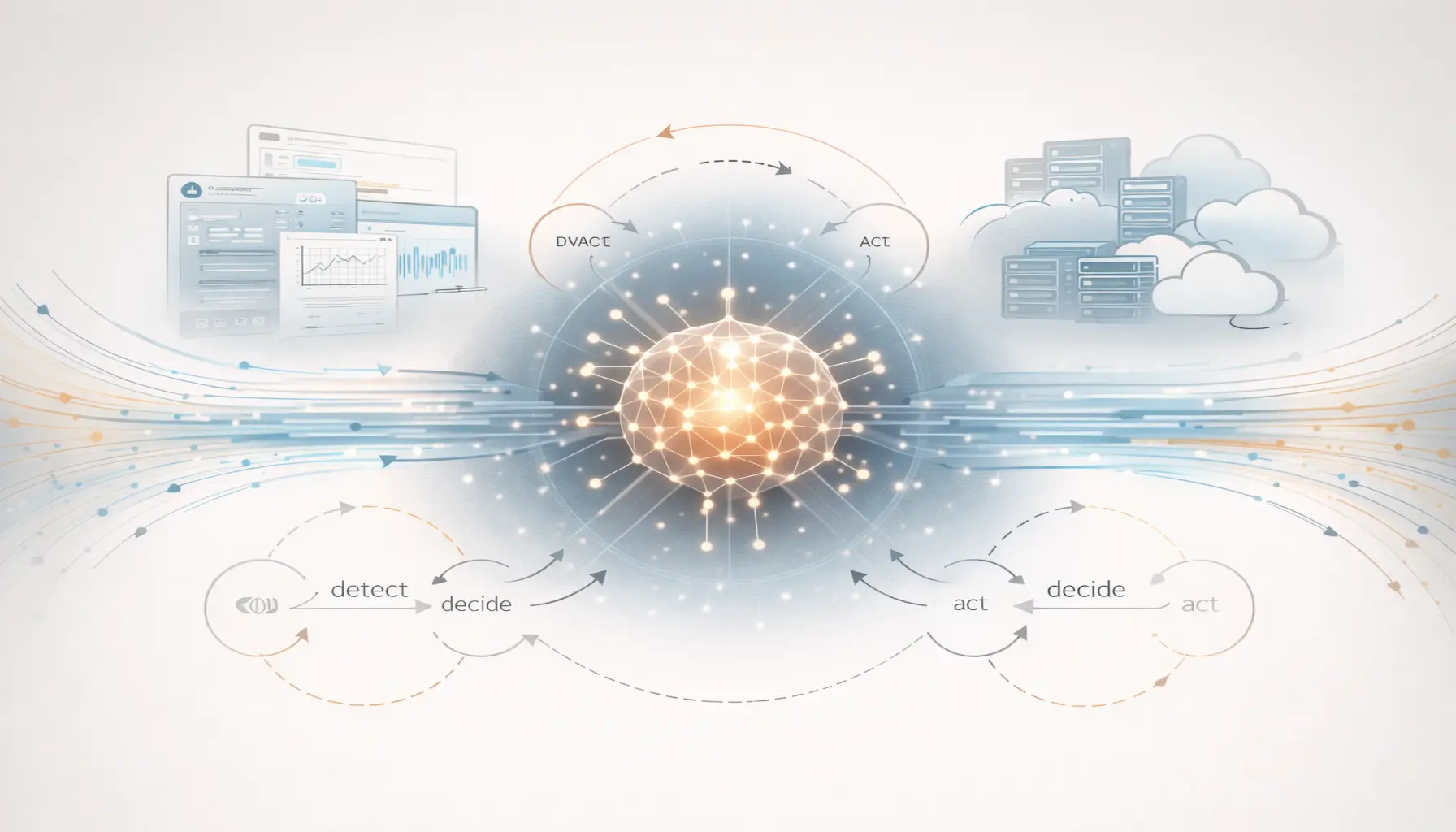
Subheadline: Balderton Capital’s $110 million investment in Dash0 reflects a broader shift in enterprise software: observability is evolving from a diagnostic layer into a system of real-time decision-making.
A Rapid Ascent Signals a Structural Bet
Dash0, an AI-native observability platform operating in the enterprise infrastructure layer, has raised $110 million at a $1 billion valuation, signaling an architectural transition from monitoring software to execution-layer intelligence in cloud systems.
The trajectory is unusually steep:
- $9.5 million seed (November 2024)
- $35 million Series A (October 2025)
- $110 million growth round (March 2026)
Total disclosed capital now exceeds $154 million.
Such velocity rarely reflects incremental product progress. More often, it indicates investor conviction in a category transition already underway.
In Dash0’s case, that transition is clear: observability is reconfiguring from passive monitoring to active system control.
The Limits of Human-Led Infrastructure
For more than a decade, observability has functioned as a diagnostic layer.
Systems generate:
- logs
- metrics
- traces
Engineers interpret them, isolate faults, and intervene.
This model assumes that system complexity remains within human cognitive limits. That assumption is now breaking.
Modern infrastructure — shaped by distributed systems, microservices, and increasingly AI systems moving beyond interfaces into execution environments — produces telemetry that is both vast and dynamic. Failure modes are no longer deterministic; they are emergent.
The result is a widening mismatch:
Systems are becoming autonomous. Their oversight remains manual.
Dash0 is designed to close that gap.
From Data Collection to Decision Systems
At a technical level, Dash0 is built on familiar foundations: OpenTelemetry, cloud-native architectures, and unified telemetry ingestion.
Its differentiation lies not in what it collects, but in how it structures and acts on that data.
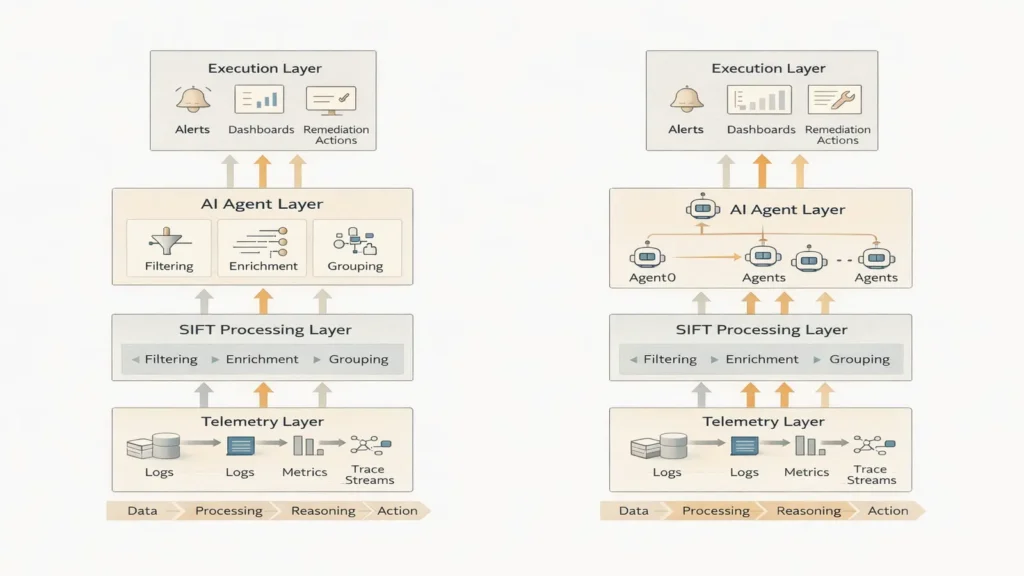
The platform integrates logs, metrics, and traces into a single analytical layer, queryable through a unified PromQL interface. More importantly, it introduces a preprocessing framework — SIFT — that filters noise, enriches context, and prepares telemetry for machine-driven reasoning.
This is a subtle but critical shift.
Most observability systems assume that more data improves visibility. Dash0 assumes that only structured, high-signal data can support autonomous decision-making.
Agent0 and the Emergence of Autonomous Operations
Dash0’s defining feature is Agent0, an AI system positioned not as an assistant but as an operational layer.
Agent0 performs tasks traditionally handled by site reliability engineers:
- correlating anomalies across systems
- identifying root causes
- generating dashboards and alerting logic
- proposing, and in some cases executing, remediation steps
The emphasis is on explainability. Each action is accompanied by traceable reasoning and underlying data references — a prerequisite for enterprise adoption.
This reflects a broader transition in enterprise AI:
from assistance → to bounded autonomy, where systems operate within defined constraints.
Observability as a Control Layer
The strategic implication is that observability is no longer peripheral to infrastructure. It is becoming central to how systems operate.
Traditionally:
- infrastructure determines where workloads run
- orchestration determines how they are deployed
Dash0 introduces a third dimension:
how systems interpret their own state and respond in real time
This aligns with a broader shift across AI infrastructure, where execution-layer platforms — from orchestration systems to AI execution-layer systems in enterprise workflows and AI infrastructure control planes like Kluisz — are beginning to redefine how systems operate.
In complex, AI-driven environments, this layer may prove decisive.
A Market Reshaped by Complexity
Dash0’s rise coincides with structural changes in the observability market.
Three forces are converging:
AI Workloads Introduce Non-Determinism
Large language models, agentic systems, and real-time inference pipelines behave probabilistically. Traditional monitoring tools struggle to model such behavior.
Telemetry Volumes Are Surging
Distributed architectures generate orders of magnitude more data. Without effective filtering, observability becomes both costly and cognitively overwhelming.
OpenTelemetry Is Standardizing Data
As enterprises adopt OpenTelemetry, vendor lock-in weakens, shifting competition toward data interpretation and actionability.
Dash0 sits precisely at this intersection:
open standards combined with AI-native execution.
Incumbents and the Architectural Divide
The competitive landscape reflects a clear divide.
Established platforms — including Datadog, Dynatrace, and New Relic — have expanded capabilities by layering AI onto existing systems. Their advantages remain scale, ecosystem breadth, and enterprise relationships.
However, they also carry structural constraints:
- proprietary data models
- fragmented pricing
- operational complexity
A newer cohort — including Dash0, alongside Honeycomb and SigNoz — is pursuing a different approach:
rebuilding observability around open standards and AI-native workflows
This is not a feature-level distinction. It is architectural.
The Investment Thesis
Balderton’s investment reflects a familiar venture pattern: backing infrastructure layers that redefine system behavior.
Past examples include:
- Databricks in data infrastructure
- Wiz in cloud security
- Scale AI in data pipelines
Dash0 fits this pattern — not as a point solution, but as a control-layer candidate within the AI infrastructure stack.
This also aligns with how AI funding is splitting into infrastructure and physical intelligence bets, with capital increasingly concentrated in foundational layers rather than applications.
Execution Risk Remains High
Despite its positioning, Dash0 faces significant challenges.
Autonomous remediation introduces operational risk. Incorrect actions at scale can amplify failures rather than resolve them. Enterprises — particularly in regulated sectors — will require strict guardrails and human oversight.
There is also the question of competitive response. Incumbents are accelerating AI investment while retaining advantages in distribution and trust.
In this context, Dash0’s success will depend less on vision than on execution under real-world conditions.
A Broader Reordering of the Stack
Dash0’s emergence is part of a wider reconfiguration of enterprise infrastructure.
Across the stack:
- orchestration is becoming autonomous
- infrastructure is becoming programmable
- observability is becoming actionable
These layers are beginning to converge.
The result is a system architecture in which:
decision-making is embedded directly into operational workflows
rather than layered on top of them.
Conclusion
Dash0’s rise to unicorn status is less about observability as a standalone category and more about how enterprise systems are evolving under the pressure of AI-driven complexity.
As systems grow more autonomous, the locus of value shifts.
Not to where data is stored. Not to where code executes.
But to where systems:
interpret, decide, and act in real time.
If Dash0 succeeds, it will not simply compete within observability. It will help redefine its boundaries — and potentially the structure of the modern infrastructure stack itself.
Research Context
Based on reporting from Bloomberg, Sifted, company disclosures, and broader analysis of AI infrastructure trends (March 2026).
Editorial Note
This article reflects independent analysis and is intended to provide structural insight into emerging technology and capital allocation trends.