
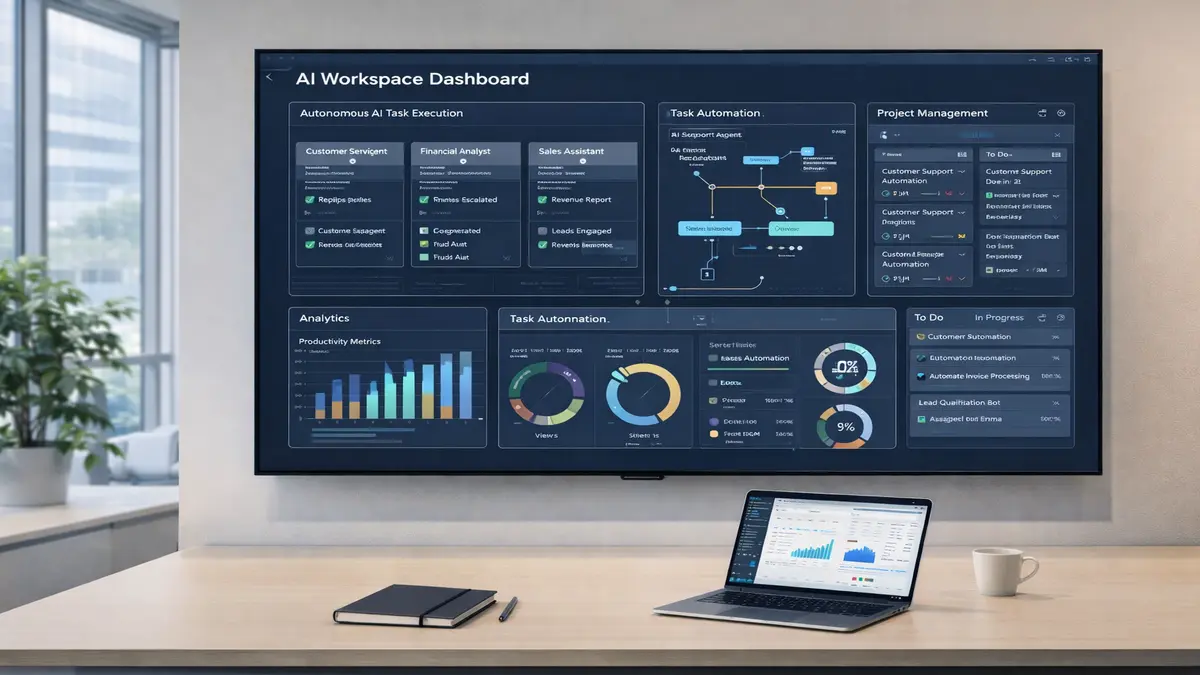
Inside the AI workspace startup betting that autonomous agents — not assistants — will redefine how knowledge work gets done.
The Intelligence Briefing
- Funding: Genspark extended its Series B to $385M at a ~$1.6B valuation
- Total Capital: More than $545M raised across all rounds
- ARR Growth: Revenue surpassed $200M ARR in just 11 months
- Lead Investor: Emergence Capital, marking the largest investment in the firm’s history
- Product Launch: Introduction of Genspark Claw, an autonomous “AI employee”
Context: The Rise of Agentic Enterprise Software
PALO ALTO — Venture capital is rapidly shifting toward a new class of artificial-intelligence companies designed not simply to assist workers, but to execute tasks on their behalf.
This analysis examines Genspark, a Palo Alto–based enterprise AI workspace startup, and the rapid emergence of “AI employee” platforms designed to autonomously execute real knowledge-work tasks across enterprise software systems.
For much of the past three years, the AI industry has been dominated by a race to build increasingly powerful generative models.
But inside enterprises, a different constraint is becoming visible.
The hardest challenge is no longer generating information.
It is getting AI systems to perform complex multi-step tasks across real software environments.
That transition is giving rise to a new category of infrastructure platforms designed to orchestrate AI models, applications, and workflows into autonomous digital workers.
Genspark is positioning itself as one of the fastest-growing companies in that emerging market.
A Funding Round Built on Execution Metrics
The company announced Thursday that it had extended its Series B funding round to $385 million, bringing its valuation to roughly $1.6 billion.
The round was led by Emergence Capital, with participation from several strategic investors including:
- SBI Group
- Mirae Asset
- LG Technology Ventures
- Temasek’s Pavilion Capital
- HartBeat Ventures
- Markham Valley Ventures
- Keisuke Honda
Total capital raised across all rounds now exceeds $545 million, making Genspark one of the most heavily funded startups in the emerging agentic productivity software market.
The funding comes alongside one of the most aggressive growth trajectories in the AI startup ecosystem.
According to company disclosures:
- Genspark reached $50M ARR within five months
- crossed $100M ARR within nine months
- surpassed $200M ARR within eleven months
The most recent doubling occurred within two months, placing the company among the fastest-growing AI productivity platforms since the generative-AI boom began.
Capital Signals: Why Investors Are Betting Big
The structure of the investor syndicate offers clues about how venture capital firms view the company’s long-term potential.
Emergence Capital, which led the round, is known for backing several defining enterprise-software companies including:
- Salesforce
- Zoom
- Box
Its decision to make the largest investment in firm history reflects growing conviction that AI execution platforms could become the next foundational enterprise-software category.
At the same time, the inclusion of strategic investors across Asia and creator-economy funds suggests Genspark may pursue global expansion beyond traditional enterprise software markets.
Such syndicate diversification often signals expectations for international adoption and cross-industry distribution channels.
The funding also reflects broader capital flows across the AI ecosystem, including trends explored in The $189B AI Funding Surge Is Reshaping the Deep Tech Venture Map.
From AI Assistant to AI Employee
The funding announcement coincided with the launch of Genspark Claw, a system the company describes as its first fully autonomous “AI employee.”
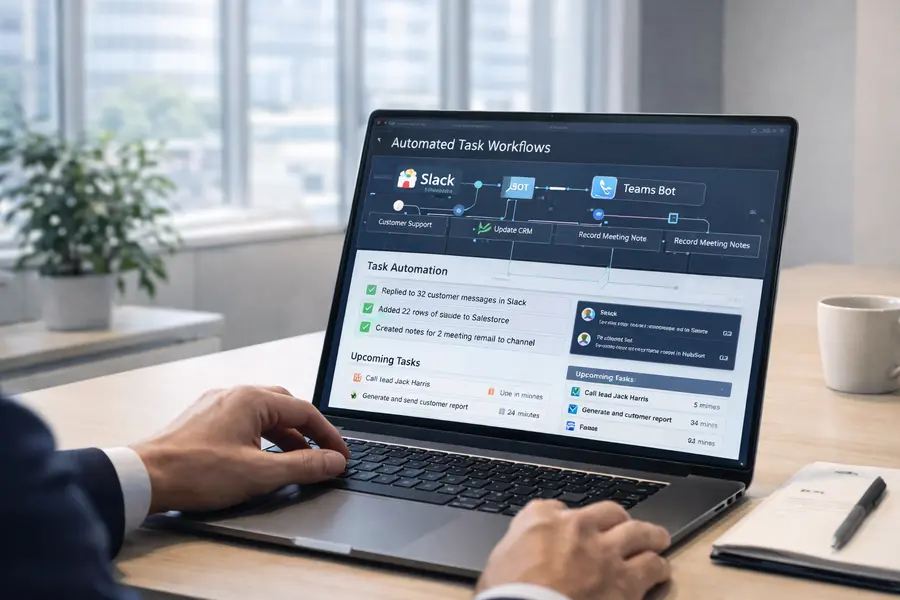
Unlike traditional AI assistants that generate drafts or suggestions, Claw is designed to execute tasks end-to-end.
Users can send requests through messaging platforms such as:
- Slack
- Microsoft Teams
- Telegram
The system then performs the required steps independently.
Typical tasks include:
- researching information
- scheduling meetings
- sending emails
- generating documents
- building applications
- executing software workflows
Rather than returning partial drafts, the system completes the workflow and returns a finished deliverable.
According to CEO Eric Jing, the shift reflects a fundamental change in how enterprises will interact with artificial intelligence.
“The industry is moving from using AI as a tool to using AI as a human-like agent,” Jing said.
This transition toward agentic software infrastructure is also visible across developer platforms discussed in
Cursor’s $2B ARR Explosion Signals the Arrival of Agentic Developer Infrastructure.
The Cloud Computer Architecture
One of Genspark’s most distinctive design choices is the infrastructure layer powering these autonomous agents.
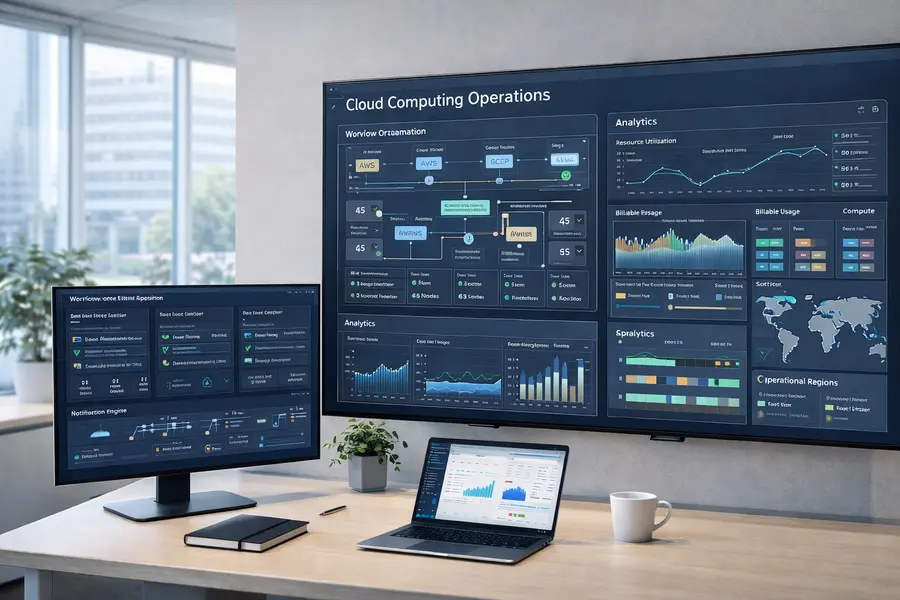
Each user operates inside a dedicated “Cloud Computer” environment, effectively a private virtual machine designed specifically for AI execution.
This architecture solves one of the most persistent challenges facing agent-based systems: credential and data security.
Instead of granting AI agents direct access to user accounts or shared systems, Genspark isolates every user environment into a separate computing instance.
This privacy-by-design architecture addresses enterprise concerns around:
- credential exposure
- regulatory compliance
- data isolation
- auditability
The result is a system capable of executing tasks across applications while keeping enterprise data segregated.
Infrastructure platforms attempting to operationalize enterprise AI are also emerging across knowledge systems, including those explored in
The Invisible Infrastructure Layer Reshaping Enterprise AI.
The Agentic Workspace Model
The company’s broader platform, Genspark AI Workspace 3.0, is designed as a unified environment where AI agents operate across enterprise workflows.
The latest version introduces several capabilities:
- automated workflows across 20+ applications
- AI meeting bots that attend and summarize discussions
- real-time voice interaction tools
- a Chrome extension for browser task execution
- integrated team messaging and collaboration tools
Behind the scenes, the platform orchestrates more than 70 frontier AI models, including systems developed by major AI labs.
The platform integrates with infrastructure providers and model platforms including:
- OpenAI
- Anthropic
- AWS
- Microsoft
- NVIDIA
Rather than relying on a single provider, Genspark dynamically selects models depending on the task.
Similar agent infrastructure platforms are also emerging across startups building enterprise AI deployment layers, including systems discussed in
Lyzr AI Raises $14.5M as Enterprise AI Agents Become Infrastructure.
Strategic Map: The Emerging “AI Employee” Market
The rise of platforms like Genspark reflects a broader structural shift across the AI ecosystem.
Three layers are beginning to emerge:
1 — Foundation Models
Large language models developed by major AI labs.
2 — Agent Platforms
Systems that orchestrate models into autonomous agents.
3 — Execution Infrastructure
Platforms that allow agents to perform real operational tasks.
Genspark is positioning itself primarily in the second and third layers.
If successful, such platforms could become the operational operating systems for knowledge work.
The Road Ahead
The company’s biggest challenge will be operational scalability.
Running millions of autonomous agents across dedicated cloud computing environments is significantly more expensive than running traditional AI applications.
Infrastructure costs — particularly compute and storage — will be a critical factor in determining long-term economics.
Competition is also intensifying.
Major AI companies are experimenting with similar computer-use agents, and large software vendors are integrating AI automation directly into productivity software.
Yet if Genspark’s growth trajectory continues, the company could become one of the earliest leaders in the emerging AI employee platform market.
The shift from AI assistants to AI agents may already be underway.
And increasingly, the companies attracting the most capital are those building systems capable not only of generating information — but of getting work done.
Research Context
This analysis synthesizes information from company announcements, investor disclosures, and coverage from BusinessWire, Yahoo Finance, and industry reporting across the AI startup ecosystem. Additional insights were derived from comparative analysis of enterprise AI agent platforms and productivity software trends.
Editorial Note
TechFront360 covers artificial intelligence infrastructure, startup ecosystems, venture capital flows, and the strategic technology shifts shaping the global AI economy. Our reporting focuses on the systems and platforms defining the next generation of enterprise computing.