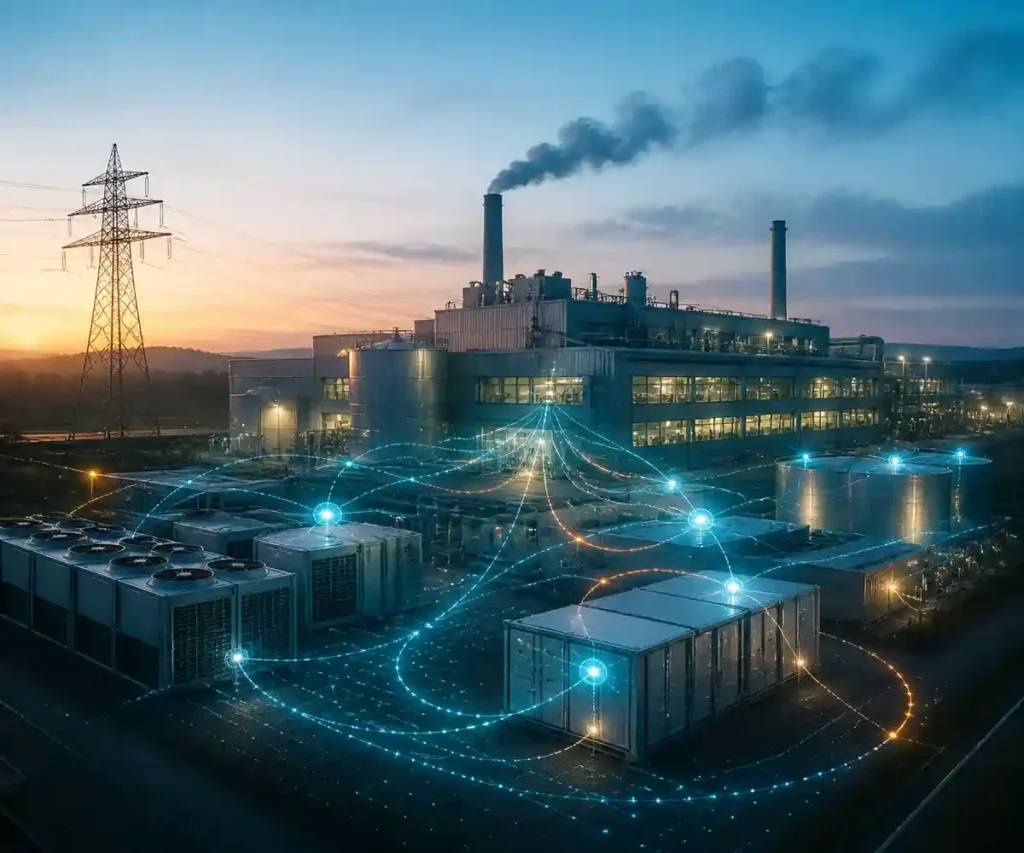
Helsinki-based energy technology company Intergrid has announced €23.5 million in total funding to expand its autonomous industrial energy-management platform across Europe. The latest funding round was co-led by Nordic industrial technology investor Kvanted and Finnish state investor Tesi, with participation from existing investors True Ventures, Lifeline Ventures and First Fellow Partners. Its technology, called Autopilot, is designed to operate industrial energy systems around the clock, automatically selecting energy sources, adjusting equipment and managing electricity-market trading. The company’s ambition is to make energy-intensive factories and industrial sites operate more efficiently without relying on people to continuously manage every energy decision.
A €23.5M Funding Package Backs Intergrid’s European Expansion
Intergrid announced its €23.5 million total funding figure on November 16, 2026. The latest financing was co-led by Kvanted, a Nordic industrial technology investment fund, and Tesi, Finland’s state-owned investment company focused on developing and internationalising Finnish businesses. Existing investors True Ventures, Lifeline Ventures and First Fellow Partners also participated. The financing package includes €2.7 million in support from Business Finland as well as an EU-guaranteed loan from Finnvera. This distinction matters because the announced €23.5 million should not be presented as a single all-equity venture-capital round. Intergrid has not disclosed a valuation or a complete breakdown of the individual financing instruments. Founded in 2023, the company plans to use the capital to strengthen its Autopilot platform, support its growing customer base and expand into additional European industrial markets. The investment reflects rising interest in technology that can make industrial energy consumption more flexible, predictable and economical.
Factories Need More Than Energy Dashboards to Manage a Changing Power System
Industrial energy management is becoming increasingly complicated as factories and other large facilities adopt electricity, heat pumps, thermal storage, batteries and multiple energy sources. These systems can reduce operating costs and emissions, but they also create more decisions that must be made throughout the day. Electricity prices can change every 15 minutes, while the most economical source of heat or power may change as production demand and weather conditions shift. A factory might have an electric boiler, a conventional boiler, a heat pump and energy storage, each with different operating costs and technical limits. Traditional energy software often helps operators monitor consumption and review performance, but people may still need to make the decisions and adjust equipment manually. Intergrid believes industrial operators need something more advanced: software that does not merely show what is happening, but actively coordinates the equipment and energy purchases to achieve the best available outcome.
Autopilot Works Like a Self-Driving System for Industrial Energy
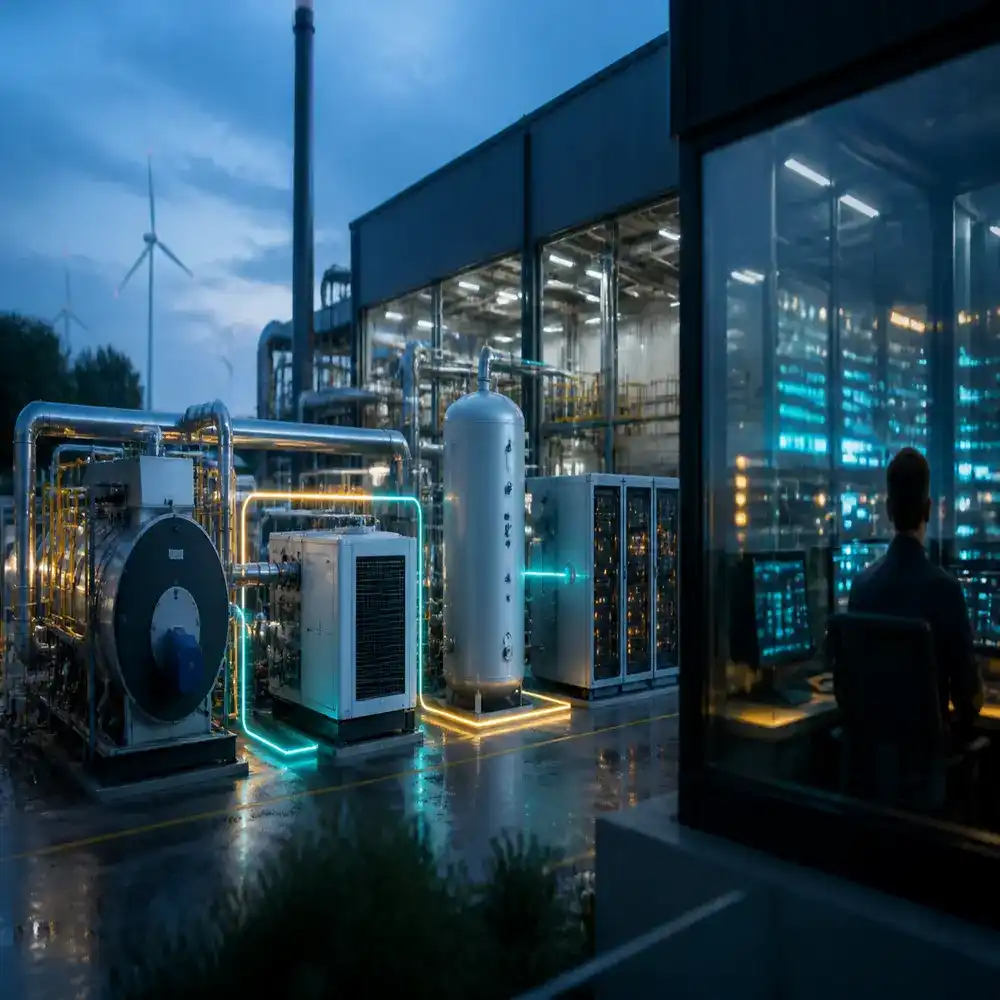
Intergrid’s central product, Autopilot, is designed to manage hybrid industrial energy systems continuously. It monitors energy demand, production patterns, equipment status, weather conditions, energy-source costs and electricity-market prices. Using this information, the platform determines which energy source should operate at a particular moment and adjusts the industrial system through its existing automation infrastructure. For example, a site with an electric boiler, heat pump and thermal storage could use whichever combination offers the best cost and operational result while respecting its technical requirements. Autopilot also manages electricity trading across energy and flexibility markets, connecting factory operations with the wider power system. The platform updates its plans as new measurements arrive rather than relying only on fixed operating schedules. In practical terms, it aims to make the factory’s energy infrastructure respond to changing conditions with less manual intervention.

The AI System Combines Machine Learning With Rules and Human Supervision
Automating industrial energy decisions requires more than predicting electricity prices or selecting the cheapest energy source. A wrong decision can affect production, equipment performance, temperatures, pressures or industrial safety. Intergrid’s approach therefore does not rely on an unrestricted AI model making every decision. CEO Olli Kangas has explained that the platform uses rule-based logic as a foundation, with machine-learning predictions built on top and AI agents supporting monitoring. Customers define operating limits, equipment priorities, safety buffers and maintenance windows. Autopilot operates within those constraints and routes its control instructions through the site’s existing automation systems. Operators can see the system’s decisions, monitor results and take over when necessary. Intergrid also says its operations team provides continuous supervision and responds to faults and outages. This combination of automation, engineering constraints and human oversight is essential when software moves from recommending energy decisions to controlling industrial equipment.
More Than 100 Industrial Sites Already Use the Platform
Intergrid says Autopilot is operating at more than 100 industrial sites across Finland and other European markets. Its customers and deployments span food production, district heating and greenhouse horticulture, with named customers including food producers Snellman and Atria, textile services company Lindström and energy utility Vatajankoski. The platform is also designed for industries such as chemicals, pharmaceuticals, aquaculture, wood products, pulp and paper, machinery manufacturing and industrial facilities. Intergrid reports that Autopilot typically delivers double-digit reductions in customers’ energy costs while also reducing manual work and emissions. These are company-reported performance claims rather than independently audited results across every site. Nevertheless, the reported deployments provide evidence that the technology is being used in operational industrial environments rather than remaining solely a research project. That commercial experience could help the company refine its software as it expands into facilities with different energy systems and operating requirements.
Industrial Electrification Creates a Larger Market for Autonomous Energy Control
The opportunity for Intergrid is connected to the transformation of industrial heat and power. Many factories, greenhouses and district-heating operators are replacing or supplementing fossil-fuel equipment with electric boilers, heat pumps, thermal storage and other flexible technologies. These investments can create opportunities to use electricity when prices are lower, store energy when it is economical and reduce reliance on expensive fuels. But the financial benefits depend on operating the equipment at the right time. A facility that invests in new energy hardware without upgrading how it manages those assets may fail to capture the full potential savings. Intergrid wants Autopilot to become the software layer that coordinates these systems and connects them with electricity markets. The company is effectively targeting the operational complexity created by the energy transition: the more energy sources, storage systems and market opportunities an industrial site adopts, the greater the need for continuous optimisation.
Kvanted and Tesi Are Backing a Finnish Industrial AI Opportunity
Intergrid was founded in Helsinki in 2023 by Olli Kangas, Pasi Hakulinen and Mikko Ilmonen. Kangas leads the company’s strategy and commercial direction, while Hakulinen serves as chief technology officer and Ilmonen as chief operating officer. The company brings together experience in energy consulting, industrial operations and technology development. Its financing syndicate combines specialist industrial investment through Kvanted with Tesi’s role in supporting the growth of Finnish technology businesses. Existing backing from True Ventures, Lifeline Ventures and First Fellow Partners provides continuity as the company moves into a larger expansion phase. The funding will help Intergrid extend its reach across Europe and continue developing Autopilot as industrial energy systems become more complex. Its strategy is not simply to sell another energy-management dashboard, but to take responsibility for operating the energy system within the limits set by each industrial customer.
Intergrid’s Biggest Test Is Proving Autonomous Energy Control Across Different Industries
The next stage for Intergrid is to demonstrate that its autonomous operating model can scale reliably across countries, industrial processes and energy-market structures. A district-heating system has different priorities from a greenhouse, food factory or chemical plant. Each facility has its own safety constraints, equipment, production schedules and tolerance for operational changes. Electricity-market rules also vary between countries, making international expansion more complicated than simply translating a software interface. Intergrid must continue proving that its optimisation delivers measurable savings without affecting production reliability or equipment performance. It also faces competition from energy-management software providers and industrial automation companies developing their own optimisation systems. Its advantage will depend on the quality of its real-time decision-making, integrations and operational support. The €23.5 million funding announcement gives the company resources to pursue this expansion. Its larger ambition is to make industrial energy systems operate more like autonomous infrastructure: continuously adapting to costs and conditions while keeping production and safety first.