
Inside the AI platform turning natural language prompts into full-stack products
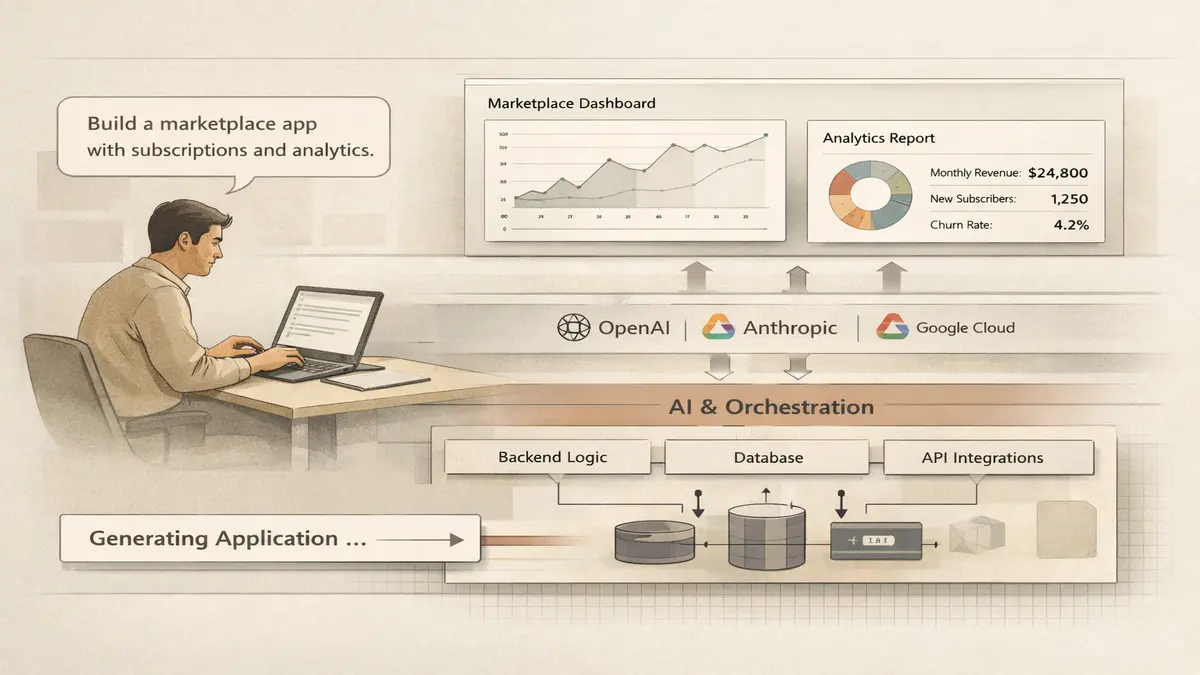
AI-native development platforms are beginning to compress the traditional software stack into a single prompt-driven workflow. Stockholm-based startup Lovable is emerging as one of the fastest-growing examples of this shift, allowing users to generate full-stack applications through natural language prompts — a model increasingly known as “vibe coding.” As AI developer tools mature, platforms like Lovable are turning software creation from a programming task into an orchestration problem.
But a new generation of AI development platforms is attempting to compress that entire process into a single interaction layer: natural language.
Stockholm-based startup Lovable has emerged as one of the most visible companies pushing that shift. Founded in 2023 by AI engineer Anton Osika and technologist Fabian Hedin, the platform allows users to generate full-stack applications simply by describing them in conversational prompts.
The community calls the process “vibe coding.”
Instead, the platform acts as a coordination layer across multiple AI providers — a model similar to the emerging AI control plane infrastructure layer reshaping enterprise deployments.
The AI generates the software.
Behind that simplicity lies a much deeper transformation in how digital products may be created.
Lovable sits within a rapidly emerging category of AI-native development platforms alongside tools like Replit, Cursor, and GitHub Copilot that are redefining how software is produced.
From Coding to Conversational Software Creation
Traditional development workflows involve multiple layers:
- writing front-end interfaces
- designing backend logic
- configuring databases
- deploying infrastructure
AI coding platforms attempt to collapse these steps into a single prompt-driven workflow.
Lovable automatically generates:
- front-end interfaces using React and Tailwind
- backend APIs and application logic
- databases and authentication systems
- deployment pipelines
- integrations with developer tools like GitHub
Users can refine the result through iterative prompts until the product behaves as intended.
The result is a development model that shifts software creation from engineering tasks to conversational iteration.
The “Vibe Coding” Paradigm
The term vibe coding gained traction in 2025 as developers began experimenting with AI-driven code generation workflows.
In this paradigm, the user focuses on the idea rather than the implementation.
Instead of writing functions, they write prompts.
Example prompt:
“Build a marketplace for digital creators with subscriptions, analytics dashboards, and AI recommendations.”
Within minutes, the system generates a working application structure that can be refined through additional prompts.
Platforms like Lovable aim to remove the need for templates or rigid drag-and-drop interfaces typical of earlier no-code tools.
Instead, the AI dynamically generates software architecture based on user intent.
The next billion software products may not be written—they may be described.
The Technology Stack Behind Lovable
Lovable does not train its own frontier AI models.
Instead, the platform acts as a coordination layer across multiple AI providers, including:
- OpenAI
- Anthropic
- Google Cloud
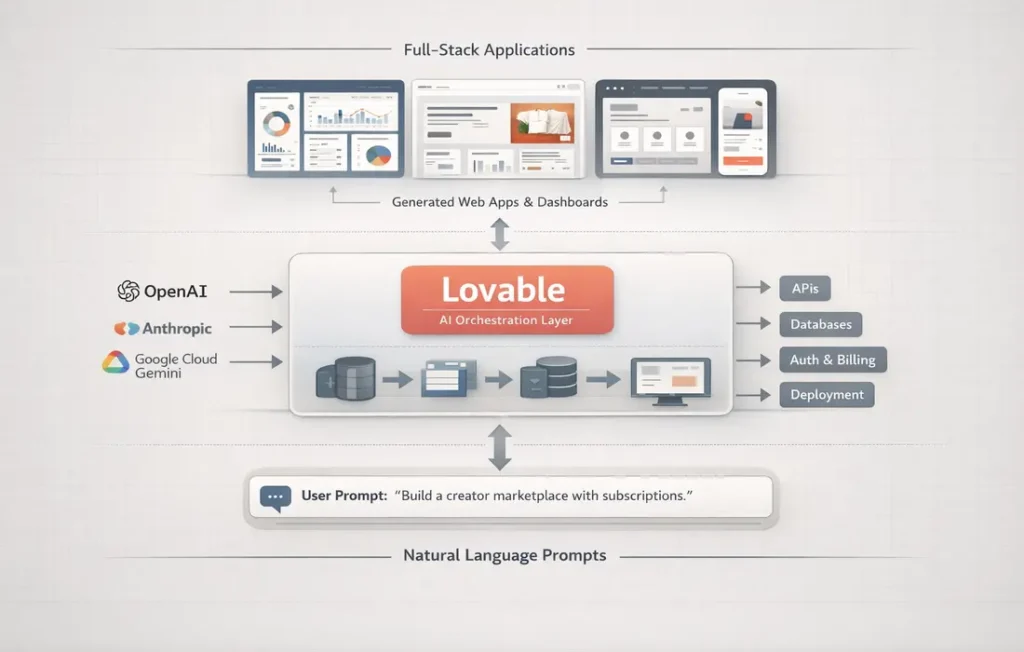
These models interpret prompts and generate code, while Lovable orchestrates:
- project structure
- deployment environments
- integrations
- developer workflows
In other words, the platform functions less like a code generator and more like an AI-native development environment.
Explosive Growth in the AI Developer Tools Market
Lovable’s growth trajectory has been unusually fast even by AI startup standards.
Within its first two years the platform reportedly achieved:
- millions of users
- tens of millions of generated projects
- hundreds of thousands of paying customers
- more than $200 million in annual recurring revenue
The company’s adoption reflects surging demand for AI-driven developer tooling.
Early users range from startup founders and designers to operators building internal tools.
Many report creating working applications in hours rather than weeks.
Funding Signals: Investors Are Betting on AI Software Creation
Lovable’s funding rounds illustrate the scale of investor conviction.
Key milestones include:
- 2025 Pre-Series A: $15M funding round
- 2025 Series A: $200M at $1.8B valuation led by Accel
- 2025 Series B: $330M at $6.6B valuation led by CapitalG and Menlo Ventures
The company has now raised more than $500 million in total funding.
Investors appear to be betting on a structural shift. Recent analysis shows AI capital rapidly repricing infrastructure platforms as foundational layers of the new software stack:
AI could dramatically expand the number of people capable of building software products.
The Bigger Trend: AI Expanding the Builder Economy
For decades, software creation required specialized engineering skills.
AI development platforms challenge that assumption.
Tools like Lovable aim to enable non-technical founders, designers, and operators to build working products without traditional development teams.
If the model succeeds, the number of individuals capable of launching digital startups could increase dramatically.
This possibility explains why venture capital is aggressively backing the category.
This dynamic mirrors the broader shift toward AI capital stack strategies shaping startup ecosystems.
Competitive Landscape: The AI Coding Platform Race
Lovable operates within a rapidly forming category of AI development tools.
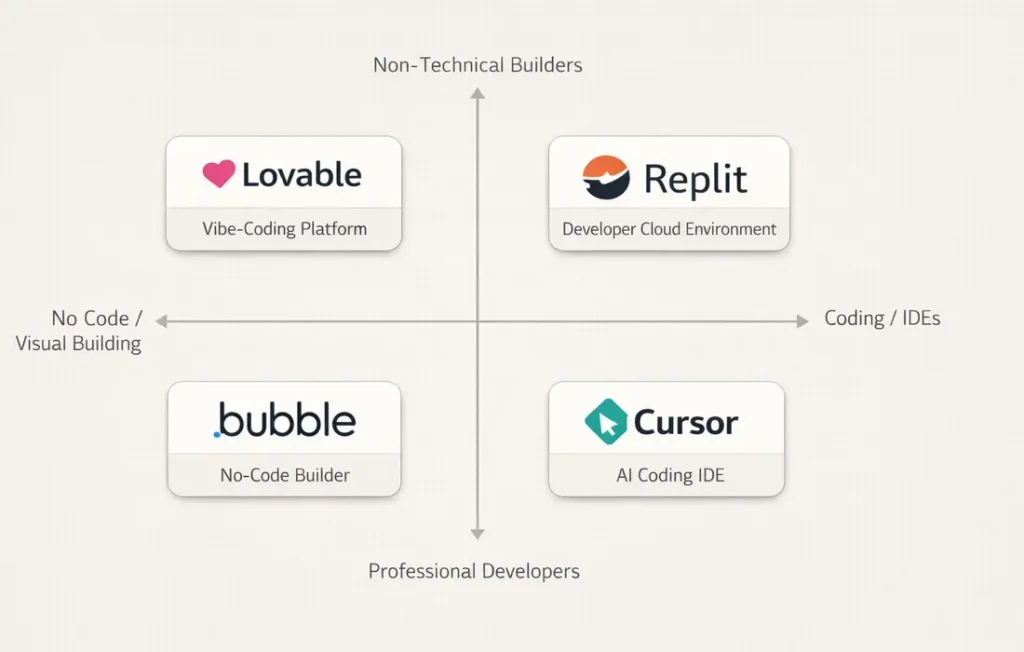
Key competitors include platforms like Replit, Cursor, and Bubble.
Each approaches the developer workflow from a different direction.
Lovable vs Replit vs Cursor
| Platform | Core Approach | Target Users | Key Strength | Strategic Position |
|---|---|---|---|---|
| Lovable | Prompt-based full-stack app generation | Non-technical builders and founders | Converts natural language into deployable applications | AI-native software creation layer |
| Replit | Cloud development environment with AI assistance | Developers and teams | Collaborative coding and rapid deployment | Developer infrastructure platform |
| Cursor | AI coding IDE | Professional developers | Deep AI-assisted coding workflows | Developer productivity tool |
| Bubble | Visual no-code builder | Entrepreneurs and product managers | Drag-and-drop application building | Legacy no-code platform |
Lovable’s strategy is the most radical.
Rather than assisting developers, it attempts to remove coding from the process entirely.
The Reliability and Security Question
Despite the excitement surrounding vibe coding, AI-generated software still faces reliability challenges.
Research examining AI-generated code has found higher rates of vulnerabilities compared to human-written software.
For early-stage prototypes this may be acceptable.
But for enterprise applications, reliability and security remain critical concerns.
This suggests AI development platforms may initially dominate prototyping and early product development before expanding into mission-critical systems.
The Infrastructure Question
The biggest strategic question facing Lovable is defensibility.
Most AI development platforms rely on the same underlying foundation models.
If those models improve significantly, parts of the platform layer could become commoditized.
Lovable’s long-term moat may depend on building:
- proprietary development workflows
- infrastructure orchestration tools
- deployment ecosystems
- collaborative product-building environments
To succeed long-term, the platform must evolve beyond code generation into a software creation infrastructure layer — a pattern increasingly visible across enterprise AI context infrastructure platforms.
The Contrarian View: Vibe Coding May Break Before It Becomes Infrastructure
The optimism surrounding AI-generated software assumes the technology will eventually replace large portions of traditional development workflows.
But there is a contrarian scenario.
AI coding platforms may excel at prototyping but struggle with production reliability.
Large software systems require long-term maintainability, security auditing, and architectural consistency—areas where AI-generated code still faces limitations.
If AI development tools generate large volumes of loosely structured software, organizations may face a new problem: maintenance debt.
Instead of eliminating complexity, AI could shift complexity from coding to debugging.
That does not mean vibe coding fails.
It may simply evolve into a different role within the software lifecycle.
AI may become the fastest way to generate product prototypes, while professional developers remain responsible for transforming those prototypes into production-grade systems.
In that scenario, vibe coding becomes not the replacement for engineering but the acceleration layer that precedes it.
Editorial Takeaway
Lovable’s rise illustrates a deeper transformation underway across the software ecosystem.
AI is no longer just changing applications.
It is changing how applications are built.
By converting natural language into deployable software, platforms like Lovable are attempting to redefine the development workflow itself.
Whether vibe coding becomes a permanent paradigm or a transitional stage remains uncertain.
But one thing is clear.
The distance between idea and product is shrinking.
And the next generation of digital startups may begin not with code—but with a prompt.
Research Context: This analysis synthesizes company disclosures, venture funding reports, developer ecosystem research, and industry commentary surrounding AI-native development platforms. It incorporates publicly available information about Lovable’s growth metrics, funding trajectory, and product architecture, alongside broader trends in AI developer tools, no-code platforms, and software creation workflows. The article also draws on comparative analysis across platforms such as Replit, Cursor, and Bubble to contextualize the emerging “vibe coding” category within the evolving AI software stack.
Editorial Note: This article reflects independent analysis by TechFront360 of the emerging AI software creation stack and the rapid rise of prompt-driven development platforms. The views presented are based on publicly available information and broader market trends shaping AI developer tooling and venture investment in the sector.