AI companies are racing to build increasingly powerful models, but the infrastructure required to run them is becoming a major constraint. Mavria, a Texas-based AI infrastructure startup, is betting that data centers need to be manufactured more like industrial products than constructed as individual buildings. The company emerged publicly on November 9, 2026, with reports of a $100 million seed financing and a $1 billion valuation. Mavria says it has raised $130 million in total across pre-seed and seed rounds, marking an unusually large early financing for a company focused on the physical infrastructure behind artificial intelligence.
A billion valuation backed by infrastructure investors
The latest financing was led by Paradigm, with participation from AMP PBC, Liquid 2, Critical Frontier and Dream Ventures. The funding figures need some clarification: the $100 million figure is reported for the seed offering, while Mavria’s official announcement confirms $130 million raised across both pre-seed and seed rounds. An earlier SEC Form D filing recorded a $100 million offering, of which $75 million had been sold by October 21. Mavria plans to use its capital to secure critical equipment and supply chains, expand manufacturing capacity and grow its engineering and operations teams. The investment thesis is straightforward: owning the ability to deliver infrastructure could become valuable as demand for AI compute grows.
Terrain turns the data center into a manufactured product
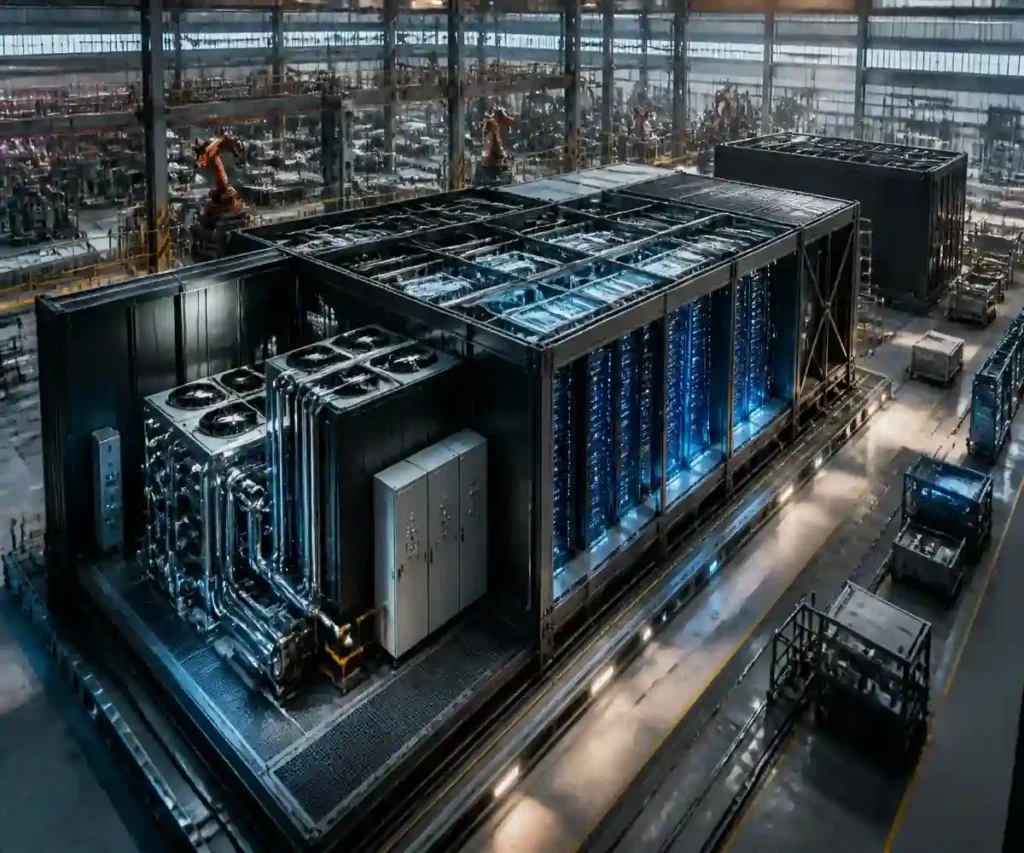
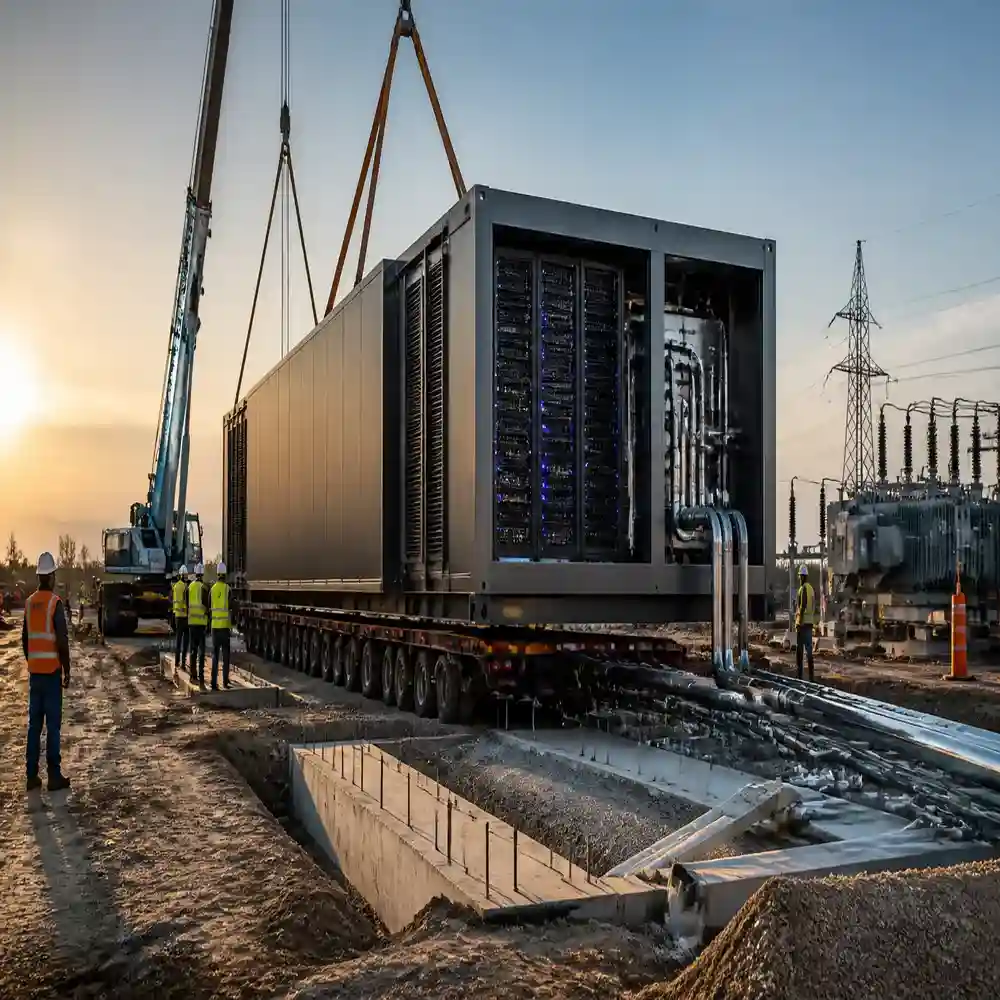
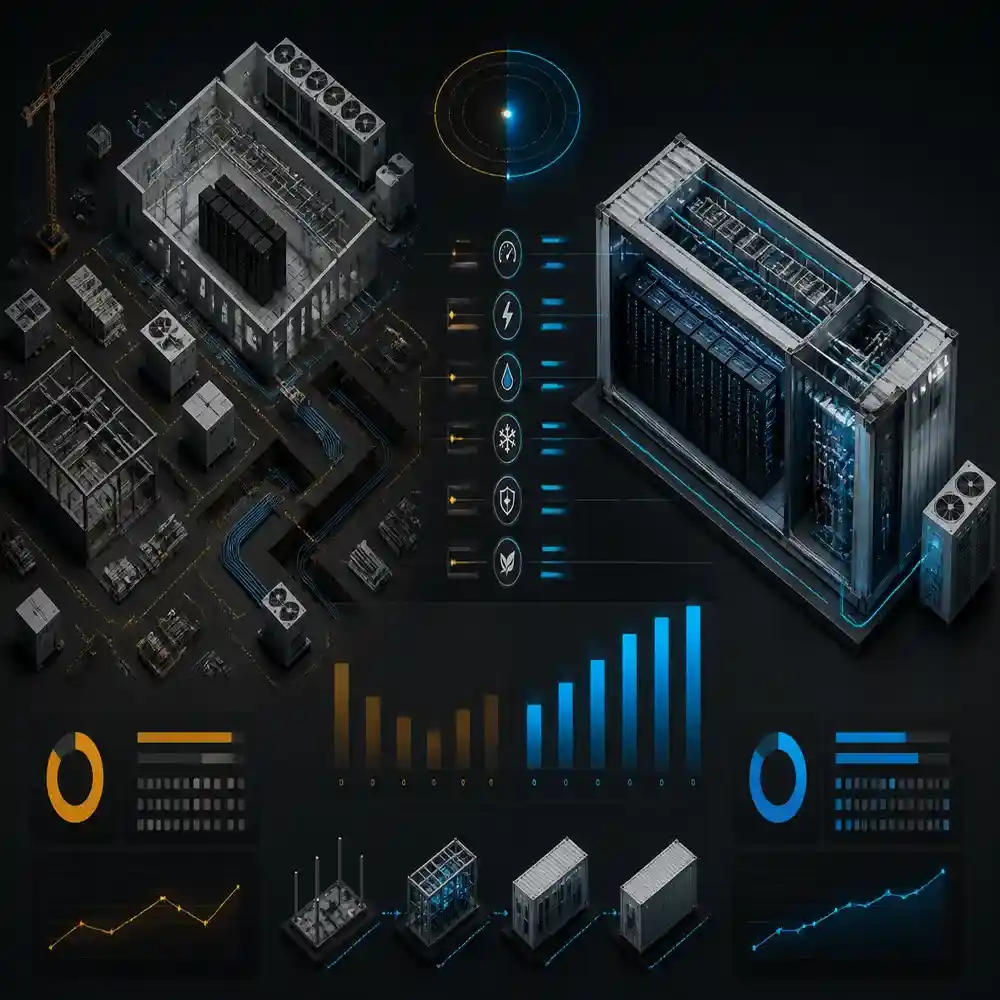
Mavria’s first product, Terrain, is designed to replace fragmented, site-by-site data center construction with a standardized factory-built system. According to industry reporting, each unit is designed around a 5-megawatt capacity and combines power distribution, direct liquid cooling, automation controls and standardized IT server racks. These components are integrated and tested as a system before deployment, rather than being assembled through multiple independent construction processes at the destination. The intended customers include frontier AI laboratories, cloud providers, neocloud operators and data center developers. Importantly, Mavria is selling the physical infrastructure, not AI chips, computing services or access to its own cloud.
Why AI infrastructure investors are watching the physical layer
The opportunity extends beyond Mavria. JLL’s 2026 Global Data Center Outlook projects nearly 97 gigawatts of additional data center capacity between 2026 and 2030, effectively doubling global capacity. Yet expanding this capacity is not simply a matter of buying more servers. Electricity availability, grid connections, transformers, cooling equipment and construction schedules can all delay deployment. JLL also reported that 57% of data center projects experienced delays of at least three months in 2025. Mavria is targeting the gap between available computing hardware and the physical facilities needed to put that hardware into operation. In an industry increasingly focused on speed to power, shortening the infrastructure delivery process could be commercially important.
A founding team built around energy and industrial execution
Mavria was founded by Adam Blake, Nick Poradek and Seth Cohen, who previously worked together at the US Department of Energy. Their backgrounds span energy infrastructure, manufacturing, software, nuclear policy and major industrial projects. Blake has experience building commercial solar projects and scaling technology businesses; Poradek has worked on complex energy equipment and manufacturing operations; Cohen brings experience across nuclear policy, regulation and government. This combination matters because building data centers at scale requires more than software engineering. It involves procurement, power systems, factory operations, project finance and the ability to coordinate supply chains that are often outside a startup’s direct control.
The difficult part will be proving the manufacturing model
Factory production could make data center deployment more repeatable, but it cannot automatically remove the industry’s biggest constraints. Every installation still needs suitable sites, reliable electricity, regulatory approvals, cooling systems, logistics and customers ready to deploy capacity. Mavria’s approach to connecting with available local distribution capacity could help certain projects move faster, but it does not create new electricity where no spare capacity exists. Its first Terrain unit is being built in Houston, with testing reported as planned for early 2027 and manufacturing expansion expected around mid-2027. Until those milestones are achieved, the company’s delivery speed and cost advantages remain a proposition to be demonstrated at scale.
Mavria is betting that the next AI infrastructure winner will know how to build
The significance of Mavria’s financing is not simply the size of its seed round or its reported billion-dollar valuation. It reflects an investment thesis that the AI infrastructure market will reward companies capable of turning complex physical projects into repeatable production systems. If Terrain can deliver dependable power, cooling and compute-ready facilities faster and at competitive costs, Mavria could occupy an important position between AI developers and the industrial supply chains they depend on. The critical milestones now are factory output, successful testing, customer deployments, delivery economics and access to power. Investors have funded the ambition; the next phase must prove that data center construction can genuinely become a manufacturing business.