
LONDON / TEL AVIV — March 17, 2026
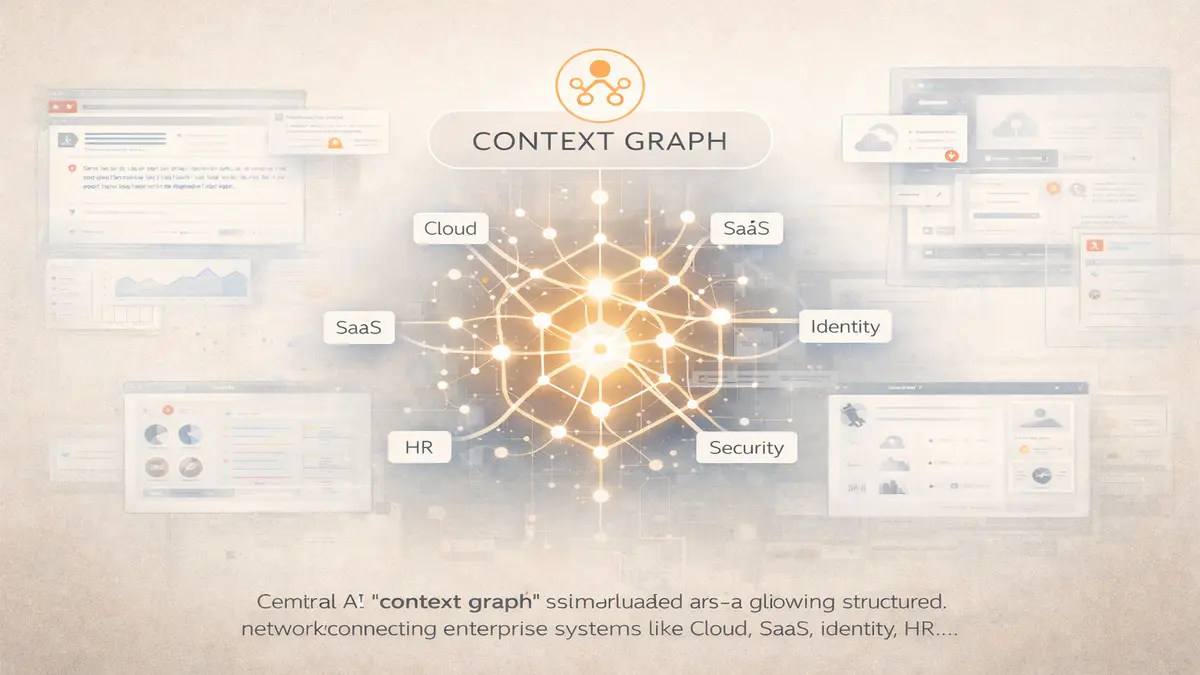
A new class of AI infrastructure is emerging inside cybersecurity — one that does not start with detection, but with context.
Surf AI, a Tel Aviv–based AI security infrastructure startup, has raised $57 million in a combined Seed and Series A round led by Accel, with participation from Cyberstarts and Boldstart Ventures, to build a context-layer system that transforms how enterprise security decisions are made.
But the funding itself is not the signal.
The signal is where Surf AI is positioning itself in the AI stack: not as a detection tool, not as a response platform — but as a context layer that sits above the entire security program.
This is not another security tool category. It is a shift in how organizations model operational reality itself.
In simple terms: Surf AI is turning cybersecurity from a system that detects problems into one that understands how work actually happens.
This marks a deeper structural shift in how cybersecurity systems are designed.
Cybersecurity is moving from:
→ alert generation
to:
→ decision orchestration
From Detection to Decision Systems
For decades, cybersecurity has been built around a simple loop:
- detect threats
- investigate alerts
- respond to incidents
AI improved each step — faster detection, better signal filtering, automated playbooks.
But the core problem remained unsolved: security teams do not fail at detection — they fail at coordination.
Organizations today operate across:
- identity systems
- cloud infrastructure
- SaaS platforms
- HR tools
- internal IT systems
Each system holds a fragment of reality.
None understand the full operational context.

Surf AI is built around this gap — a pattern increasingly visible across AI systems where coordination, not capability, becomes the bottleneck, as explored in The Next AI Breakthrough Is Expertise, Not Models.
The Core Architecture: Context as Infrastructure
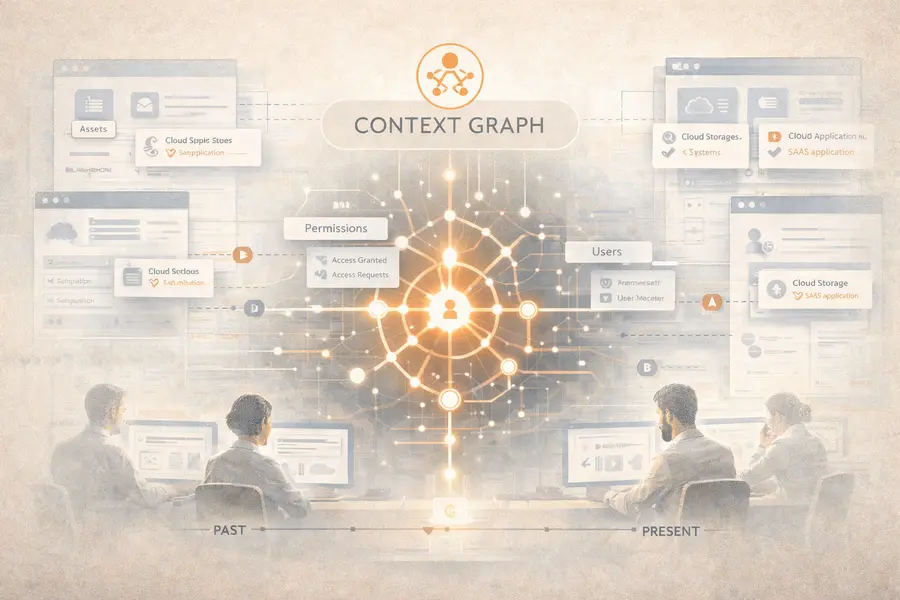
At the center of Surf AI’s platform is what it calls a “Context Graph.”
This is not a static asset inventory.
It is a dynamic, time-aware system that maps:
- assets
- permissions
- ownership
- dependencies
- behavioral changes over time
- communication patterns between systems and teams
The difference is structural.
Traditional tools answer:
→ What exists?
Surf AI attempts to answer:
→ What matters right now, and who is responsible for it?
This distinction is critical.
Because in modern enterprises, risk is rarely a single event. It is a chain of misaligned decisions across systems.
From Visibility to Action
Where most platforms stop at visibility, Surf AI extends into execution.
It deploys specialized AI agents that:
- prioritize risks based on business impact
- identify ownership gaps
- initiate remediation workflows
- automate coordination across teams
Crucially, these agents operate under explicit human oversight.
This reflects a broader pattern across enterprise AI:
→ autonomy is increasing
→ but control remains central
As explored in How AI Startups Are Reshaping Market Power, the competitive advantage is shifting toward systems that combine automation with governance.
The “Gray Work” Problem
Surf AI’s thesis is not built around high-profile breaches.
It is built around something less visible — but more costly: the “gray work” of security operations.
This includes:
- approval flows
- access reviews
- system updates
- coordination between teams
- tracking ownership across distributed environments
These processes are:
- repetitive
- fragmented
- poorly instrumented
And they consume the majority of security teams’ time.
CEO Yair Grindlinger describes this reality directly:
“Day-to-day security is much less glamorous than people think. It’s about coordination, approvals, and closing gaps that everyone knows exist.”
Surf AI’s bet is that this is where AI delivers the highest leverage — automating the invisible layer of enterprise operations, similar to how agentic systems are reshaping workflows across industries, as seen in Cursor’s $2B ARR Explosion Signals the Arrival of Agentic Developer Infrastructure.
Early Signals: From Theory to ROI
Unlike many AI-native platforms, Surf AI is already in production.
Early enterprise deployments report:
- recovery of ~$1M in unused SaaS licenses
- removal of thousands of dormant accounts
- resolution of certificate and identity risks
- measurable operational improvements within weeks
This is not incremental improvement.
It is a compression of entire operational cycles — reducing the time between detection and resolution across workflows.
A Familiar Pattern: The Rise of Context Layers
Surf AI is not an isolated case.
It fits into a broader infrastructure shift across AI:
- coding → copilots → autonomous systems
- enterprise → tools → context platforms
- security → alerts → decision layers
In each case, the winning systems are not those that generate outputs — but those that organize context across systems.
The Competitive Landscape: Converging Toward the Same Layer
Surf AI is entering a rapidly evolving category.
Different players are approaching the same problem from different directions:
- Axonius → asset and identity graph
- Torq → agentic workflow automation
- Palo Alto Networks → integrated enterprise security platforms
- CrowdStrike → endpoint-driven AI operations
What differentiates Surf AI is not any single feature.
It is the integration of three layers into one system:
- Context graph
- Agentic execution
- Human-governed control
This combination defines a new category: AI-native security operations infrastructure
The Strategic Control Point
Surf AI’s positioning can be reduced to a single insight:
Cybersecurity will not be defined by:
- better alerts
- faster detection
- more dashboards
It will be defined by: who controls the context layer of decision-making
Because that layer determines:
- what gets prioritized
- what gets fixed
- what gets ignored
In other words: control over context becomes control over outcomes — a pattern increasingly visible across AI infrastructure, as seen in
the $3B AI funding wave reshaping infrastructure, agents, and robotics.
The Bigger Shift
The rise of platforms like Surf AI signals a broader transition in artificial intelligence:
From:
→ systems that generate signals
To:
→ systems that structure decisions across organizations
This is the same shift now visible across:
- enterprise AI platforms
- agentic systems
- workflow automation layers
Cybersecurity is simply one of the first domains where this transition becomes unavoidable.
The Opportunity Ahead
Surf AI remains early:
- founded in 2024
- ~65 employees
- already in production with Fortune 500 companies
- valuation undisclosed
But its strategic positioning reflects a deeper truth about the next phase of AI:
The most valuable systems will not be those that detect problems —
but those that understand how organizations actually operate.
And then act on that understanding.
Live Update Signal
This article will be updated as Surf AI expands customer deployments, releases product benchmarks, or discloses additional funding details.
Research Context
This report synthesizes real-time coverage from Israeli and global tech media (Globes, Geektime, Jerusalem Post, Axios), company disclosures, and cross-verified founder and investor data.