
Subheadline:
Customer-led seed round signals a shift toward execution-layer AI, as Lance deploys autonomous agents inside legacy hotel systems to capture revenue and replace operational workflows.
The Capital Signal Behind Lance’s $3.7M Raise
Lance, a YC-backed startup building AI agents for hotel operations, has raised a $3.7 million seed round backed primarily by hotel owners and operators—marking a shift in how capital is flowing into execution-layer AI systems embedded directly inside real-world infrastructure.
The company operates in the emerging category of agentic enterprise software, where AI systems execute workflows rather than assist them.
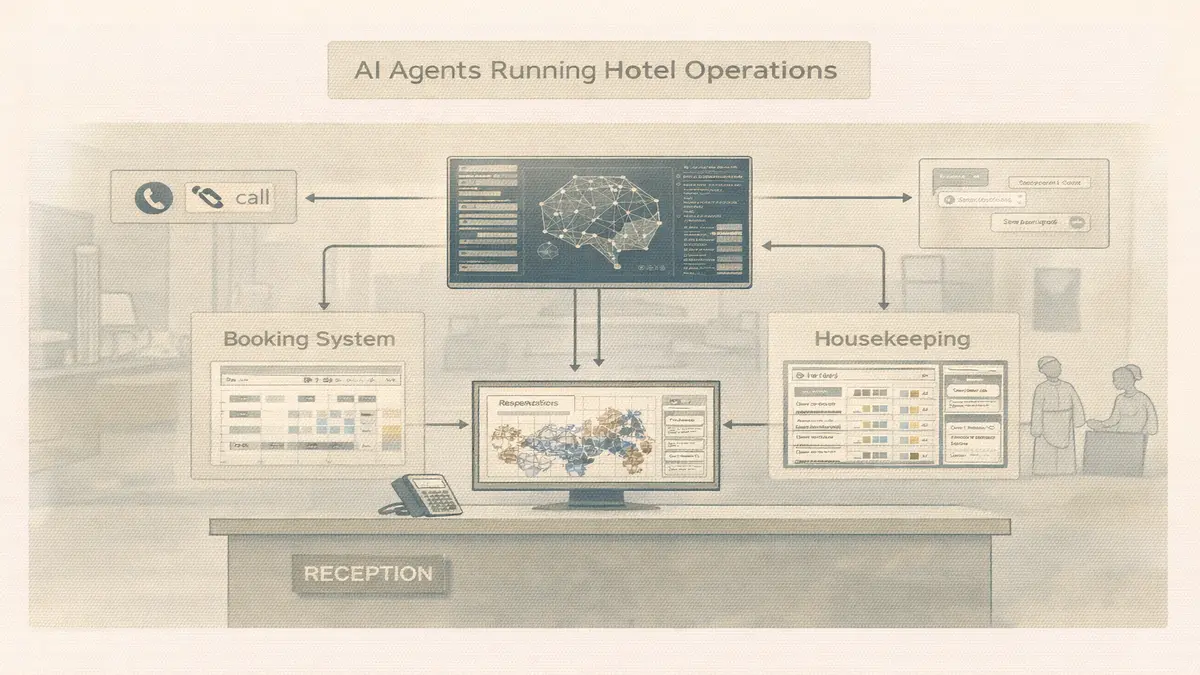
The company builds multimodal AI agents that autonomously run hotel operations—from guest communication to back-office coordination—at a time when enterprise AI is moving from assistive interfaces to systems that directly execute workflows and generate revenue.
In less than three months, Lance has scaled to over $2.2M in ARR, an outlier trajectory for a hospitality startup.
This places Lance within a broader capital transition already visible across AI markets:
from funding models to funding systems that control outcomes.
Hard Facts: Capital, Traction, and Deployment Velocity
The structure of Lance’s round reveals more than its size:
- $3.7M Seed (YC W26)
- Backed primarily by hotel operators (customer capital)
- Oversubscribed round
- ~43–50 hotels live across the U.S.
- >$2.2M ARR reached in ~3 months
- Deployment time: <1 hour per property
This combination—rapid deployment, immediate ROI, and customer-funded capital—is atypical in hospitality technology, where adoption cycles historically span years.
The signal is clear:
capital is following systems that produce measurable outcomes, not experimental tools.
Why Customer-Led Capital Matters More Than the Round Size
The most important detail is not the $3.7M—it is who wrote the checks.
Unlike traditional venture-led rounds, Lance’s investors are:
- Hotel owners
- Operators already using the product
- Stakeholders directly exposed to operational inefficiencies
This reflects a deeper shift in venture dynamics:
customers are becoming capital allocators when ROI is immediate and visible.
The absence of a traditional venture lead is itself a signal. Early-stage AI infrastructure companies are increasingly raising from customers when product-market fit is immediate, reducing reliance on speculative capital. In Lance’s case, operator-led funding suggests that value validation is occurring inside deployment environments—not investor narratives.
This model compresses the traditional startup loop:
- Product → adoption → validation → funding
Into:
- Product → revenue → funding
It also creates a structural advantage:
- Built-in distribution
- Faster expansion across hotel chains
- Reduced go-to-market friction
The Architecture Driving the Capital Shift
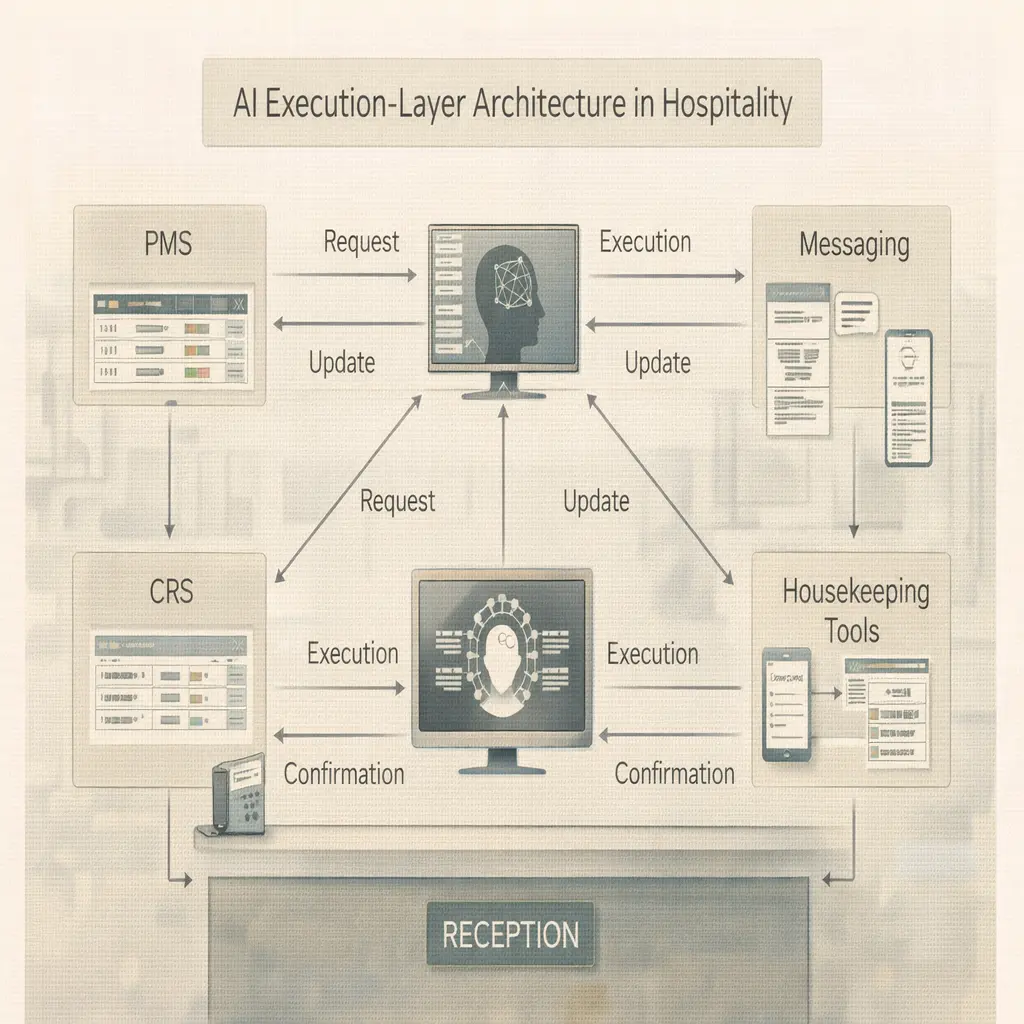
Lance’s core differentiation lies in its execution-layer architecture.
Instead of integrating with hotel systems, its agents:
- Visually interpret software interfaces
- Click, type, and navigate workflows like human staff
- Operate across PMS, CRS, and legacy tools
- Complete tasks end-to-end, not just log them
This eliminates the core constraint of hospitality technology:
integration dependency
Deployment shifts from:
- Months → under one hour
This aligns with a broader pattern also visible in
AI agents replacing interface-driven software:
AI is no longer connecting systems—it is operating them directly.
The Economic Layer: Where Value Is Actually Created
Hospitality is structurally inefficient:
- Up to 40% of guest calls go unanswered
- Staffing shortages persist globally
- Revenue leakage occurs across bookings, upgrades, and services
Lance targets this inefficiency directly.
Its agents:
- Handle guest communication across channels
- Execute operational tasks across systems
- Capture missed revenue opportunities
Reported outcomes, based on operator-reported results, include:
- 30%+ reduction in front desk call volume
- Increased request completion rates
- Direct revenue recovery
This reframes the product from software to:
operational infrastructure tied to cash flow
Capital Is Moving Toward Execution, Not Interfaces
Lance’s round fits into a broader capital reallocation pattern across AI:
Investors are increasingly prioritizing:
- Systems that execute workflows
- Products tied to revenue generation
- Architectures that bypass integration friction
- Vertical AI with immediate ROI
This mirrors shifts seen in
AI infrastructure and control-layer investments:
the model layer is commoditizing—execution layers are capturing value.
The Competitive Landscape: Integration vs Execution
Hospitality AI is now splitting into two architectures:
Integration-Based Systems
- Require APIs and data pipelines
- Slow enterprise deployments
- Limited by legacy software constraints
Execution-Layer Systems (Lance)
- No integration required
- Operate directly on interfaces
- Rapid deployment across fragmented systems
- Strong fit for legacy-heavy environments
Most existing hospitality AI tools remain limited to chatbot or voice automation layers, positioning Lance not as a feature competitor, but as a system-level replacement for operational roles.
This is not incremental improvement.
It is a redefinition of how software interacts with enterprise environments.
The Constraint the Market Is Underestimating
Despite strong traction, Lance operates within constraints that remain underpriced:
- Operational edge cases across properties
- Reliability expectations in guest-facing systems
- Scaling support across hundreds of hotels
- Trust in autonomous execution replacing staff
Hospitality is a real-time environment.
Errors are not theoretical—they are experienced by guests.
The challenge is not building agents.
It is maintaining consistent performance at scale.
Strategic Implications for Investors
Lance reinforces a clear capital thesis:
- Vertical AI is outperforming horizontal platforms
- Execution-layer systems create stronger defensibility
- Customer-funded rounds signal real product-market fit
- Deployment speed is becoming a primary competitive advantage
For investors, this represents a shift toward:
capital-efficient systems with embedded distribution and measurable ROI
System-Level Insight: The Real Moat Is Outcome Ownership
The defining shift behind Lance is not its use of AI.
It is where it sits in the value chain.
AI defensibility is moving away from:
- Model performance
- Interface quality
- Feature differentiation
Toward:
control over workflows that produce economic outcomes
This model introduces a new category of enterprise software:
labor-replacing systems that are sold on outcomes, not seats.
Unlike SaaS, which scales with user adoption, agentic systems scale with task ownership—fundamentally changing how software revenue is generated.
Lance’s agents are valuable because they:
- Execute tasks across systems
- Replace operational labor
- Generate measurable revenue impact
This is where:
AI transitions from software to infrastructure
Editorial Close
Hospitality has long been constrained by fragmented systems, manual workflows, and persistent labor shortages.
Lance does not attempt to replace that complexity.
It operates on top of it.
By embedding autonomous agents directly into existing environments, it bypasses integration barriers and aligns with how hotels already function.
That architectural choice—more than the funding itself—explains why capital is moving in.
Because in this phase of AI:
the companies that win are not those that build intelligence—
but those that deploy it where economic value is created.
Research Context:
Synthesis of YC disclosures, funding announcements, operator participation, product architecture, and enterprise AI deployment patterns as of March 2026.
Editorial Note:
This article reflects independent analysis of publicly available information and broader AI ecosystem trends.