Coreshell Technologies has raised $30 million in Series B funding to accelerate the commercialisation of its next-generation lithium-ion battery technology and expand manufacturing capacity in the United States. Announced on November 11, 2026, the round was co-led by Ferroglobe and Access Industries, with participation from ADS, Helios Ventures, Pegasus Tech Ventures, Mana Ventures and Entrada Ventures. Based in San Leandro, California, Coreshell is developing batteries that replace conventional graphite in the anode with metallurgical-grade silicon, a widely available material that can offer significant energy-storage advantages. Its technology is designed to address one of the biggest obstacles to silicon-based batteries: the material’s tendency to expand and degrade during repeated charging and discharging. The new investment will support manufacturing expansion, customer programmes and commercial deployment. The company’s wider ambition is equally significant: to build a battery supply chain that reduces dependence on Chinese critical materials across both the anode and cathode.
Why the Battery Industry Is Looking Beyond Conventional Graphite
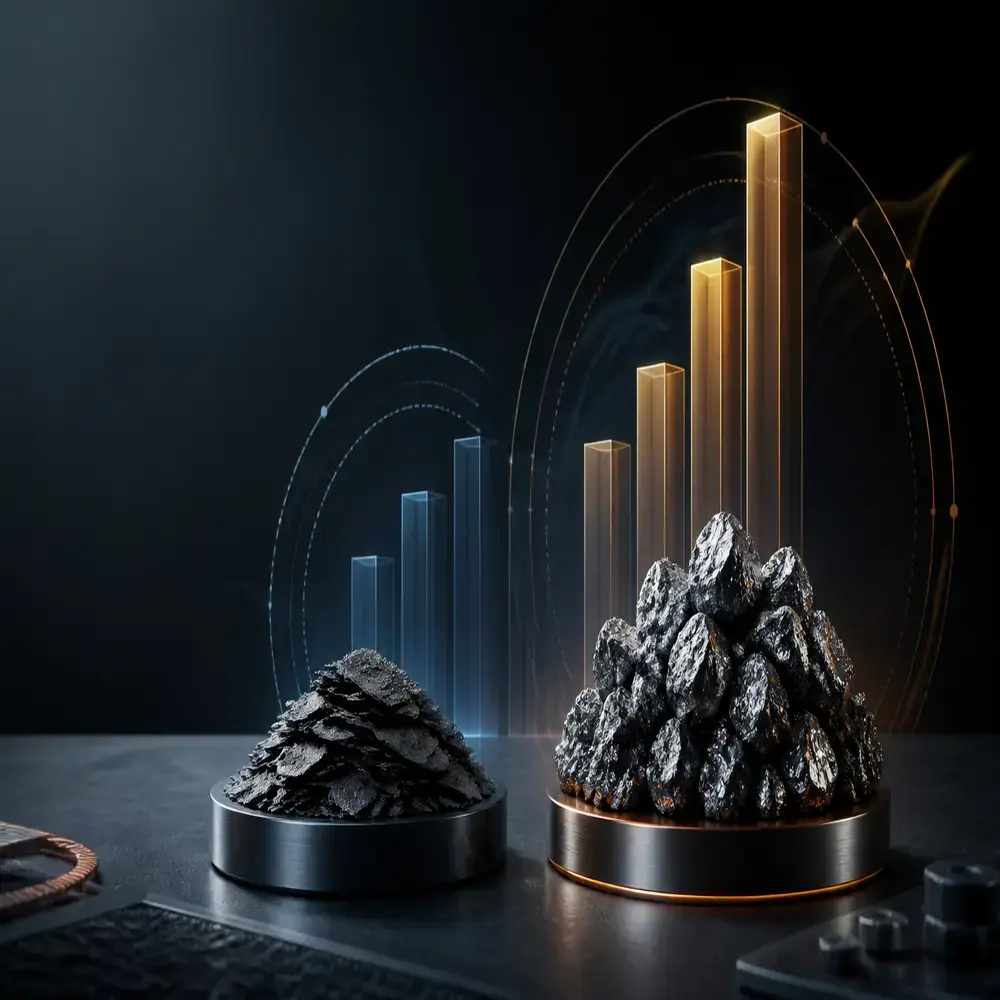
Graphite has been the standard material used in lithium-ion battery anodes for decades, but its supply chain has become a strategic concern for manufacturers. More than 90% of the world’s graphite processing is concentrated in China, according to the funding announcement from Coreshell. That concentration exposes battery producers to export restrictions, geopolitical tensions and disruptions in the movement of critical materials. At the same time, battery makers are under pressure to improve energy density, reduce costs and deliver better performance for electric vehicles, drones and energy-storage systems. Silicon is attractive because it can store substantially more lithium than graphite, potentially allowing a battery to deliver greater capacity in a similar space or weight. However, conventional silicon-anode approaches have faced challenges involving cost, expansion and long-term stability. Coreshell is attempting to make a commercially produced, lower-cost form of silicon work reliably inside lithium-ion cells, rather than depending on more expensive engineered silicon materials.
Coreshell’s Coating Technology Tackles Silicon’s Biggest Weakness
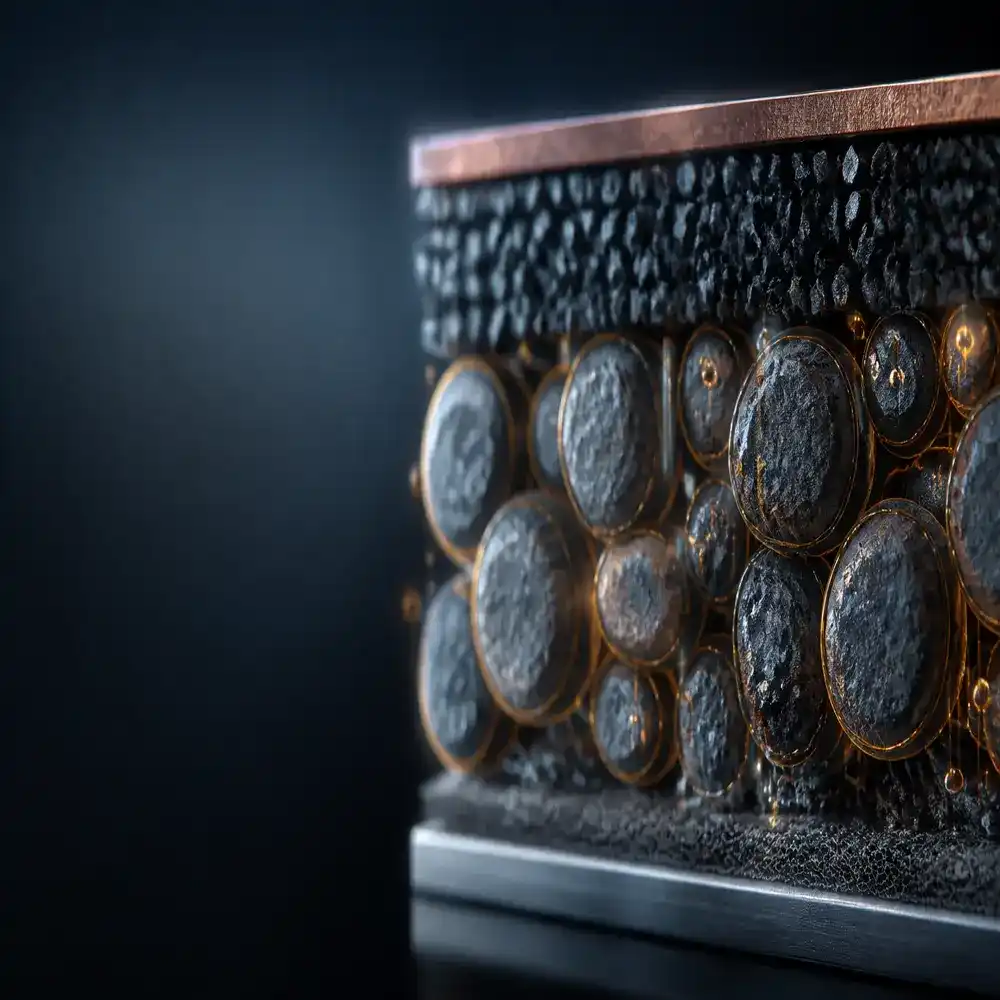
The central technology behind Coreshell is its proprietary coating for metallurgical-grade silicon. During charging, silicon absorbs lithium and expands; during discharge, it contracts. Repeating this process can damage the material, weaken its structure and cause performance to deteriorate over time. Coreshell says its coating acts as both an artificial solid-electrolyte interface, or SEI, and an encapsulant. In simple terms, it helps protect the silicon surface and reinforce the material as the battery repeatedly charges and discharges. The company combines this coating with specially designed binders, active materials and electrolytes to create a complete cell-level battery design. This is important because replacing graphite is not just a matter of putting silicon into an existing battery recipe. The surrounding chemistry and cell construction also need to work together. Coreshell’s approach is intended to make abundant metallurgical silicon a practical alternative to conventional graphite-based anodes.
Why Metallurgical Silicon Could Change Battery Economics
Not all silicon-anode technologies use the same type of material. Some approaches rely on highly processed or synthetic silicon compounds that can be expensive and difficult to manufacture at scale. Coreshell instead uses metallurgical-grade silicon, a commercially produced form of the material that can be sourced through established industrial supply chains. The company works with Ferroglobe, a major silicon producer, to secure domestic material. Coreshell says its technology can integrate with existing lithium-ion battery manufacturing lines, reducing the need for manufacturers to replace their entire production infrastructure. Its Genesis technology is marketed with company-stated targets of up to 30% more range and more than 25% lower battery cost per kilowatt-hour. These are the company’s own performance and cost claims, not independently established results across all commercial applications. If the technology can deliver consistent performance at manufacturing scale, its combination of lower-cost raw material and higher energy-storage potential could make it relevant to several battery markets.
Ferroglobe and L&F Help Address Both Sides of the Battery Supply Chain
Replacing graphite in the anode addresses only one part of the battery’s material requirements. The cathode is another critical component, and its materials also have concentrated global supply chains. Coreshell has therefore been working to establish alternative sourcing across both sides of the battery cell. Ferroglobe supplies the metallurgical silicon used in its anode technology, while an eight-year agreement with South Korea’s L&F provides long-term access to lithium iron phosphate, or LFP, cathode active materials sourced outside China. LFP is widely used in electric vehicles and energy-storage systems because of its durability and safety characteristics. Together, these partnerships are intended to give customers a more traceable supply chain with reduced exposure to materials from Foreign Entities of Concern. The distinction matters: Coreshell is building a supply chain based on US-sourced silicon and non-Chinese cathode materials, rather than claiming that every component in its production process is manufactured in the United States.
A M Department of Energy Award Supports Manufacturing Expansion
The Series B follows a separate $50 million award from the US Department of Energy announced in August 2026. The federal support is intended to help expand domestic manufacturing capacity for batteries using metallurgical-silicon anodes. Coreshell’s announced project, developed alongside AM Batteries and its dry-coating cathode technology, outlines approximately 2 gigawatt-hours of electrode manufacturing capacity and 1.5 gigawatt-hours of cell-assembly capacity. The project is also expected to create more than 100 domestic jobs as construction and equipment are brought online. These are planned manufacturing capacities, not evidence that the factory is already operating at those levels. The combination of private investment and public-sector support gives Coreshell additional resources to move from technical development and pilot production towards larger-scale manufacturing. It also reflects the growing importance of battery supply chains to US industrial, transportation and defense policy.
Where Coreshell’s Batteries Could Find Their First Major Markets
Coreshell’s technology is aimed at customers that need high-performance batteries but also want greater control over material sourcing. Electric vehicle manufacturers could benefit from higher energy storage in a given battery weight, potentially supporting longer driving range or lighter battery packs. Drone and uncrewed-system manufacturers may value additional flight time and payload capacity, while defense suppliers have a separate reason to reduce exposure to foreign-controlled battery materials. Energy-storage developers and industrial customers are also looking for durable batteries with more predictable supply chains. However, entering these markets requires extensive testing, customer qualification and consistent manufacturing quality. Battery performance must be demonstrated across operating temperatures, charging rates, safety conditions and long-term cycling. Coreshell’s commercial progress will therefore depend not only on its material innovation but also on its ability to deliver reliable cells at the volumes and specifications required by large customers.
Coreshell’s M Series B Is a Bet on the Future of Domestic Battery Manufacturing
Coreshell’s latest funding round highlights how battery innovation is becoming closely connected to industrial strategy and supply-chain security. The company is not simply trying to improve one component of a lithium-ion cell; it is working to combine a lower-cost silicon anode, alternative cathode sourcing and scalable manufacturing into a more resilient battery platform. Its technical proposition addresses a genuine challenge in battery chemistry, while its commercial strategy is supported by partnerships with materials suppliers and a substantial federal manufacturing award. The risks remain significant. Coreshell must prove that its batteries can maintain performance through extended use, meet customer qualification standards and compete on cost when manufactured at industrial scale. It must also turn planned factory capacity into dependable production and long-term customer orders. The $30 million Series B gives the company more capital to pursue that transition. Its next milestone will be demonstrating that metallurgical-silicon batteries can move from promising technology to a dependable commercial alternative for electric mobility, energy storage and defense applications.
Sources
- Coreshell Technologies – $30M Series B announcement, November 11, 2026
- Coreshell – Metallurgical silicon battery technology and proprietary coating
- Coreshell – Founders and management team
- Coreshell – $50M Department of Energy manufacturing award, August 2026
- Coreshell – Eight-year L&F LFP cathode-material supply agreement
- Coreshell – Earlier $24M strategic funding announcement, March 2025
- Berkeley Lab – Coreshell’s origins and silicon-anode manufacturing development