Project Omega has raised $80 million in Series A funding led by B Capital to develop technology that could turn America’s used nuclear fuel into valuable materials for future reactors and long-duration power systems. Announced on November 9, 2026, the round also included noa VC and 645 Ventures, alongside existing investors Starship Ventures, Mantis Ventures, Decisive Point, Virta Ventures, Pace Ventures, Essential Capital and Washington Harbour Partners. Founded in 2025 and headquartered in Newport, Rhode Island, the company is developing a nuclear fuel recycling process designed to recover useful materials from fuel that has already been used in commercial reactors. Those recovered materials could support two related businesses: feedstock for advanced nuclear reactors and radioisotope power systems for applications where conventional batteries and generators are difficult to use. Founder and CEO Dr. Stafford Sheehan is positioning Project Omega around a larger opportunity in domestic energy infrastructure: recovering value from existing nuclear materials while developing new sources of reliable power. The company previously raised a reported $12 million seed round in February 2026, making the $80 million its Series A financing rather than its lifetime funding total.

Why Used Nuclear Fuel Could Become an Important Energy Resource
The nuclear industry faces a challenge that extends beyond building new reactors. The United States has accumulated a substantial inventory of used nuclear fuel, while developers of advanced reactors need dependable supplies of specialised nuclear materials. Used fuel is commonly stored and managed after removal from a reactor, even though it still contains valuable materials that may be recovered and reused through appropriate processing. At the same time, the development of advanced reactor technologies is creating demand for alternative fuel supplies, including high-assay low-enriched uranium, commonly known as HALEU. These two challenges are connected: one part of the nuclear industry is managing previously used material, while another is searching for the fuel and materials required for future systems. Project Omega is trying to connect those markets through a domestic recycling platform. Its strategy is to recover useful components from used nuclear fuel and turn them into products with potential value in energy generation, industrial applications and specialised power systems. This approach could help strengthen domestic supply chains, although its commercial potential will depend on successful technical validation, licensing and industrial-scale operation.
Project Omega’s Molten-Salt Technology Is Designed to Recover Valuable Materials
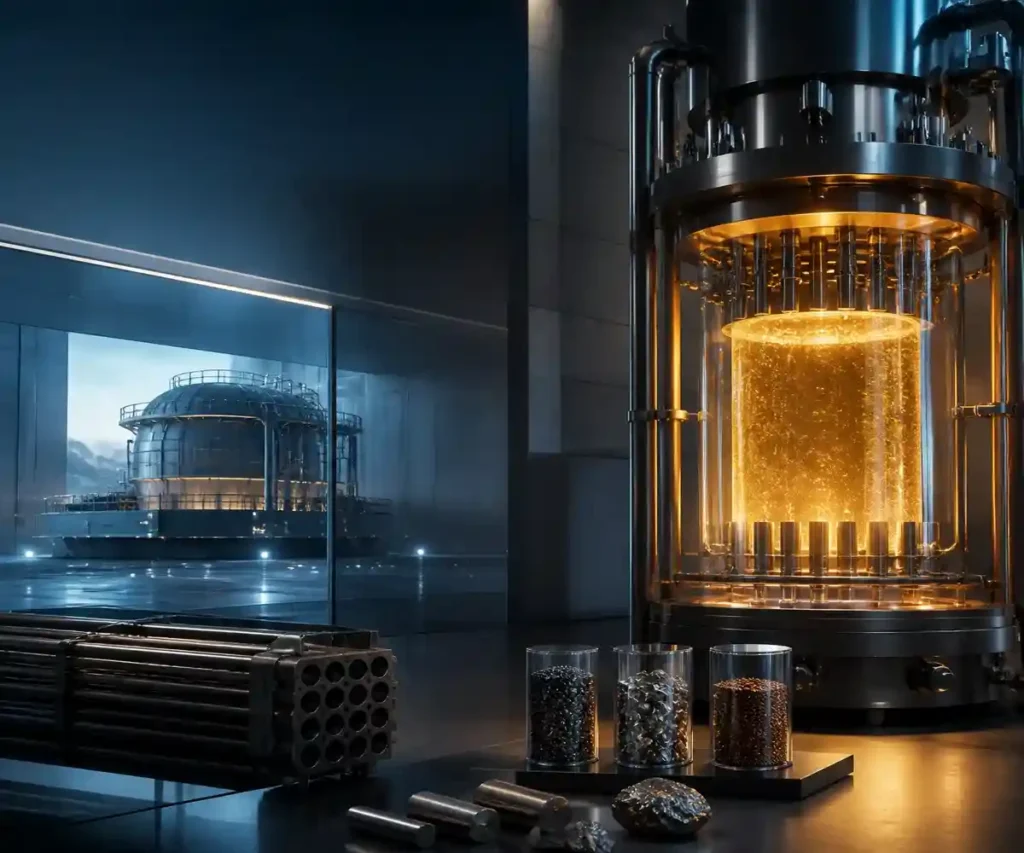
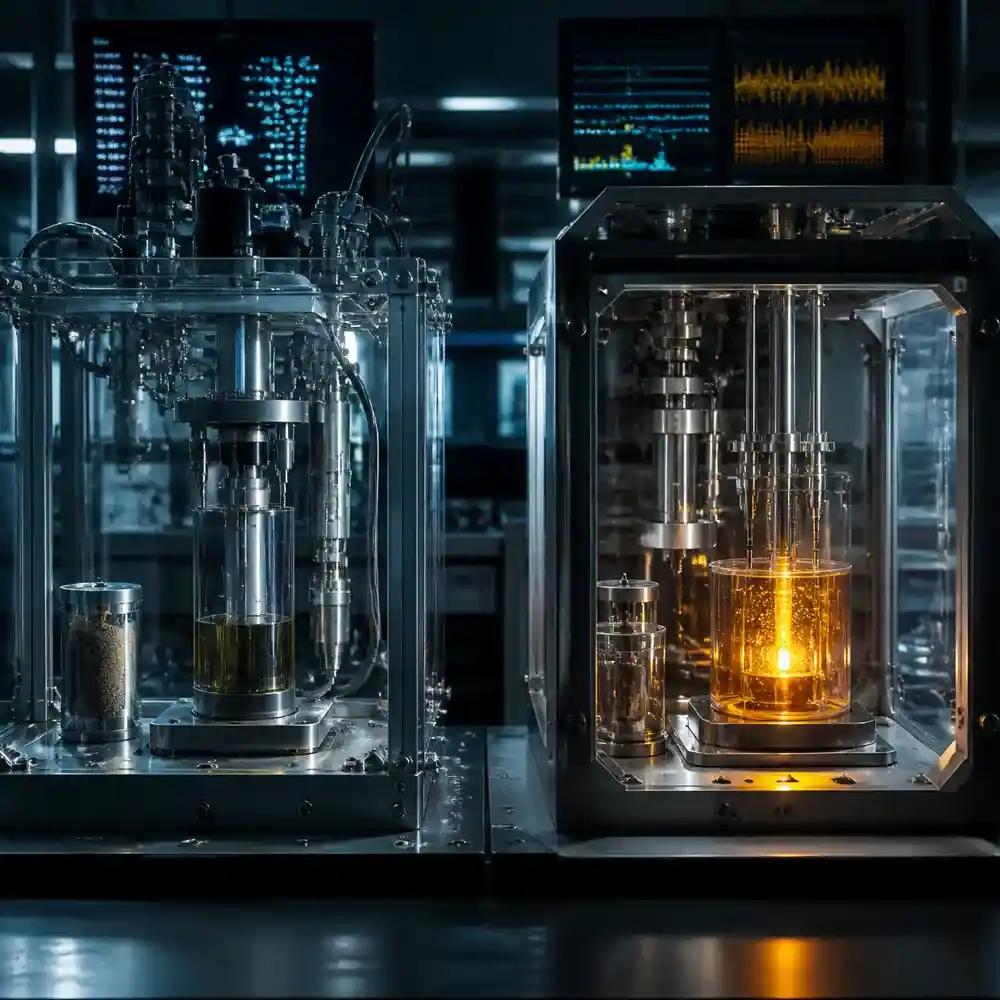
The centre of Project Omega’s technology is a non-aqueous molten-salt electrochemical process known as pyroprocessing. In simple terms, used nuclear fuel is processed in high-temperature molten salt, where electrical current helps separate different materials so that useful components can be recovered. The company says its system is designed to recover uranium for future fuel applications and valuable radioisotopes, including strontium-90, that can support its power technology. An important part of its stated process is that it does not isolate pure plutonium, a key consideration when evaluating the proliferation risks associated with nuclear fuel recycling. Because the process does not rely on conventional water-based chemical separation, Project Omega also aims to avoid some of the secondary wastewater streams associated with those methods. The company says its technology could reduce the volume of material requiring long-term disposal by up to 90%, although this is a company-reported potential outcome rather than a result demonstrated at commercial scale. The larger objective is to build a nuclear refinery that can recover multiple valuable product streams from a single used-fuel feedstock.
Radioisotope Power Systems Generate Electricity From Radioactive Decay
One of Project Omega’s most distinctive product opportunities is its work on radioisotope power systems. These devices generate electricity from the natural decay of radioactive isotopes. This is fundamentally different from a nuclear reactor: a radioisotope power system does not generate electricity through a sustained nuclear fission chain reaction. Instead, it converts energy released during radioactive decay into electrical power. Such systems can be useful in locations where batteries are difficult to replace, generators require regular fuel deliveries or human access is limited. Project Omega is investigating recovered isotopes such as strontium-90 for long-duration solid-state power products that could support remote sensors, communications equipment, spacecraft, underwater infrastructure and defense systems. The attraction is continuous power over extended periods, particularly for equipment that must remain operational without frequent maintenance. The company has demonstrated a laboratory proof of concept with testing at Pacific Northwest National Laboratory. However, laboratory results do not establish commercial readiness: output, durability, shielding, manufacturing, safety validation and regulatory approval will all matter before wider deployment is possible.
The X Series Combines Conventional Power Sources With Future Isotope Technology
Alongside nuclear fuel recycling and isotope development, Project Omega has introduced the X Series, a family of modular expeditionary power systems designed for remote and demanding environments. The current platform combines battery storage and generators with an intelligent control system that is designed to manage different sources of electricity. The company says the system is intended to support solar and wind integration initially, with radioisotope power planned as a future addition as the technology develops. This distinction is important because the X Series should not be described as a fully commercial nuclear-powered battery system today. Its initial architecture is based on conventional power technologies, while isotope power represents a longer-term capability. The target markets include remote military operations, communications infrastructure, field equipment and other locations where maintaining a continuous electricity supply can be difficult. By developing the power products alongside its recycling technology, Project Omega hopes to create a direct pathway for recovered isotopes to become useful energy systems rather than treating isotope recovery as an activity with no clear commercial destination.
National Laboratory and Defense Research Partnerships Support Technical Validation
Project Omega is working with research institutions and government programmes to validate different parts of its technology. Through the Department of Energy’s ARPA-E CURIE programme, the company is collaborating with Idaho National Laboratory to test key components of its used nuclear fuel recycling process and generate engineering data needed for future scale-up. Pacific Northwest National Laboratory has also tested the company’s radioisotope power technology and produced a working proof of concept, according to Project Omega and its investor B Capital. Separately, a research team involving Project Omega, Morgan State University, Northrop Grumman and Pacific Northwest National Laboratory received approximately $3.37 million under DARPA’s Rads to Watts programme to advance micro-radioisotope power systems for demanding environments. The company has also reported signing a letter of intent with a US nuclear utility covering used-fuel supply and recycled-fuel offtake. These activities provide evidence of research progress and early commercial interest, but they should not be confused with full commercial deployment. Project Omega has demonstrated aspects of its technology in laboratory settings; its proposed industrial recycling facility remains a development and construction objective.
Why B Capital Is Backing a New Nuclear Fuel Supply Chain
The $80 million Series A reflects investor interest in a part of the nuclear industry that receives less attention than reactor design but is essential to its expansion: the fuel cycle. New reactors cannot operate without dependable fuel supplies, and used fuel cannot simply be treated as an ordinary industrial material. Recovering and handling nuclear materials requires specialised technology, strict safety procedures and regulatory oversight. Project Omega’s business model is designed to connect these requirements with two potential product markets. Its recycling process could recover uranium and other feedstock for advanced reactor applications, while selected radioisotopes could support long-duration power systems and other scientific, commercial or medical uses. B Capital’s investment thesis highlights the potential to create multiple product lines from one refining platform. The new funding will support a pilot facility for domestic isotope recovery and feedstock production, further development of power-system products and the beginning of construction planning for a nuclear fuel recycling facility. This is a substantial industrial undertaking, and the company will need to demonstrate that its process can operate reliably and economically beyond laboratory conditions.
Project Omega’s M Series A Is a Bet on the Future of Nuclear Infrastructure
Project Omega is pursuing a broader opportunity than building a specialised power cell. Its strategy combines used nuclear fuel recycling, domestic reactor-feedstock recovery and radioisotope-powered systems into a connected industrial platform. If the technology can be validated and scaled, it could help create additional sources of fuel for advanced reactors while supporting reliable power for remote infrastructure, defense missions and space applications. The opportunity is significant, but the path to commercialisation is demanding. Project Omega must advance its laboratory technology into a pilot facility, secure the necessary nuclear and environmental approvals, demonstrate reliable material recovery and qualify its power systems for real-world use. It must also establish customers and long-term supply arrangements for the recovered materials. The $80 million Series A gives the company resources to move through these development stages, but it does not mean that the proposed recycling plant or all isotope power products are already commercially operational. The most important milestone ahead will be proving that used nuclear fuel can become a dependable industrial feedstock for new reactor materials and long-duration energy systems. That is the larger infrastructure opportunity behind Project Omega’s latest funding.
Sources
- Project Omega – Official $80M Series A announcement, November 9, 2026
- B Capital – Why We Invested in Project Omega, November 10, 2026
- Axios – Project Omega’s $12M seed funding, February 11, 2026
- American Nuclear Society – Project Omega’s early technology and research partnerships
- Project Omega – Official nuclear recycling and power technology overview