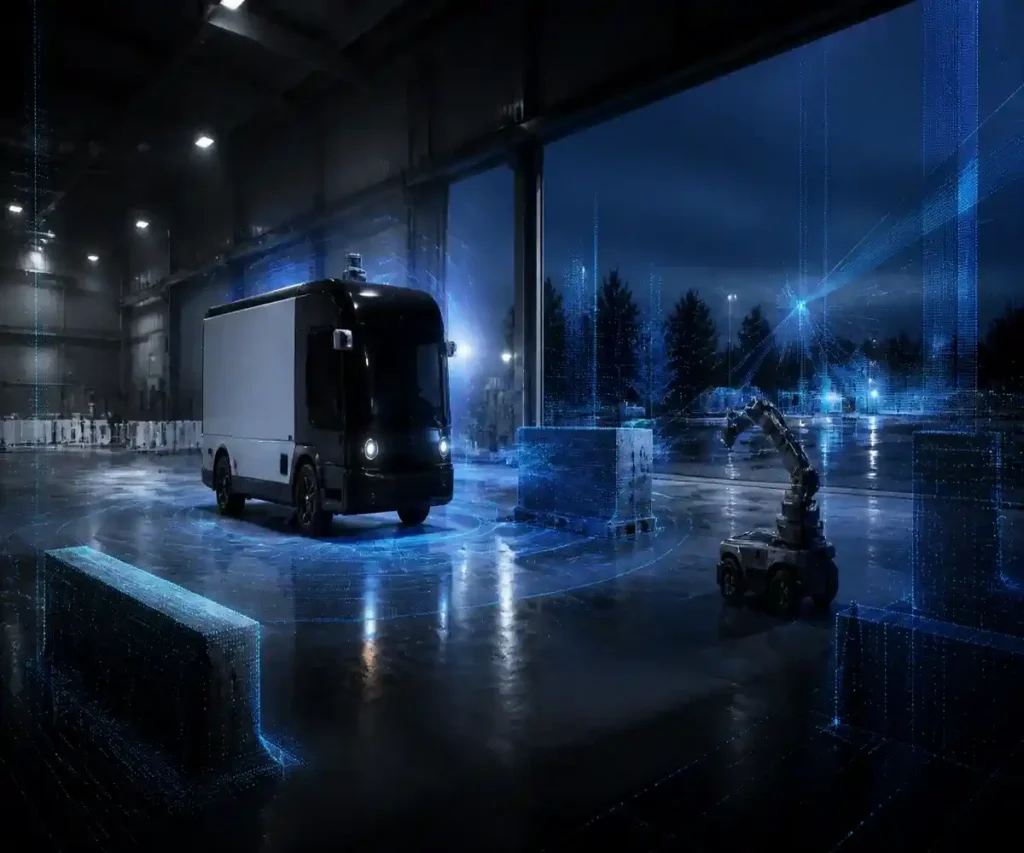
Artificial intelligence is moving beyond chatbots and software into autonomous vehicles, industrial robots and machines that make decisions in the physical world. But there is a major problem: an AI system that performs well in a laboratory may still fail when it encounters an unexpected situation on a real road or factory floor. Montréal-based Qvyon Technologies wants to make these systems safer before they reach customers. The startup emerged from stealth on November 12, 2026, announcing $8 million in seed financing, comprising $6 million in equity and $2 million in venture debt. MaC Venture Capital led the equity investment, with participation from BDC Capital’s Black Entrepreneurs Fund, BKR Capital and Spotlight VP, while RBCx provided the debt financing. Founded by former LeddarTech CEO Frantz Saintellemy and a team with autonomous vehicle experience, Qvyon is developing a validation platform that helps companies discover dangerous weaknesses in physical AI systems before deployment.

Why physical AI needs more than conventional software testing
Testing an AI chatbot is very different from testing a robot or self-driving truck. If a chatbot produces an incorrect answer, a user may be able to correct it. If an autonomous vehicle makes a wrong decision at high speed, the consequences can be much more serious. Physical AI systems must understand roads, people, objects, movement and constantly changing environments. Engineers call unusual situations that fall outside normal operating conditions edge cases. These might include a pedestrian suddenly crossing in heavy rain, a truck approaching an unexpected obstacle or a factory robot losing visibility because a sensor becomes blocked. Such situations can be rare, expensive and dangerous to reproduce in real life. Traditional simulations can generate artificial scenarios, but companies also need evidence that their virtual tests reflect the physical conditions their machines will actually encounter. Qvyon is targeting this gap between AI model performance and real-world deployment confidence.
MIMIC Core turns real-world sensor recordings into repeatable simulations
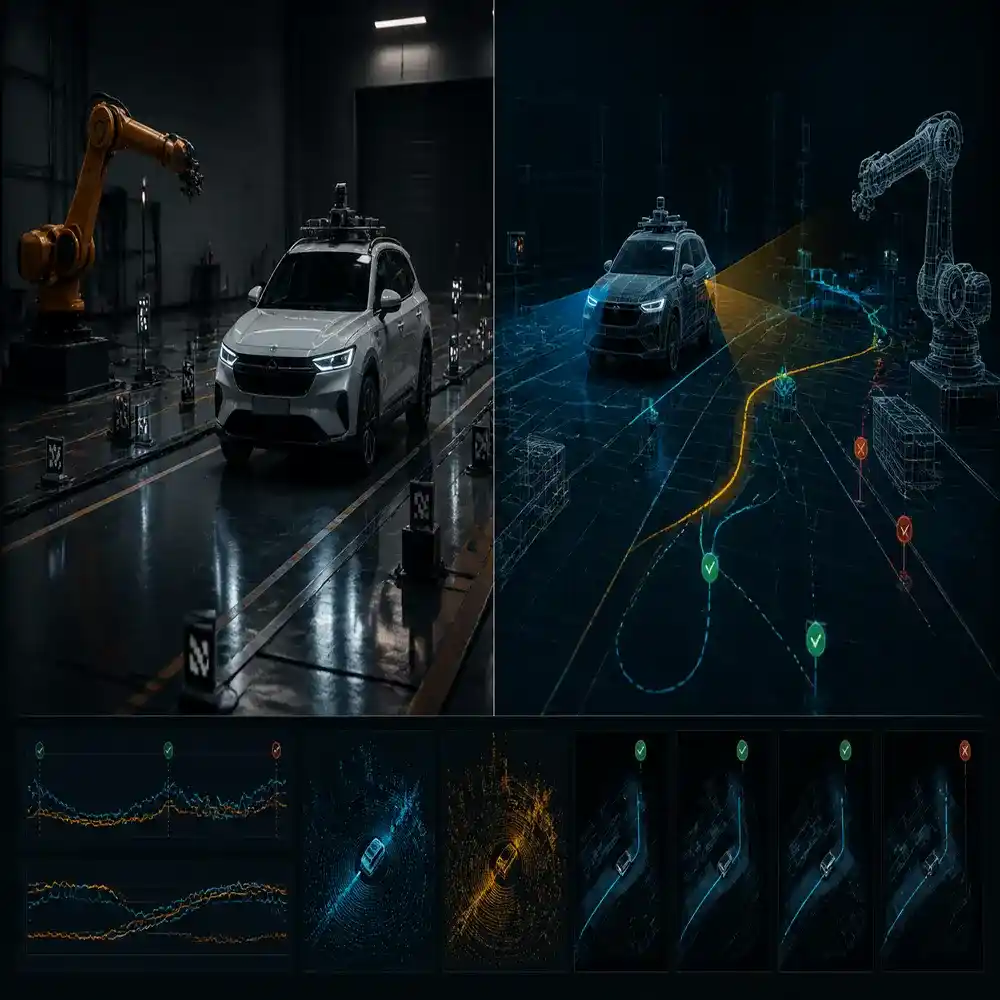
Qvyon’s first commercial product, MIMIC Core, starts with real information captured by cameras, LiDAR and radar sensors. The platform uses these recordings to reconstruct physical environments in three dimensions, while four-dimensional representations account for how objects and events change over time. Engineers can then create multiple variations of an original situation without returning to the road or factory to record it again. For example, a recording of a truck approaching an intersection could be modified to test different lighting conditions, object positions or sensor behaviour. A single real-world event can therefore become a collection of challenging tests. MIMIC also produces traceable datasets and validation evidence, allowing engineering teams to understand which conditions were tested and how their systems responded. Qvyon positions the platform as an additional infrastructure layer that works alongside existing simulation tools rather than replacing them entirely.
The bigger opportunity is proving when an autonomous machine is ready
Qvyon’s strategy goes beyond generating additional training data. Its larger ambition is to help manufacturers establish whether an autonomous system is sufficiently reliable for deployment. That requires answering questions such as which dangerous scenarios have been tested, where the system continues to make mistakes and whether software updates introduce new problems. MIMIC is designed to preserve the connection between original sensor recordings, reconstructed environments, modified test scenarios and resulting evidence. This traceability could help engineering teams make more informed release decisions and provide documentation for internal safety reviews. Qvyon says its approach can reduce validation cycles from weeks to hours, although that is a company-reported capability rather than an independently verified industry-wide result. The key distinction is that the company wants to sell evidence of system readiness, not simply more synthetic data or another robotics development environment.
Autonomous trucking and manufacturing provide early commercial validation
Qvyon is initially targeting industries where autonomous systems already operate in complex environments and where mistakes can be costly. One early customer is NuPort Robotics, a Canadian autonomous trucking company working on automated freight transportation. Another is US manufacturer Voltava, which Qvyon says is using its technology to validate industrial inspection systems. These relationships suggest opportunities in both mobility and factory automation, although the company has not disclosed contract values or recurring revenue. The wider market could include warehouse robots, industrial equipment, aerospace systems and defence applications. Each sector faces different safety requirements, but the underlying challenge is similar: developers need to expose autonomous systems to enough realistic conditions to understand their weaknesses before allowing them to operate independently. Qvyon’s commercial opportunity depends on making this testing process repeatable, affordable and compatible with the tools manufacturers already use.
Customer-controlled data could become an important competitive advantage
Autonomous vehicle companies and industrial manufacturers often collect highly valuable sensor recordings containing information about proprietary hardware, facilities and operating conditions. Sharing that information with external AI platforms can introduce intellectual property, security and compliance concerns. Qvyon addresses this by offering MIMIC Core through its cloud service or as a self-hosted deployment inside a customer’s own infrastructure. The company says customer datasets remain separated and are not used to train models for other customers. Its platform also includes a scenario editor with sensor-parameter controls, Python scripting and API access, allowing engineering teams to incorporate generated test cases into existing development workflows. These capabilities matter because enterprise customers are unlikely to adopt a validation platform that requires them to abandon established engineering systems or surrender control of sensitive operational data. Qvyon’s ability to combine realistic testing with data sovereignty could become an important part of its commercial positioning.
The funding will support a broader physical AI validation platform
Qvyon’s $8 million financing provides capital for product development and international expansion, with the company targeting customers in the United States, Europe and Japan. Its approximately 20-person team is also working on two additional products planned for 2027. MIMIC Validation OS, expected in the first half of the year, is intended to help companies measure, organise and document validation results. MIMIC Learn, planned for later in 2027, aims to use information collected from machines already operating in the field to improve AI systems over time. Together, these products suggest a broader platform covering the lifecycle of autonomous technology: collecting real-world information, creating test scenarios, measuring performance and learning from deployment. Saintellemy’s experience at LeddarTech, where the challenge of obtaining enough real-world validation data was a persistent obstacle, provides the background for this strategy. The next test is whether Qvyon can turn that experience into a scalable infrastructure business.
Physical AI safety could become a critical infrastructure market
The significance of Qvyon’s funding is not simply that another robotics-related startup has raised capital. It highlights a growing infrastructure problem as AI begins controlling machines that interact directly with people and physical environments. Autonomous systems need computing power, perception models and training data, but they also need credible evidence that they can handle difficult situations safely. Qvyon is attempting to build the validation layer connecting those requirements. Competition will come from established simulation platforms, autonomous vehicle developers with internal testing systems and newer companies generating synthetic robotics data. Its challenge will be proving that reality-grounded scenarios improve testing coverage, reduce costs and reveal failures that other methods miss. Simulation alone cannot guarantee safety, and physical testing, independent evaluation and appropriate regulatory processes will remain necessary. If Qvyon demonstrates measurable advantages across customers and industries, it could become part of the infrastructure companies rely on before deploying autonomous machines at scale.
Sources and further reading
- Qvyon Technologies – Official MIMIC Platform and Technology Overview
- BetaKit – Qvyon’s Funding Structure, Customers and Founder’s Interview
- SiliconANGLE – MIMIC Core Architecture and Product Roadmap
- Axios – Qvyon Emerges From Stealth With $8M
- Dealroom – Physical AI Validation Market and Competitive Context