UFORCE has raised $700 million in a Series A financing round at a $6 billion valuation, placing one of Ukraine’s most closely watched defence-technology businesses among the largest privately funded autonomous-systems companies in Europe.
Announced on November 12, 2026, the round was co-led by Valor Equity Partners and the UK’s National Wealth Fund, with participation from the U.S.-Ukraine Reconstruction Investment Fund. The financing also attracted investors from the United States, Europe and Asia, while existing backers including Shield Capital, Ballistic Ventures, Lakestar and Squadra increased their positions.
The financing is significant for more than its size. UFORCE is attempting to build a business around a model that has emerged from the war in Ukraine: autonomous systems developed through frontline deployment, improved through continuous operational feedback, and manufactured at a scale that makes them economically viable for sustained military use.
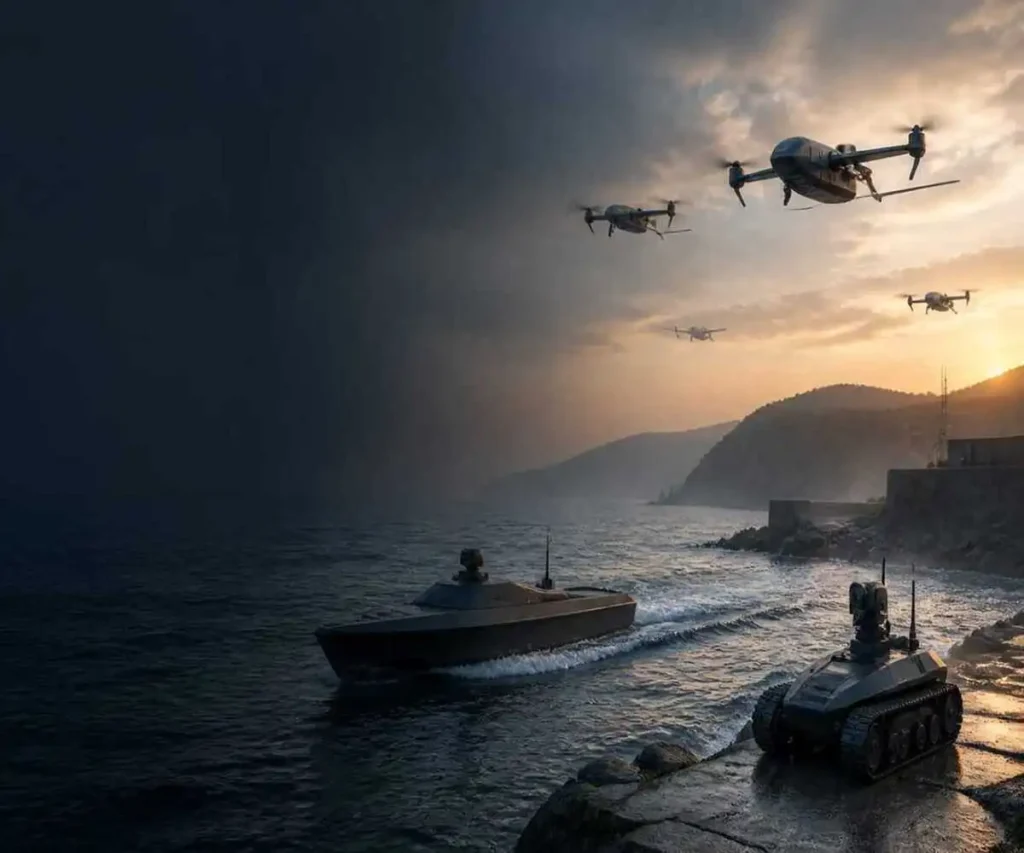
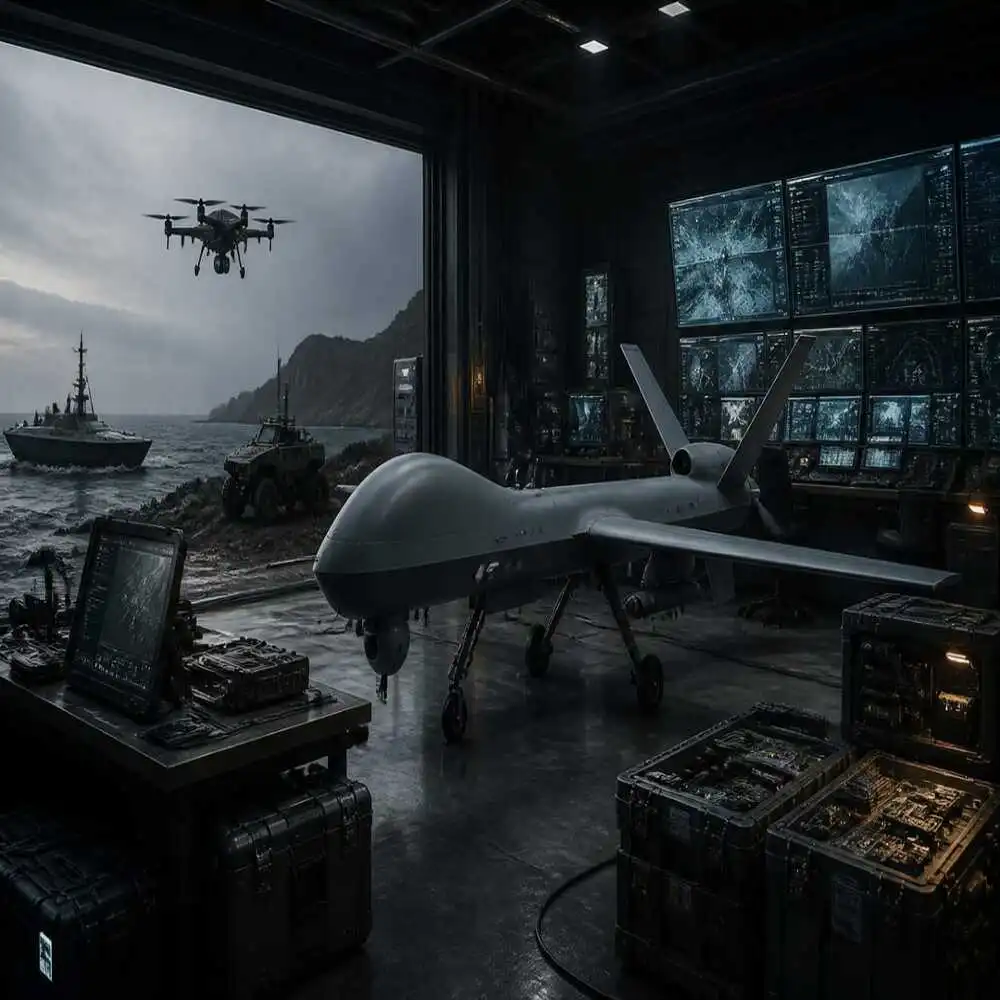
Its portfolio spans uncrewed maritime vessels, aerial strike platforms, ground robotics, counter-drone systems and the software used to coordinate them. The company’s ambition is to connect these capabilities into a unified defence architecture rather than sell individual machines as disconnected products.
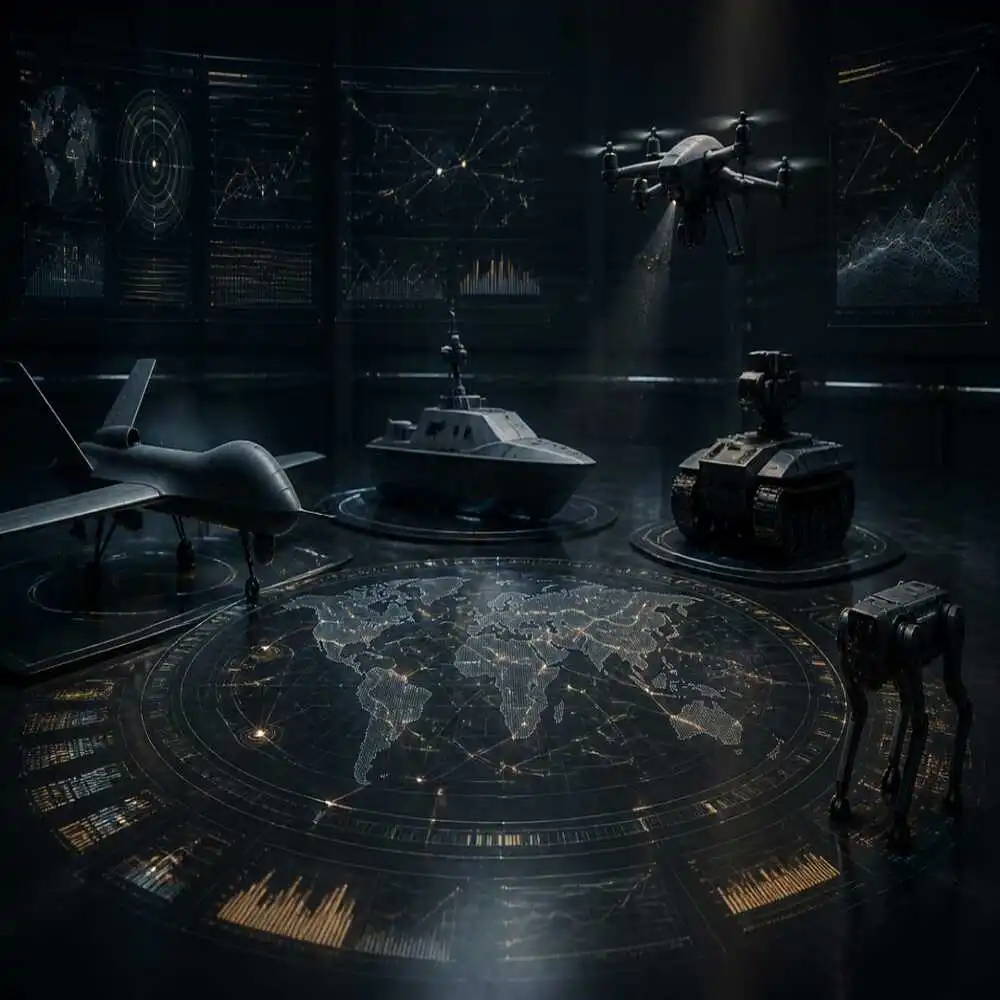
That distinction matters. The next generation of defence companies will not necessarily be defined by the most sophisticated individual drone or sensor. Their strategic value may increasingly depend on how quickly they can integrate hardware, autonomy software, manufacturing capacity and operational feedback into a system that keeps improving.
UFORCE’s $6 billion valuation is a bet that this model can move beyond Ukraine and become commercially relevant to allied militaries.
The 0 Million Financing: Capital for an Emerging Defence Industrial Platform
The Series A gives UFORCE substantial financial resources to expand production, invest in research and development, and establish manufacturing capacity across multiple allied markets.
The round was co-led by Valor Equity Partners and the UK’s National Wealth Fund. The U.S.-Ukraine Reconstruction Investment Fund also participated, with its investment directed toward UFORCE’s Ukrainian operations, including staffing, research and development, and new product development.
The investor composition is particularly important.
Valor brings experience investing in and scaling operationally intensive businesses. The National Wealth Fund introduces a British institutional-capital dimension, connecting UFORCE’s expansion to the UK’s interest in domestic manufacturing, supply-chain resilience and defence technology. URIF adds a direct economic and strategic connection to Ukraine.
This is not simply a venture-capital syndicate financing a promising technology company. It combines private growth capital with institutions whose investment objectives are linked to industrial capacity, national security and Ukraine’s economic resilience.
Why the National Wealth Fund’s Participation Matters
The National Wealth Fund is wholly owned by HM Treasury but operates independently. Its stated purpose includes mobilising investment in areas that support economic growth, security and resilience.
Its participation is strategically important because it potentially helps establish a pathway for Ukrainian-origin defence technology to become part of the UK’s industrial and security infrastructure.
The exact amount invested by the National Wealth Fund has not been disclosed in the financing announcement. It would therefore be premature to assign a specific figure to its participation or describe it as the fund’s largest defence investment without additional confirmation.
A Different Kind of Series A
A $700 million Series A is unusual by conventional startup standards. It reflects the capital requirements of a business that must develop products, maintain engineering teams, secure supply chains, manufacture physical systems and support deployment across multiple countries.
For UFORCE, the challenge is not simply to develop a product that works. It is to produce systems consistently, deliver them to military customers, maintain them under demanding conditions and update them as battlefield requirements change.
That is a much more industrial business model than the conventional software startup.
From Ukraine’s Battlefield to a London-Headquartered Defence Company
UFORCE was founded in Ukraine and is headquartered in London, with major operational hubs in Kyiv and Washington, DC. Its structure connects Ukrainian defence-technology experience with Western investment, international partnerships and access to allied markets.
The company is led by Oleg Rogynskyy, a Ukrainian-born entrepreneur who previously built People.ai into a $1.1 billion enterprise software company. He also founded Freedom Fund, an early investor in Ukrainian defence technology.
Oleksiy Honcharuk, Ukraine’s former prime minister, serves as board chairman. His experience includes advising on unmanned-systems strategy and working with Ukrainian defence initiatives.
The company’s leadership combines this background with senior Western defence and technology experience.
The combination is strategically useful.
Ukraine has become an unusually demanding environment for unmanned systems development. Platforms face electronic warfare, air defence, disrupted communications, changing tactics and the constant pressure to deliver capabilities quickly.
A company operating in this environment has access to a feedback cycle that conventional defence development programmes may struggle to replicate.
But battlefield experience alone does not create a sustainable international business. UFORCE must translate that experience into repeatable manufacturing, product reliability, customer support, regulatory compliance and integration with allied military systems.
Its corporate structure is designed to help bridge that gap.
The Product Portfolio: Four Systems, One Defence Architecture
UFORCE’s strategy is built around a portfolio of platforms operating across sea, air and land, supported by command-and-control software.
The company identifies four principal product families: MAGURA, NEMESIS, LIUT and PREDATOR. Its broader architecture also includes the software and orchestration layer used to coordinate unmanned systems.
MAGURA: Uncrewed Surface Vessels and Maritime Denial
MAGURA is UFORCE’s maritime platform family. These uncrewed surface vessels are designed for missions including reconnaissance, maritime strike, area denial and multi-domain operations.
Their strategic significance comes from the changing economics of naval warfare.
Traditional warships are expensive, crew-intensive assets. They require substantial investment in construction, maintenance, training and protection. Uncrewed vessels can offer a different operational model: lower-cost platforms that can be deployed in numbers, assigned to high-risk missions and continuously adapted.
MAGURA has become particularly associated with Ukraine’s campaign against Russian naval assets in the Black Sea.
UFORCE says the MAGURA family has contributed to the destruction of more than a dozen Russian warships and has been used in hundreds of missions. The company also says the platforms have demonstrated the ability to engage aerial targets.
The distinction between confirmed outcomes and company-reported claims remains important. Some of the major early Black Sea attacks have been widely documented, but the attribution of every subsequent loss, the full operational record and specific claims involving aircraft require individual assessment.
Nevertheless, MAGURA demonstrates a strategically important proposition: relatively inexpensive uncrewed vessels can impose meaningful operational and financial pressure on a conventional naval force.
NEMESIS: High-Volume Aerial Strike Platforms
NEMESIS is UFORCE’s family of aerial strike platforms, including reusable and one-way attack configurations.
The company describes the NEMESIS Class 1 heavy strike UAV as one of the most widely deployed bomber and strike-drone systems on the Ukrainian battlefield.
UFORCE reports more than 300,000 combat flights for the NEMESIS family and adoption across more than 100 Ukrainian military units.
Those figures are company-reported operational metrics rather than an independently audited database of every flight.
Even with that qualification, the scale of deployment is central to the company’s investment thesis. A platform that can be produced, deployed, repaired and improved at high frequency may become more strategically valuable than a technically sophisticated system that is available only in limited quantities.
The NEMESIS model also illustrates the importance of iteration. Each operational cycle can expose weaknesses in navigation, communications, payload integration, electronic-warfare resilience and reliability.
The commercial question is whether UFORCE can preserve that rapid development cycle while expanding into markets with different operating requirements and procurement standards.
LIUT: Ground Robotics and Uncrewed Land Operations
LIUT represents UFORCE’s ground-robotics portfolio.
Uncrewed ground vehicles can support logistics, reconnaissance, equipment movement and other missions where exposing personnel to danger is costly.
The opportunity is significant, but ground robotics presents a different engineering challenge from aerial and maritime systems. Terrain, obstacles, communications limitations, payload requirements and mobility constraints all affect practical deployment.
The long-term value of LIUT will depend on its ability to operate reliably in difficult environments and integrate with broader military workflows.
PREDATOR: Counter-UAS and Point Defence
PREDATOR is UFORCE’s counter-uncrewed aerial system platform family.
Counter-UAS capabilities are becoming increasingly important as low-cost drones proliferate across military theatres. The challenge for defence forces is not simply detecting an incoming drone. It is identifying the threat, selecting an appropriate response and neutralising it without exhausting expensive defensive resources.
A counter-drone platform becomes more valuable when it can operate as part of a wider network of sensors, command systems and defensive assets.
This is where UFORCE’s integrated architecture becomes relevant.
The Command-and-Control Layer: The Connective Tissue
Hardware provides the physical capability. Software determines how effectively different systems can operate together.
UFORCE describes its business as including AI software, orchestration and command-and-control capabilities that connect its platforms across air, land and sea.
This layer could become one of the most important parts of the company’s long-term value proposition.
A military customer does not necessarily want to manage separate fleets of vessels, drones and ground robots through disconnected systems. It needs to coordinate information, missions, operators and assets across a shared operational environment.
The company’s emphasis on open, NATO-compatible architecture is intended to make its systems easier to integrate with allied capabilities.
However, interoperability is not established by a marketing description alone. It must be demonstrated through secure interfaces, testing, certification, communications resilience and integration with actual military command structures.
The Combat Metrics: What the Numbers Demonstrate—and What They Do Not
UFORCE’s investment case is closely tied to its reported operational record in Ukraine.
The company says its systems have been developed through more than 300,000 combat missions, with extensive maritime deployment and significant operational effects. Its website also reports an average UAV cost per effect below $5,000, average survivability exceeding 16 missions per airframe and approximately five targets hit per UAV airframe.
These metrics are important because they shift the discussion from technical specifications to operational economics.
But they should not all be treated as independently verified performance statistics.
MAGURA: Operational Impact and Attribution
The MAGURA programme has demonstrated that uncrewed surface vessels can contribute to maritime denial operations against a much larger conventional naval force.
The most important evidence is not any single headline claim. It is the broader strategic effect: the ability of relatively low-cost unmanned platforms to impose defensive costs, complicate naval operations and change how a fleet uses contested waters.
UFORCE attributes more than a dozen warship losses or strikes to the MAGURA family. That is the company’s stated figure. The precise number of vessels destroyed, damaged or struck should be assessed against individual incidents and independent reporting rather than treated as one uniformly verified total.
The company also reports that MAGURA platforms have downed helicopters and fighter aircraft. These claims are operationally significant, but the level of independent corroboration varies. They should be presented as claims attributed to UFORCE and Ukrainian sources, not as universally established performance records.
NEMESIS: Deployment Scale
The reported 300,000-plus combat flights and adoption across more than 100 Ukrainian units provide an indication of the scale at which the company says its aerial systems have been used.
However, a flight count is not equivalent to 300,000 successful strike missions. It does not independently establish the number of targets hit, mission success rates, aircraft losses or the economic value of damage inflicted.
A robust assessment would require additional information, including:
- The proportion of flights completed successfully.
- The number of airframes produced and lost.
- The distinction between reusable and one-way platforms.
- Mission outcomes by platform configuration.
- The frequency of upgrades and changes to operational performance.
- Independent battle-damage assessments.
The absence of fully transparent data does not make the reported figures meaningless. It does mean they should be interpreted as company-reported operational evidence rather than audited performance accounts.
Cost per Effect: The Economic Argument
UFORCE reports an average UAV cost per effect below $5,000.
The metric is potentially compelling because it connects the cost of deploying a system to the operational outcome it produces.
But cost per effect is highly dependent on how an effect is defined. It may refer to a damaged target, a destroyed target, a disrupted operation or another measurable outcome. The calculation also depends on whether it includes production, maintenance, operator training, communications infrastructure, logistics and replacement costs.
For allied defence ministries, the important question will be whether the economics remain attractive when systems are deployed at scale, maintained over time and operated against different adversaries.
The strongest version of UFORCE’s argument is not that every reported metric can be taken at face value. It is that Ukraine has provided a real operational environment in which unmanned platforms can be tested, modified and redeployed at a pace that is difficult to reproduce through conventional procurement programmes.
The Competitive Landscape: UFORCE Against Anduril, Helsing, Saronic and Shield AI
UFORCE is entering a market in which defence technology companies are attracting increasingly large funding rounds and building businesses that combine software, autonomous hardware and industrial manufacturing.
The competitive landscape is not made up of identical companies. Each player has a different mix of products, customers, capital and operational experience.
The most useful comparison is therefore based on capability and business model, rather than valuation alone.
Anduril: The Scale Benchmark
Anduril Industries is the clearest large-scale benchmark for UFORCE.
The American defence technology company develops autonomous systems, sensors, hardware and software, including its Lattice command-and-control platform.
Anduril raised $5 billion in a Series H round in May 2026 at a $61 billion valuation. Reuters also reported that the company had generated approximately $2.2 billion in revenue in 2025.
Where Anduril leads: Capital, manufacturing investment, US defence relationships, product breadth and software ecosystem maturity.
Where UFORCE differentiates: Its Ukrainian operating experience, its claimed volume of combat deployment and its direct connection to a battlefield-driven development cycle.
Anduril has a much larger financial base and established access to major US defence programmes. UFORCE’s potential advantage is the depth of its operational feedback from Ukraine and its ability to build products around lessons from a high-intensity conflict.
The two companies are not interchangeable. Their competitive overlap is strongest in autonomous platforms, command systems and the broader shift toward software-defined defence.
Helsing: Europe’s Defence AI and Autonomous Systems Contender
Helsing has become one of Europe’s most valuable defence technology businesses.
The company raised $1.8 billion in a Series E round in July 2026 at an $18 billion valuation. Its business combines defence AI, sensor fusion and autonomous systems, with an expanding portfolio of hardware capabilities.
Where Helsing leads: European defence relationships, AI software, sensor fusion and sovereign technology positioning.
Where UFORCE differentiates: Its Ukrainian battlefield origins, maritime platform experience and integrated portfolio of air, sea and ground systems.
At $6 billion, UFORCE’s announced valuation is approximately one-third of Helsing’s latest disclosed financing valuation. That comparison is useful as a capital-market reference, but it does not establish that UFORCE is undervalued. The businesses have different revenue profiles, product portfolios, maturity levels and risk exposures.
Saronic: The Maritime Autonomy Specialist
Saronic is one of UFORCE’s most relevant competitors in the uncrewed surface-vessel market.
Saronic closed a $1.75 billion Series D in March 2026 at a $9.25 billion valuation. The round was intended to accelerate autonomous maritime platforms and shipbuilding capacity.
Where Saronic leads: US maritime procurement access, shipbuilding infrastructure and a focused autonomous-vessel strategy.
Where UFORCE differentiates: MAGURA’s reported combat record in the Black Sea and UFORCE’s broader air, land, sea and command-system portfolio.
The comparison highlights two different routes to scale.
Saronic is building around American maritime industrial capacity and the requirements of the US Navy and allied customers. UFORCE is attempting to convert an operational record developed in Ukraine into a distributed manufacturing and export platform.
UFORCE has announced a partnership with ReconCraft to expand US manufacturing of MAGURA vessels, which could help it compete in a market where local production and supply-chain security matter as much as platform performance.
Shield AI: The Autonomy Software Competitor
Shield AI competes in a different but overlapping layer of the market.
Its Hivemind software is designed to provide autonomous piloting capabilities across multiple vehicle types, while its hardware portfolio includes the V-BAT aircraft and the X-BAT programme.
In March 2026, Shield AI announced $1.5 billion in Series G funding at a $12.7 billion post-money valuation, alongside $500 million in fixed-return preferred equity financing.
Where Shield AI leads: Autonomy software, simulation, aircraft integration and a dedicated AI-pilot development strategy.
Where UFORCE differentiates: A broader portfolio of company-associated hardware platforms and a development model tied directly to Ukrainian battlefield deployment.
Shield AI’s approach demonstrates why the software layer is becoming increasingly important. A capable autonomous platform is valuable, but software that can be adapted across multiple vehicle classes may create a much larger strategic footprint.
For UFORCE, the challenge is to demonstrate that its command-and-control and autonomy capabilities can achieve comparable integration, reliability and interoperability across different platforms.
Competitive Benchmark at a Glance
| Company | Latest Disclosed Financing Reference | Strategic Focus |
|---|---|---|
| UFORCE | $700M Series A; $6B valuation | Ukrainian-origin, multi-domain autonomous systems |
| Anduril | $5B Series H; $61B valuation | Full-stack defence technology and autonomy |
| Helsing | $1.8B Series E; $18B valuation | Defence AI and autonomous platforms |
| Saronic | $1.75B Series D; $9.25B valuation | Autonomous maritime systems |
| Shield AI | $1.5B Series G; $12.7B post-money valuation | AI pilots and autonomous aircraft |
These figures refer to disclosed financing transactions, not current market valuations. Shield AI’s financing package also included $500 million in preferred equity, which is not included in the Series G equity amount.
For a closer look at the maritime autonomy investment thesis, see TechFront360’s coverage of Saronic’s $1.75 billion financing.
UFORCE’s wider autonomous-systems strategy also connects with the analysis of Shield AI’s autonomy stack and defence software architecture.
The Industrialisation Challenge: Turning Battlefield Production Into Global Manufacturing
The most important use of UFORCE’s new capital may not be the development of another platform. It may be the expansion of the manufacturing system behind the existing portfolio.
The company says the financing will support distributed production across the United States, Europe, Asia-Pacific and the Middle East. Its stated objective is to manufacture closer to the regions where systems are required, while helping allied countries develop sovereign manufacturing capabilities.
This is a significant strategic shift.
For decades, defence manufacturing has often been organised around large facilities, long procurement cycles and relatively small production runs of complex systems.
The growing use of unmanned platforms creates a different requirement. Militaries need systems that can be produced in greater quantities, updated frequently and replaced without the financial burden associated with traditional high-value platforms.
Why Distributed Production Matters
Ukraine’s wartime experience has demonstrated the vulnerability of concentrated manufacturing and supply chains.
Distributed production can help reduce dependence on individual facilities, shorten delivery routes and create local industrial capacity in allied countries.
It can also make political and commercial adoption easier. Governments may be more willing to procure foreign-designed systems when they can participate in local manufacturing, maintenance, training and supply-chain development.
However, distributed production is difficult to execute.
Each manufacturing location must meet quality standards, maintain component availability, protect sensitive technology and deliver consistent performance. The company must also manage different regulatory environments, export controls and customer requirements.
A production footprint across several regions is therefore not automatically an advantage. It becomes one only when the company can maintain quality, cost discipline and delivery reliability across all of them.
ReconCraft and the US Manufacturing Route
UFORCE has announced a partnership with ReconCraft to scale US manufacturing of MAGURA uncrewed surface vessels. The initiative is intended to make the maritime platform more accessible to international customers while supporting domestic industrial capacity.
The partnership is an important example of how UFORCE intends to move from Ukrainian battlefield production to allied industrial integration.
It also highlights a commercial reality: defence customers often purchase more than a platform. They require local support, maintenance, training, spare parts and a supply chain that can remain operational during a crisis.
The Strategic Investment Thesis: Defence as an Industrial and Software System
UFORCE’s funding round reflects a broader shift in how investors and governments evaluate defence technology.
The traditional defence model placed considerable emphasis on individual platforms: aircraft, ships, missiles, radar systems and other expensive assets.
The emerging model increasingly combines physical platforms with software, autonomy, sensors, communications and manufacturing capacity.
In this environment, a company’s value may depend on how effectively it connects several layers.
1. The Hardware Layer
UFORCE’s MAGURA, NEMESIS, LIUT and PREDATOR families provide the physical systems used across different operational environments.
This is the most visible part of the business, but it is not necessarily the only source of long-term differentiation.
2. The Autonomy and Software Layer
Software can coordinate platforms, process information and support operations across different systems.
If UFORCE can demonstrate that its command-and-control architecture works reliably across its portfolio and integrates with allied systems, it could create a more durable competitive position than a hardware-only manufacturer.
3. The Manufacturing Layer
The ability to manufacture at scale is central to the economics of autonomous warfare.
A company that can build a technically capable platform but cannot deliver it consistently will struggle to become a major defence supplier.
4. The Operational Feedback Layer
The ability to learn from deployment and rapidly incorporate improvements is one of UFORCE’s strongest potential advantages.
The company says its platforms have been iterated through hundreds of thousands of combat missions. If that learning cycle can be maintained as it expands internationally, it could become a meaningful source of product differentiation.
5. The Sovereign Supply-Chain Layer
Governments increasingly want control over critical defence capabilities.
Local manufacturing, trusted suppliers, secure software and access to spare parts can become decisive procurement factors.
UFORCE’s UK headquarters, Ukrainian origins and planned allied production network position it to participate in this shift. They do not guarantee procurement success, but they create a structure that aligns with the priorities of several Western governments.
This wider industrial perspective is also central to TechFront360’s analysis of how startup capital and strategic technology infrastructure are reshaping the 2026 funding landscape.
The Risks Behind the Billion Valuation
UFORCE’s operational story is compelling, but its valuation introduces expectations that go well beyond battlefield performance.
The company must demonstrate that its technology can become a sustainable international defence business.
Several challenges will determine whether the investment thesis holds.
Turning Combat Validation Into Procurement Contracts
A platform that performs effectively in Ukraine does not automatically qualify for procurement by NATO members or other allied militaries.
Different countries have different requirements for certification, communications, cybersecurity, weapons integration, data handling and operational doctrine.
The company will need to demonstrate that its systems can work within those frameworks without losing the speed and flexibility that helped create their battlefield relevance.
Proving the Economics Independently
UFORCE’s reported cost-per-effect figures and operational metrics are central to its positioning.
But military customers and investors will require more than headline numbers. They will want evidence of lifecycle costs, maintenance requirements, replacement rates, reliability and performance against different threat environments.
The distinction between a low-cost system and a low-cost capability is important. The latter includes the entire infrastructure required to deploy and sustain it.
Competing Against Companies With Greater Capital
Anduril, Helsing and Shield AI have substantial financing resources, established customer relationships and expanding product ecosystems.
UFORCE’s $700 million raise is significant, but the company still needs to prove that it can compete for large international programmes while building its own manufacturing and support infrastructure.
Managing Geopolitical and Operational Exposure
The company’s Ukrainian roots are a source of operational knowledge and differentiation. They also create exposure to wartime disruption, infrastructure damage, supply-chain uncertainty and the changing security environment.
Its international expansion must reduce these vulnerabilities without weakening its connection to the operational environment that shaped its products.
Avoiding the Hardware-Only Trap
A large portfolio of drones and robotic systems does not automatically create a defensible technology platform.
The longer-term opportunity lies in integration, autonomy, software, manufacturing and recurring customer relationships.
If UFORCE cannot make those layers work together, it risks becoming a collection of hardware businesses competing in markets where prices and product capabilities can change quickly.
What UFORCE Must Prove Next
The next phase should be evaluated through execution rather than additional funding announcements.
There are five indicators worth watching.
Manufacturing output: Can UFORCE increase production while maintaining quality, delivery schedules and cost discipline?
Allied procurement: Can the company convert operational credibility into repeat orders and meaningful contracts outside Ukraine?
Software integration: Can its command-and-control layer coordinate multiple platforms and integrate with established military systems?
Independent performance evidence: Can it provide more transparent evidence of reliability, mission outcomes and lifecycle economics?
International industrial partnerships: Can its manufacturing arrangements create durable supply chains and local support rather than remain limited partnership announcements?
These indicators will reveal whether UFORCE is becoming a global defence supplier or remains primarily a company with an exceptional battlefield-origin story.
The Bigger Picture: Ukraine’s Defence Innovation Is Becoming Exportable Infrastructure
UFORCE’s $700 million financing round represents more than a major capital event for a Ukrainian-founded company.
It illustrates how the war in Ukraine is influencing the structure of the global defence industry.
The conflict has accelerated the development of unmanned platforms, electronic-warfare resilience, distributed manufacturing and rapid software-led iteration. It has also exposed the limitations of defence systems designed around slower development and procurement cycles.
UFORCE is attempting to turn those lessons into a commercial and industrial platform that can serve Ukraine and allied militaries.
Its $6 billion valuation reflects investor confidence in that opportunity. But the valuation is not proof that the model has already succeeded.
The company still has to demonstrate manufacturing scale, international procurement access, software maturity and independently credible performance across different operational environments.
The competitive field is formidable. Anduril has far greater capital and scale. Helsing has a powerful European defence AI position. Saronic is building a dedicated maritime manufacturing business. Shield AI is advancing a software-centred autonomy model.
UFORCE’s potential advantage is different: a multi-domain portfolio shaped by one of the most demanding real-world environments for autonomous warfare, combined with an increasingly international capital and manufacturing structure.
The central question is no longer whether battlefield innovation can produce commercially relevant defence technology. Ukraine has already demonstrated that it can.
The harder question is whether companies born from that innovation can become reliable, scalable suppliers to the military institutions of the countries now seeking to adopt it.
UFORCE has secured the capital to attempt that transition. Its next test will be industrial execution.