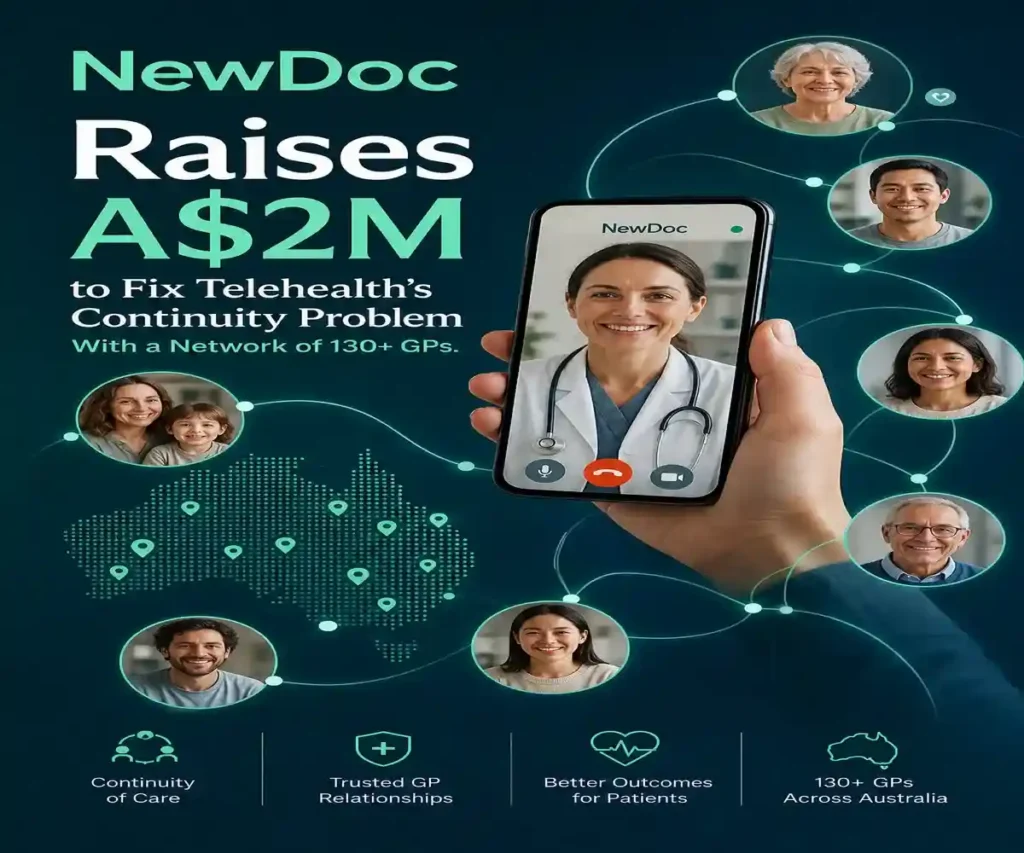
NewDoc Raises A$2M to Fix Telehealth’s Continuity Problem With a Network of 130+ GPs
Australian telehealth startup NewDoc has raised A$2 million in seed funding led by Archangel Ventures to expand its online GP network and strengthen its healthcare platform. With more than 130 specialist GPs and over 80,000 consultations already delivered, the Sydney-based company is building a service designed to make online healthcare feel more like an ongoing relationship with a regular doctor.
1. NewDoc Raises A Million to Build a More Connected Telehealth Service
Sydney-based healthcare technology startup NewDoc has raised A$2 million in seed funding led by Australian venture capital firm Archangel Ventures. Founded by Dr Tom Lee, Shavin Wijeyaratne and Dr Jason Yu, the company is developing a telehealth platform that connects patients with qualified general practitioners through phone and video consultations. Its main ambition is to address a weakness in parts of the digital healthcare market: patients can often access an online appointment quickly, but may struggle to build an ongoing relationship with the same doctor. NewDoc wants to make online healthcare more consistent by helping returning patients reconnect with their preferred GP and keeping consultation information available for future care. The new funding will support expansion of its doctor network, improvements to its in-house technology and new healthcare partnerships. The company is also preparing pilot programmes with youth mental health not-for-profit organisations, extending its ambitions beyond general telehealth appointments.
2. The Problem NewDoc Wants to Solve Is Fragmented Patient Care
Traditional healthcare depends heavily on continuity: a doctor who understands a patient’s medical history, previous concerns, medications and changing health needs can make more informed decisions over time. However, patients using some online healthcare services may see a different doctor every time they book an appointment. That can make it harder to maintain context, particularly for people managing recurring conditions or requiring follow-up discussions. NewDoc believes telehealth should provide more than convenient access to a single consultation. Its model is designed to help patients establish a continuing relationship with a GP, even when appointments happen remotely. The company aims to match returning patients with the same doctor where availability allows, while making previous consultation information easier to access. This approach is particularly relevant to patients who have busy schedules, limited access to nearby clinics or difficulty finding an appointment with their usual GP. The company’s broader proposition is that digital healthcare should improve access without sacrificing the relationship between a patient and their doctor.
3. More Than 130 GPs and 80,000 Consultations Provide Early Traction
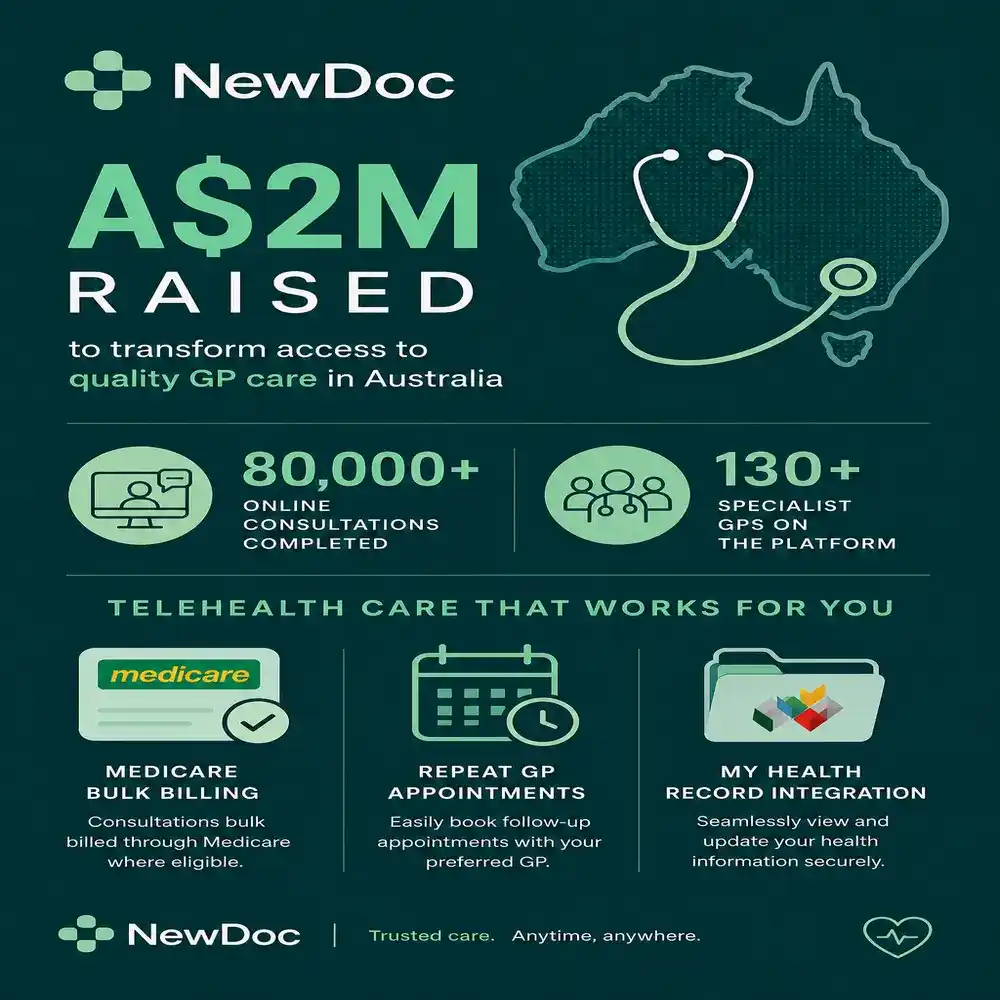
NewDoc is entering its next growth phase with an established network of more than 130 specialist GPs. The company reports that its doctors have delivered over 80,000 phone and video consultations in just under a year of operations. Returning patients account for close to one-third of its daily bookings, an important early indicator for a business built around ongoing doctor-patient relationships. These figures suggest that NewDoc is attracting demand beyond one-time requests for prescriptions or medical certificates. However, consultation volume alone does not establish clinical outcomes, patient satisfaction or long-term retention, and those measures will become increasingly important as the company grows. Its challenge is to maintain consistent care quality while expanding the number of doctors, appointments and patients using the platform. For a telehealth company, growth depends not only on bringing people onto the service but also on ensuring that patients can access appropriate follow-up care when their health needs change.
4. Medicare Bulk Billing Makes Online GP Access More Affordable
A key part of NewDoc’s business model is its approach to pricing. Eligible patients can access bulk-billed telehealth consultations through Australia’s Medicare system, meaning there is no out-of-pocket consultation fee when the relevant Medicare requirements are met. Patients who are not eligible for bulk billing can access private consultations at a published price of A$69.95. The company offers appointments through phone and video, seven days a week, subject to GP availability. Its service can include prescriptions, medical certificates, specialist referrals and pathology or imaging referrals where clinically appropriate. This pricing structure is designed to make online GP access more predictable for patients who might otherwise delay seeking care because of cost or appointment availability. Medicare eligibility is not automatic for every patient or location, so patients must meet the applicable rules. NewDoc’s opportunity is to combine affordability with the convenience of digital booking and access to Australian-trained, registered general practitioners.
5. Connecting Appointments With My Health Record and Repeat GP Relationships
NewDoc is also building its service around the information that connects one consultation to the next. The company says it uploads consultation notes to Australia’s My Health Record system, helping make relevant medical information available through the national digital health infrastructure. Its platform also aims to help returning patients request the same GP when they book another appointment, although this depends on doctor availability. These features are important because telehealth is most useful when it becomes part of a broader healthcare relationship rather than a disconnected series of digital conversations. A patient who returns to a familiar GP may spend less time repeating basic background information and can use appointments to discuss changes, follow-up needs and new concerns. The technology does not replace a doctor’s clinical judgement or guarantee that every consultation can be handled remotely. Instead, NewDoc is trying to make the administrative and information-sharing parts of online care work more smoothly around the doctor-patient relationship.
6. Youth Mental Health Pilots Could Expand NewDoc’s Healthcare Role
Beyond general practitioner appointments, NewDoc is preparing pilot programmes with youth mental health not-for-profit organisations. This gives the company an opportunity to explore how its digital healthcare infrastructure could support access to mental health services for younger people. Mental health care often requires more than a single conversation, making continuity and follow-up particularly important. A platform that helps patients connect with healthcare professionals and maintain relevant consultation information could potentially support parts of that journey. However, mental health services require careful clinical governance, appropriate referral pathways and safeguards for vulnerable patients. NewDoc’s pilot programmes should therefore be viewed as an early expansion initiative rather than evidence that the company has already established a comprehensive youth mental health service. If the pilots prove useful, they could help the company develop partnerships with organisations that want to improve access to professional support through digital healthcare channels.
7. Archangel Ventures Backs NewDoc’s Continuity-of-Care Strategy
Archangel Ventures led NewDoc’s A$2 million seed round, backing a business that is trying to make telehealth more closely resemble the relationship patients traditionally expect from their regular GP. The investment provides capital for expanding the doctor network, improving the company’s internally developed software and supporting new service partnerships. NewDoc’s founders bring medical and technology experience to a market where clinical trust and operational execution are both important. The company must now balance growth with the practical requirements of healthcare delivery, including GP availability, privacy, clinical quality, patient support and appropriate escalation when an online consultation is not sufficient. Its early consultation volume provides a foundation, but the next stage will require evidence that the service can retain patients and maintain consistent care as activity increases. The round also reflects investor interest in digital health models that focus on improving the healthcare experience rather than simply moving existing appointments onto a video call.
8. NewDoc Is Betting That the Next Phase of Telehealth Will Be Built Around Continuity
NewDoc’s A$2 million seed round highlights a different direction for Australia’s digital healthcare market. The first generation of telehealth services focused heavily on making consultations accessible through phones and computers. NewDoc wants to take the model further by making online appointments part of a more continuous relationship between patients and general practitioners. Its growing network, reported consultation volume, Medicare billing model and My Health Record integration provide the foundations for that strategy. The company now needs to demonstrate that it can maintain clinical quality, deliver reliable follow-up experiences and expand its services without losing the personal connection at the centre of its proposition. If it succeeds, NewDoc could become a useful digital access point for patients who want convenience without having to start their healthcare relationship from the beginning at every appointment. Its larger opportunity is not simply to make seeing a GP easier online, but to make ongoing primary care more connected.
TechFront360 Analysis: NewDoc is addressing a problem that is easy to overlook in the race to digitise healthcare: access is valuable, but continuity matters too. Its strategy combines a growing GP network with patient records, repeat appointments and a Medicare-supported service model. The important test will be whether it can preserve the trust and consistency of a regular GP relationship while operating at the scale and speed expected from a digital platform. If it can, NewDoc could offer a more sustainable model for telehealth than services built around one-off consultations.