
Finnable Raises ₹405 Crore in Series C as Bengaluru Lender Scales a ₹4,600 Crore Credit Business
Bengaluru-based digital lender Finnable has raised ₹405 crore (approximately $44 million) in a Series C funding round led by Bharat Value Fund, with participation from Pratithi Investments, NKSquared and existing backers. The company plans to use the capital to expand its lending operations, strengthen its technology platform and build partnerships across India’s evolving consumer-credit market.
1. Finnable Secures ₹405 Crore as Investors Back Its Next Growth Phase
Finnable, a Bengaluru-based technology-led non-banking financial company (NBFC), has raised ₹405 crore in a Series C funding round, bringing fresh institutional backing to its digital lending business. The round includes a ₹150 crore investment from Bharat Value Fund, part of the Pantomath Group, alongside investments from Pratithi Investments and NKSquared. Existing investors, including TVS Capital and Claypond Capital, also participated. The funding arrives as Finnable reports assets under management (AUM) of more than ₹4,600 crore, giving investors a business with an established lending portfolio rather than a platform still testing its basic model. The company intends to deploy the capital towards expanding its lending book, strengthening its proprietary technology and developing partnerships across the credit ecosystem.
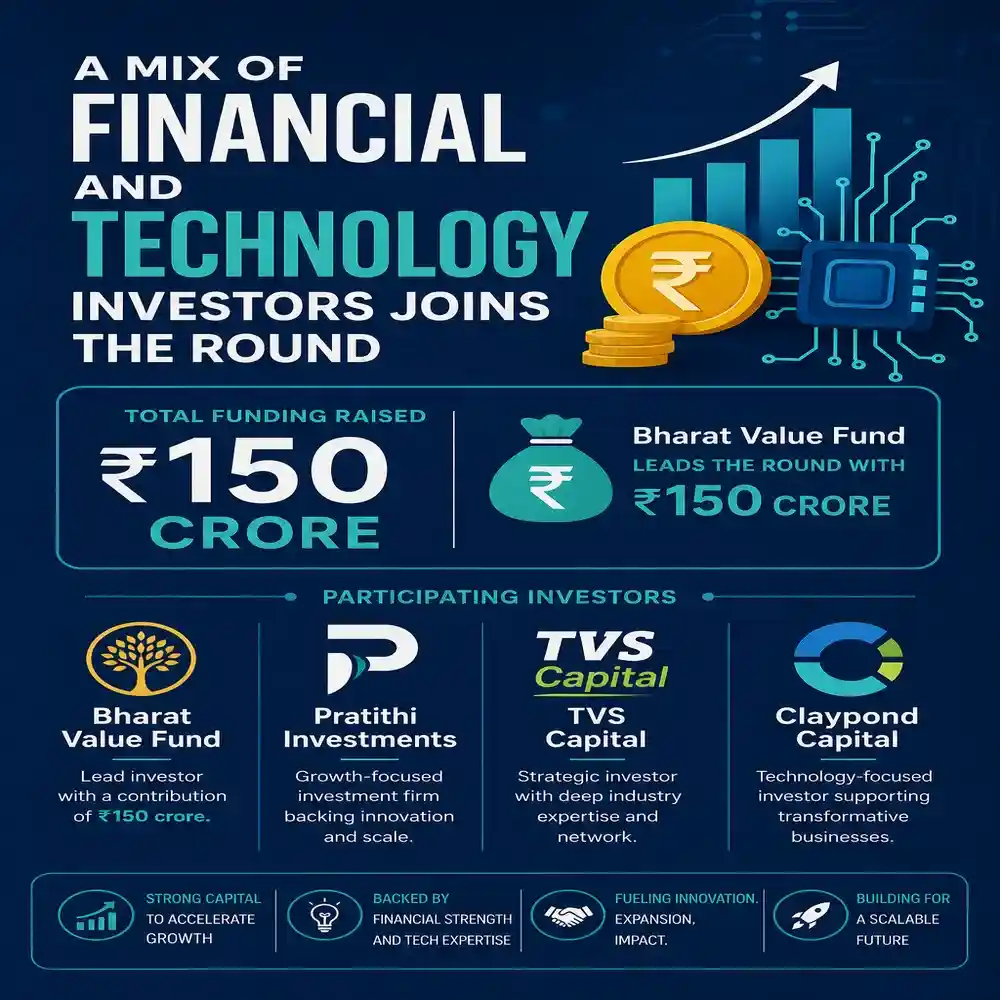
2. A Mix of Financial and Technology Investors Joins the Round
The investor group brings together institutions and prominent entrepreneurial networks. Bharat Value Fund’s ₹150 crore contribution makes it the largest publicly disclosed investment in the round. Pratithi Investments is associated with Infosys co-founder Kris Gopalakrishnan, while NKSquared is the investment vehicle of Zerodha co-founders Nithin and Nikhil Kamath. TVS Capital and Claypond Capital are among the existing investors continuing their support. The round also reflects interest from investors connected to India’s financial-services and technology sectors. For a lending business, this kind of backing can provide more than growth capital: it can strengthen credibility with partners, support long-term planning and help the company invest in the systems required to manage a larger loan portfolio. The participation of existing backers is also a signal of continued support, although it does not remove the commercial and regulatory risks associated with lending.
3. Finnable Is Building More Than a Personal Loan App
Finnable’s business is built around multiple credit products rather than a single personal-loan offering. Its platform serves salaried professionals seeking personal loans, while its loan-against-property business provides secured credit to customers and small-business owners. The company also operates a consumer-finance business that offers checkout credit through digital commerce channels. These products address different borrowing situations: personal loans can meet individual cash-flow needs, loans against property use an asset as security, and checkout finance allows customers to access credit during an online purchase. This combination gives Finnable several routes to reach borrowers and generate lending activity. It also creates a more complex operating model because each product has different underwriting requirements, repayment patterns, customer risks and collection needs.
4. A ₹4,600 Crore AUM Business Changes the Scale of the Opportunity
Finnable’s reported AUM crossed ₹4,600 crore in October 2026, compared with approximately ₹1,015 crore in March 2023, according to funding coverage. That increase points to a substantial expansion of the company’s managed lending portfolio over the period. AUM is an important measure for lenders because it indicates the scale of loans being managed, but it should not be confused with revenue, cash on hand or profit. The quality of that portfolio matters just as much as its size. Borrower repayment behaviour, overdue loans, funding costs, credit underwriting and collection efficiency all influence whether a lender can grow sustainably. Finnable’s next challenge will be to maintain disciplined lending standards while extending its reach into additional markets and customer segments.
5. Profitability Gives the Funding Story a Different Dimension
The company has also reported positive financial performance. Finnable said it recorded ₹51 crore in profit after tax during the first half of FY27, exceeding the ₹46 crore profit it reported for the full FY26 financial year. It has also disclosed a PAR 90 at six months on books of 0.24%, a portfolio-quality measure relating to loans overdue by more than 90 days at that point in their lifecycle. These are company-reported figures and should be assessed alongside audited financial statements, the composition of the loan book and performance across different lending products. Still, the combination of expanding AUM and reported profitability gives the latest funding round a different profile from a raise based only on customer acquisition or rapid loan growth. For investors, the central question is whether Finnable can preserve those economics as its lending operations become larger.
6. Where the New Capital Could Make a Difference
Finnable plans to use the fresh capital to expand its on-book lending, take its loan-against-property business into additional geographies, scale consumer-finance partnerships and strengthen its technology infrastructure. The company is also investing in artificial intelligence across areas such as underwriting, fraud detection, collections and customer service. These applications could help lenders process information more efficiently, identify suspicious activity and prioritise customer interactions. However, technology does not eliminate credit risk. Automated systems still depend on reliable data, carefully designed decision rules and effective human oversight. In lending, a poor underwriting decision can translate directly into financial losses, while weak collections can damage portfolio performance. The value of Finnable’s technology investment will therefore depend on whether it improves decision quality and operating efficiency without weakening responsible lending practices.
7. India’s Digital Credit Market Offers Opportunity but Demands Discipline
India’s expanding digital economy creates opportunities for lenders that can reach customers through online channels and offer credit with less friction. Yet the market is not simply a race to approve more loans. Lenders must assess affordability, verify borrower information, protect personal data and maintain effective grievance and collection processes. Unsecured personal lending can be particularly sensitive to changes in borrower income and repayment behaviour, while secured lending introduces its own collateral and recovery considerations. Finnable’s mix of personal loans, property-backed credit and consumer finance may help it serve different needs, but it also requires strong risk controls across distinct products. As the business expands, investors will be watching not only loan growth but also funding costs, asset quality, compliance and the consistency of its profitability through changing credit conditions.
8. The Next Test Is Turning Fresh Capital Into Sustainable Lending Scale
Finnable’s ₹405 crore Series C marks an important funding milestone for the Bengaluru lender, backed by a group that includes Bharat Value Fund, Pratithi Investments, NKSquared and existing institutional investors. The company enters its next phase with a reported AUM above ₹4,600 crore and positive first-half FY27 profit after tax. Those figures create a stronger starting point for expansion, but they also raise expectations. The business must show that it can grow its lending portfolio without allowing credit losses, operating costs or compliance risks to rise faster than income. Its ability to deepen partnerships, improve underwriting and build dependable collections will be central to the outcome. For India’s digital lending sector, Finnable’s progress will be another test of whether technology-led NBFCs can combine convenient access to credit with durable profitability and responsible lending standards.
TechFront360 Analysis: Finnable’s latest funding is notable because it backs a lending institution that is already operating at meaningful scale. The next phase will not be measured only by how quickly its AUM grows, but by whether the company can protect asset quality, sustain profitability and use technology to make credit decisions more reliable. In digital lending, disciplined execution is ultimately more valuable than headline loan-book expansion.