Preflop Raises $1.5M to Build a New Market for Human Capital
Preflop has raised $1.5 million in pre-seed funding from Verdict Capital and Afore Capital to develop a marketplace built around a different kind of asset: human potential. The startup wants to create a financial market where people can attract backing based on their future economic potential rather than only the value of a company they own.
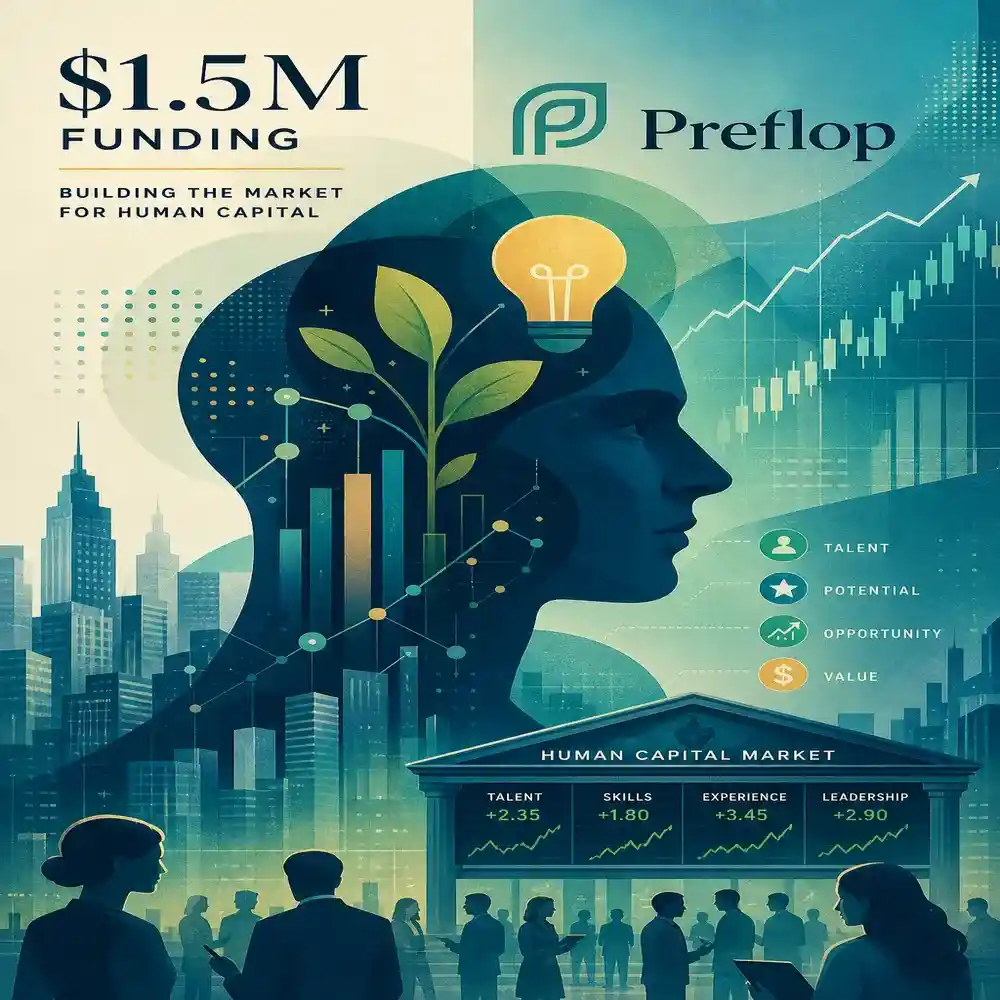
1. Preflop Raises .5 Million to Rethink How Human Potential Is Valued
Preflop has announced a $1.5 million pre-seed funding round led by Verdict Capital and Afore Capital, marking an early step in its ambition to build what it describes as the first market for human capital. The startup is exploring a new way for people to receive financial backing based on their potential to create economic value over time. Its founder says the idea grew out of a personal experience: selling half of an earlier company for far less than he believed his contribution was worth. That experience raised a bigger question about how talented individuals are valued, especially when much of their future earning potential has not yet been realised. Traditional financial markets make it relatively easy to invest in companies, property and other assets, but there is no widely accessible market that allows people to attract investment based on their own future economic trajectory. Preflop wants to explore whether technology and standardised financial structures can help create one.
2. A Founder’s Experience With Being Undervalued Became the Starting Point
The story behind Preflop is closely connected to its founder’s experience as an entrepreneur. In the funding announcement, the founder explained that he had sold half of his first company for what he now considers a very low price. Looking back, he believes he was one of the most undervalued assets in the room. Rather than treating that experience as an isolated business mistake, he began thinking about why individuals often struggle to capture the economic value they may create in the future. Founders can raise money by selling company equity, while other professionals may have limited ways to secure capital against their future earning potential. Preflop’s proposed model aims to address this gap by creating a platform where a person’s potential can be evaluated and where supporters can express financial conviction. The idea is ambitious because it attempts to connect personal achievement, financial valuation and access to capital in a single market structure.
3. What Does a Market for Human Capital Actually Mean?
In simple terms, Preflop wants to create a marketplace where people can attract backing based on their future economic output. Instead of investing only in a company, a supporter could potentially gain exposure to a defined financial claim linked to an individual’s future economic trajectory. The concept is different from ordinary crowdfunding, where people contribute money to support a project, and different from traditional venture capital, where investors purchase ownership in a business. Preflop’s proposed approach is designed around the individual rather than a single company or product. Its website describes research into standardised Trajectory Units and milestone-based markets, with a possible pricing system that uses forecasts of future economic benefits. However, these mechanisms remain proposed designs rather than live investment products. The company’s long-term ambition is to make human capital easier to evaluate and potentially trade, but it must first establish how such a system could work fairly, transparently and legally.
4. The Road to the Funding Round: 3,000 Conversations and 136 Rejections
Preflop’s founder says the company reached its funding announcement after more than 3,000 conversations and 136 rejections. The founder also said that over 200 people had tried the company’s trading simulator. These figures provide an early picture of the work involved in testing an unfamiliar financial concept and finding investors willing to support it. A new market category is difficult to explain because potential users, investors and regulators may not immediately understand what is being offered or how it differs from existing financial arrangements. The conversations may have helped the team understand the questions people have about pricing, trust, participation and the risks of linking financial claims to an individual’s future economic activity. The simulator provides another way to explore how a marketplace could function before any real-money product is introduced. These are founder-reported early indicators, rather than independently audited customer or revenue figures, but they help explain the company’s progress from an idea to a funded startup.
5. How Preflop Is Testing Its Marketplace
Preflop’s current public product is a play-money simulation that allows users to explore fictional profiles and simulated market activity. Its website explains that the demo is designed to test how a market for human capital might feel and operate without using real money. The company is researching a possible system in which a person’s economic trajectory could be represented through standardised financial units, while milestone markets could allow users to examine specific future outcomes. Its proposed architecture also explores how forecasts, reference prices, auctions and secondary trading might fit together. The important distinction is that these are research and product-design concepts, not financial rights available to users today. The current demo does not offer real investments, ownership claims, payouts or enforceable financial instruments. This staged approach gives Preflop an opportunity to test user understanding and market mechanics while it continues to work through the difficult legal, operational and ethical questions involved in its business model.
6. The Investors Are Backing a New Financial Category
The participation of Verdict Capital and Afore Capital gives Preflop early institutional backing as it attempts to develop a market that does not fit neatly into traditional financial categories. The founder also thanked several individuals for supporting the company, including Michael Fertik, Bonatsos, Gaurav Jain, Anamitra and Nathan Qyu, as named in the announcement. For investors, the opportunity is potentially larger than a conventional software product if Preflop can establish a trusted marketplace around an entirely new asset category. However, the company must prove that its valuation methods are credible, that people understand the financial arrangements and that the market can operate without creating unacceptable risks for participants. A successful platform would need more than a working trading interface. It would require clear contracts, reliable evidence, appropriate protections, transparent pricing and a regulatory structure that can support the activity it wants to enable. The $1.5 million round gives the team an initial pool of capital to pursue those challenges.
7. The Biggest Challenges: Consent, Regulation and Fair Valuation
Preflop’s idea also raises difficult questions that will shape whether a market for human capital can become a practical business. How should a person’s future economic potential be valued when careers can change unexpectedly? How should a platform protect people from unfair pressure, inaccurate information or valuations that affect their reputation? What rights would financial backers actually receive, and how could those rights be enforced across different jurisdictions? These questions become especially important when a financial product is connected to an individual rather than a company. Preflop’s own documentation acknowledges that its proposed instruments, real-money trading and related legal mechanisms are not live and remain subject to further review. The company’s public materials also identify consent, privacy, power imbalance and the risk of treating people as commodities as issues that need careful attention. Addressing these concerns will be essential. A market that claims to value human potential must demonstrate that it protects the people whose potential it is attempting to measure.
8. Can Preflop Turn Human Potential Into a New Investable Market?
Preflop is entering a market-building challenge rather than simply launching another financial technology application. Its $1.5 million pre-seed round gives it early support to investigate whether human economic potential can be measured, valued and represented through a transparent financial marketplace. If the company can solve the difficult problems around valuation, consent, regulation and market design, its approach could open a new way for individuals to access capital and for supporters to back people whose future work they believe in. But the gap between a simulated marketplace and a functioning real-money financial market remains substantial. The startup still needs to demonstrate that its proposed model is useful, fair and legally workable. For now, Preflop’s most important achievement is securing early funding for an unusual idea and attracting interest from people willing to test it. The next phase will determine whether a market for human capital can become a credible financial category or remain an ambitious experiment.
TechFront360 Analysis: Preflop is exploring a question that traditional venture capital does not fully answer: why should investment opportunities be tied primarily to companies when much of the value in an economy is created by individuals? Its proposed marketplace could offer a different route to financial backing, but pricing a person’s future economic output is far more complicated than pricing a share in a business. The opportunity is interesting; the real test will be whether Preflop can build a system that is transparent, voluntary, legally sound and genuinely beneficial to the people participating in it.